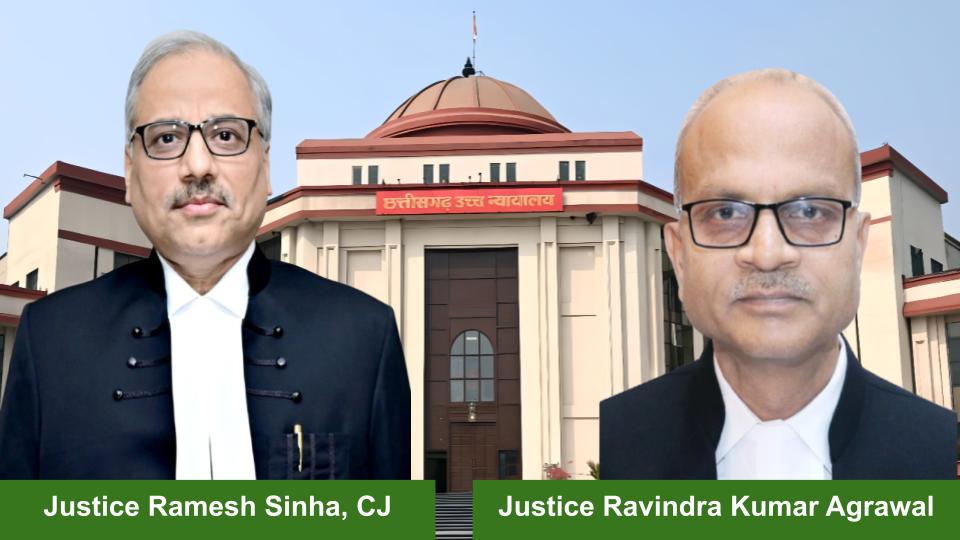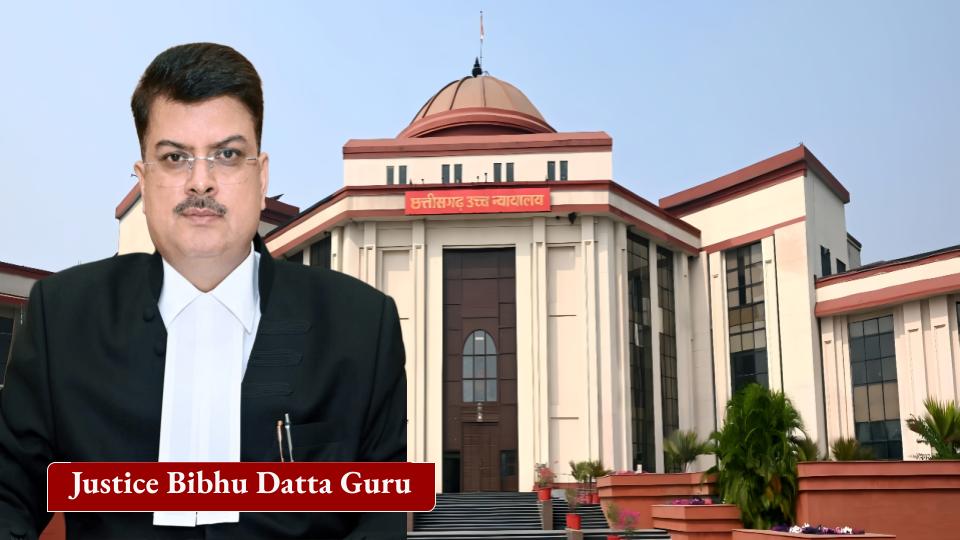
Bilaspur : The Chhattisgarh High Court at Bilaspur has rejected the regular bail application of former Chhattisgarh Public Service Commission (CGPSC) Chairman Taman Singh Sonwani in a money laundering case linked to alleged irregularities in the State Service Examinations conducted in 2020 and 2021. Justice Bibhu Datta Guru held that the material placed by the Directorate of Enforcement (ED) disclosed a prima facie connection between the alleged recruitment conspiracy and financial transactions under investigation. The Court also declined to grant bail on medical grounds, observing that the available medical records did not establish a life-threatening condition or demonstrate that the required treatment could not be provided while the applicant remained in judicial custody.
In its order dated October 16, 2026, the High Court considered the allegations of manipulation of recruitment rules, leakage of examination question papers, and the alleged routing of proceeds of crime through Gramin Vikas Samiti. The Court concluded that the statutory conditions prescribed under Section 45 of the Prevention of Money Laundering Act, 2002 (PMLA), were not satisfied in favour of the applicant. Accordingly, the bail application filed under Section 483 of the Bharatiya Nagarik Suraksha Sanhita, 2023 (BNSS), was dismissed.
Alleged CGPSC Recruitment Scam and Money Laundering Investigation
The case originates from alleged irregularities in the CGPSC State Service Examinations held in 2020 and 2021. The Economic Offences Wing and Anti-Corruption Bureau, Raipur, registered FIR No. 05/2024 on February 7, 2024, under Sections 120-B and 420 of the Indian Penal Code, 1860, along with Sections 7, 7A and 12 of the Prevention of Corruption Act, 1988. The investigation was subsequently taken over by the Central Bureau of Investigation (CBI), which registered RC No. RC1242024A0004 on July 9, 2024. The CBI filed its charge sheet on January 16, 2025, followed by supplementary charge sheets on September 26 and December 31, 2025.
According to the ED, the alleged irregularities involved manipulation of the recruitment process, leakage of examination question papers and the selection of favoured candidates. The prosecution has alleged that an amendment to the relevant recruitment rules on July 14, 2021, removed the word “nephew” from the definition of “family”, allegedly facilitating the selection of Sonwani’s nephews, Nitesh Sonwani and Sahil Sonwani, as Deputy Collector and Deputy Superintendent of Police, respectively.
The ED has further alleged that money generated through the alleged examination-related conspiracy was routed through financial transactions involving Gramin Vikas Samiti, a society allegedly controlled by members of Sonwani’s family. A key allegation concerns the transfer of ₹45 lakh by Shri Bajrang Power and Ispat Limited, through its director Shravan Kumar Goyal, to the society in the name of corporate social responsibility contributions for an educational project described as Kala Mahavidyalaya. The agency suspects that the payment was illegal gratification linked to the alleged leakage of question papers, which purportedly benefited Goyal’s son, Shashank Goyal, and daughter-in-law, Bhumika Katiyar, through their selection as Deputy Collectors.
The ED has also alleged that approximately ₹3 crore was collected from more than 33 candidates through intermediaries in exchange for access to examination question papers. According to the agency, the total proceeds of crime identified in the investigation amount to approximately ₹3.45 crore. These allegations remain subject to adjudication and have not been finally established by a trial court.
During searches conducted on June 3, 2026, under Section 17 of the PMLA, the ED reportedly seized documents, electronic devices, digital material and cash amounting to ₹8.45 lakh. Statements of individuals connected with the examination process and the alleged financial transactions were recorded under Section 50 of the PMLA. The agency also stated that a provisional attachment order dated September 21, 2026, had been issued in relation to certain properties allegedly acquired from the proceeds of crime.
A prosecution complaint against Sonwani and six other accused persons was filed before the Special Court under the PMLA at Raipur on September 22, 2026. At the time of the High Court’s consideration of the bail application, the complaint was awaiting consideration for cognizance, while further investigation into the remaining proceeds of crime, intermediaries and alleged beneficiaries was continuing.
Applicant’s Arguments: Medical Condition, Documentary Evidence and Parity
Appearing for Sonwani, Senior Advocate Sunil Otwani, assisted by Advocate Ankush Borkar, argued that the investigation into the underlying recruitment case had substantially progressed before the ED arrested him in July 2026. The defence submitted that the relevant recruitment records, examination documents, banking transactions and witness statements were already in the possession of the investigating agencies. It contended that the prosecution had not demonstrated any subsequent recovery of incriminating material from the applicant that would justify his continued detention.
The defence also relied on Sonwani’s age, approximately 65 years, and his medical condition. According to the medical documents cited before the Court, he suffered episodes of loss of consciousness and bradycardia on August 19, 2026, and was referred to the cardiology department of Pt. Jawaharlal Nehru Memorial Medical College and Dr. B.R.A.M. Hospital, Raipur. A temporary pacemaker was implanted on August 20, 2026, and permanent pacemaker implantation was reportedly advised.
The applicant argued that his cardiac condition warranted consideration under the proviso to Section 45(1) of the PMLA, which permits relaxation of the ordinary bail restrictions in cases involving a person who is sick or infirm. The defence also cited the Supreme Court’s orders dated October 29, 2025, granting bail to Shashank Goyal, Bhumika Katiyar, Nitesh Sonwani and Sahil Sonwani, arguing that the principle of parity supported his release.
ED Opposes Bail, Citing Alleged Financial Links and Witness Concerns
Opposing the application, the ED argued that Sonwani’s alleged role went beyond holding the position of CGPSC Chairman. According to the agency, he was involved in the alleged manipulation of recruitment rules, the leakage of examination papers and the routing of money through Gramin Vikas Samiti.
The prosecution relied on the alleged role of the society in receiving and utilising the funds. It pointed out that Sonwani’s wife, Padmini Sonwani, was its president and his brother, Anil Kumar Sonwani, was its secretary. The ED further alleged that Lalit Ganvir, the society’s then treasurer and Deputy Controller of Examinations at CGPSC, operated its bank account under Sonwani’s instructions.
The agency maintained that the alleged financial transactions and statements recorded during the investigation indicated a specific connection between the recruitment irregularities and the suspected proceeds of crime. It also argued that the applicant’s alleged role differed materially from that of the co-accused who had received bail, as he was accused of facilitating the wider conspiracy rather than merely benefiting from the alleged question paper leak.
The ED additionally referred to a disciplinary order dated September 29, 2026, concerning three Central Jail, Raipur, personnel who were dismissed following an inquiry into security lapses during Sonwani’s hospital escort and an unauthorised meeting that was subsequently circulated on social media. The agency cited the incident as part of its concern that the applicant’s release could create a risk of interference with persons connected to the proceedings. The defence countered that the disciplinary action concerned the conduct of jail personnel and did not establish that Sonwani had personally arranged the meeting or attempted to influence witnesses.
High Court Explains the Twin Conditions Under Section 45 PMLA
Justice Bibhu Datta Guru examined the statutory restrictions governing bail under Section 45 of the PMLA. The provision requires the Public Prosecutor to be given an opportunity to oppose bail. If the application is opposed, the court must be satisfied that there are reasonable grounds for believing that the accused is not guilty of the alleged offence and is unlikely to commit an offence while on bail, subject to the statutory exceptions.
The Court relied on the Supreme Court’s decision in Vijay Madanlal Choudhary v. Union of India, (2022) 10 SCC 386, which considered the validity and operation of the PMLA’s statutory framework. It explained that a court deciding bail is not required to conduct a full trial or conclusively determine guilt. Instead, it must undertake a preliminary assessment of the material collected during the investigation.
The High Court observed that the alleged amendment to the recruitment rules, the relationship between the applicant and certain selected candidates, the ₹45 lakh transaction and the alleged control over Gramin Vikas Samiti had to be considered together. In the Court’s assessment, these circumstances disclosed a prima facie connection between the alleged recruitment-related activities and the financial transactions under investigation.
The Court also rejected the argument that the completion of the CBI investigation into the underlying offence automatically entitled Sonwani to bail in the separate money laundering proceedings. It noted that the investigation into the scheduled offence and the investigation into the generation, routing, concealment or utilisation of alleged proceeds of crime involve distinct statutory questions.
The order emphasised that the filing of a prosecution complaint does not automatically require an accused’s release, just as the continuation of further investigation cannot independently justify indefinite detention. The decision must be based on the material against the accused and the statutory conditions governing bail.
On the issue of parity, the Court held that bail orders passed in favour of co-accused cannot be applied mechanically without comparing their alleged roles and the circumstances of their release. Since the prosecution attributed a different and allegedly more significant role to Sonwani, the Court found that the earlier bail orders did not independently justify his release.
Medical Bail Rejected Despite Temporary Pacemaker Implantation
A significant aspect of the order concerns the interpretation of the sick-or-infirm exception under Section 45(1) of the PMLA. The High Court acknowledged the medical records relating to Sonwani’s temporary pacemaker and the advice for a permanent pacemaker. However, it found that the material placed before it did not establish that his condition was life-threatening or that the necessary treatment could not be provided during judicial custody.
The ED submitted that the required medical procedure could be arranged at an appropriate government hospital, including Dr. B.R.A.M. Hospital, Raipur, with referral to AIIMS Raipur if required. The Court relied on this assurance while considering whether continued custody would prevent the applicant from receiving adequate treatment.
The Court observed that the statutory exception for sick or infirm persons does not create an automatic right to bail merely because an accused has a medical condition. The seriousness of the illness, the treatment required and the adequacy of medical facilities available during custody must be examined together.
Referring to the principles discussed in Kewal Krishan Kumar v. Enforcement Directorate, 2023 SCC OnLine Del 1547, and the Supreme Court’s decision in State of Uttar Pradesh v. Gayatri Prasad Prajapati, (2022) 15 SCC 515, the High Court considered whether the applicant’s condition warranted release rather than treatment under appropriate medical supervision while in custody.
The Court also reiterated that prisoners and undertrial accused persons retain the right to necessary medical care. Access to specialist consultations, diagnostic facilities and post-operative treatment must be ensured where medically required. However, the Court found no sufficient medical material demonstrating that the necessary treatment could not be delivered while Sonwani remained in judicial custody.
Court Finds Prima Facie Material Against Applicant
The High Court further relied on the principles laid down in Satish Jaggi v. State of Chhattisgarh, (2007) 11 SCC 195, and Y.S. Jagan Mohan Reddy v. CBI, (2013) 7 SCC 439, while considering the nature of the allegations and the material available at the bail stage.
The Court noted that economic offences involving alleged organised financial transactions and conspiracy require careful consideration of the nature of the accusations, the evidence collected, the possibility of witness interference and the interests of the public and the State. At the same time, it expressly recognised that the allegations against Sonwani had not yet been established at trial and that the presumption of innocence continued to apply.
In its assessment, the prosecution had placed sufficient material to prima facie connect the applicant with the alleged money laundering activities. The Court was not persuaded that his denial of involvement, the documentary nature of the evidence, the timing of his arrest or the grant of bail to other accused persons satisfied the requirements of Section 45 of the PMLA.
The Court stated that the material did not permit it to conclude that there were reasonable grounds for believing that the applicant was not guilty of the alleged offence. It also considered the prosecution’s concerns regarding the applicant’s alleged role, the financial arrangements and the possibility of interference with persons connected with the proceedings.
Final Order and Legal Significance
Concluding that the statutory requirements for granting bail had not been met, the Chhattisgarh High Court rejected Sonwani’s application under Section 483 of the BNSS, read with Section 45 of the PMLA. The order means that he did not receive regular bail through this application and remains subject to judicial custody, subject to any subsequent orders passed by a competent court.
The ruling highlights two important legal principles. First, bail in money laundering cases is governed by the specific restrictions under Section 45 of the PMLA, and the alleged role of an accused must be assessed on the material available at the pre-trial stage. Second, the medical exception under the same provision requires meaningful consideration of the accused’s health, but a medical condition alone may not justify release when the court finds that appropriate treatment can be provided in custody.
The decision does not determine Sonwani’s guilt or innocence in the alleged CGPSC recruitment scam. The allegations concerning recruitment manipulation, question paper leakage and money laundering remain matters for adjudication in the relevant proceedings. The prosecution will have to establish its case in accordance with law, and the findings made for deciding bail cannot substitute for a final determination at trial.
Important Court Observation
The High Court’s central finding on the medical ground was that the exception for sick or infirm accused persons could not be invoked without sufficient evidence of a serious condition that could not be adequately treated during custody. The order’s headnote states:
“In absence of medical material demonstrating a life threatening condition or the inadequacy of the custodial system to provide the requisite treatment, the statutory exception as provided under Section 45(1) of the Prevention of Money Laundering Act, 2002 ought not to be invoked.”
The Court also reiterated the limited nature of judicial scrutiny at the bail stage, observing that it was required to assess the prima facie material rather than determine the ultimate guilt of the accused. The final outcome of the prosecution case will depend on the evidence and findings in the appropriate proceedings.
Case Reference : Taman Singh Sonwani v. Directorate of Enforcement; Case Number: MCRC No. 8189 of 2026. Applicant’s Counsel: Mr. Sunil Otwani, Senior Advocate, through video conferencing, assisted by Mr. Ankush Borkar, Advocate. Respondent’s Counsel: Dr. Saurabh Pande, Advocate, for the Directorate of Enforcement.