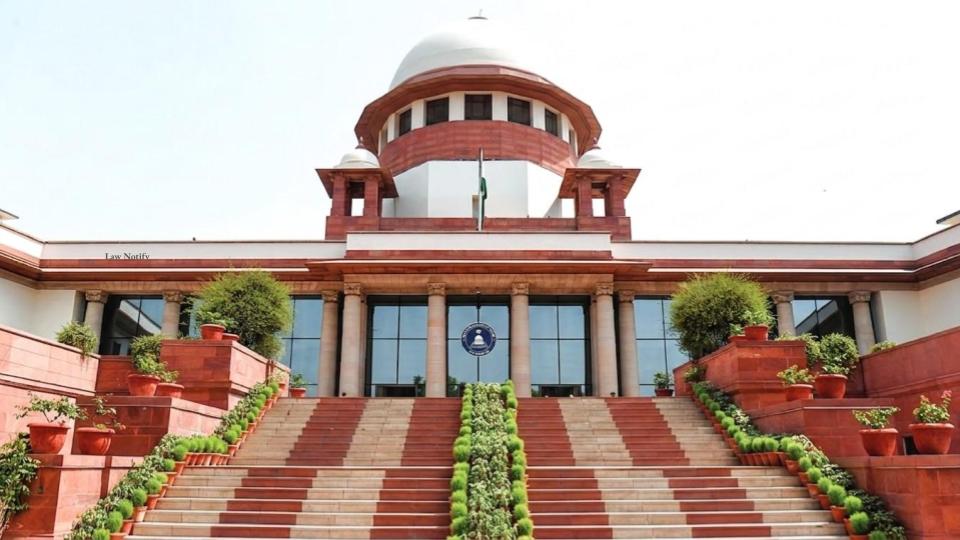
June 12, 2026 : The Supreme Court has dismissed a writ petition filed by Congress leader Meenakshi Natarajan challenging the rejection of her nomination for the Rajya Sabha election from Madhya Pradesh, holding that constitutional courts cannot interfere in election disputes in view of the bar contained under Article 329 of the Constitution.
A Bench comprising Justice Prashant Kumar Mishra and Justice A.S. Chandurkar ruled that the petition filed under Article 32 was not maintainable and observed that disputes arising from the rejection of nomination papers must be adjudicated through the statutory election dispute resolution mechanism provided under the Representation of the People Act, 1951.
The Court rejected the argument that constitutional courts could exercise jurisdiction under Articles 32 or 226 in cases involving apparent or manifest errors in the rejection of nomination papers. The Bench held that creating such an exception would be contrary to the constitutional framework and would result in an impermissible distinction between different categories of election disputes.
While dismissing the petition, the Court granted Natarajan liberty to challenge the Returning Officer’s decision by filing an election petition under the Representation of the People Act. The Bench clarified that it had not examined the merits of the controversy and that all issues concerning the legality of the nomination rejection remain open for consideration in appropriate proceedings.
The dispute arose after Returning Officer Arvind Sharma rejected Natarajan’s nomination on June 9, citing her failure to disclose details of a private criminal complaint pending before a court in Telangana in her Form 26 affidavit. The Returning Officer noted that she had received summons in the matter but had not disclosed the proceedings.
Appearing for Natarajan, Senior Advocate Abhishek Manu Singhvi argued that the rejection was legally unsustainable because Section 33A of the Representation of the People Act requires disclosure only of criminal cases where charges have been framed by a competent court. He contended that no cognisance had been taken in the complaint and that the proceedings were still at a pre-cognisance stage, leaving no legal obligation to disclose the matter.
Singhvi further submitted that the complaint originated from allegations against another individual and that Natarajan had been named only on the allegation that she failed to act against the principal accused in her capacity as the Congress party’s Telangana in-charge. He pointed out that the alleged incident occurred in 2022, whereas Natarajan assumed the Telangana in-charge role only in 2025.
The senior counsel also informed the Court that the Election Commission had not acted on her complaint against the rejection of her nomination and highlighted that the rival candidate had already been declared elected unopposed following the rejection.
Relying on the Supreme Court’s decisions in Mohinder Singh Gill v. Chief Election Commissioner and Election Commission of India v. Ashok Kumar, Singhvi argued that courts could intervene in exceptional circumstances where such intervention would facilitate rather than obstruct the electoral process.
The Bench, however, expressed concern that entertaining such petitions would create a parallel system of adjudication for election disputes. Justice Mishra observed that allowing courts to examine rejected nominations under Articles 32 and 226 would undermine the constitutional scheme that mandates election disputes to be resolved through election petitions.
Opposing the plea, Senior Advocate Mukul Rohatgi argued that the right to contest elections is a statutory right rather than a fundamental right and therefore cannot be enforced through Article 32. He relied on the landmark judgment in N.P. Ponnuswami v. Returning Officer, which held that disputes concerning acceptance or rejection of nomination papers must be challenged only through election petitions after the election process concludes.
Senior Advocate Dama Seshadri Naidu, appearing for the Election Commission of India, and Advocate Kanu Agarwal, appearing for the rival candidate, also contended that Article 329 bars judicial interference during the election process and that election tribunals possess exclusive jurisdiction over such disputes.
After hearing all parties, the Supreme Court concluded that the writ petition was not maintainable and reiterated that any challenge to the rejection of Natarajan’s nomination must be pursued through an election petition in accordance with the statutory framework governing election disputes.