News Citation : 2026 LN (HC) 296
January 8, 2026 : The Telangana High Court has dismissed a writ petition challenging a show-cause notice issued under the Prevention of Money Laundering Act, 2002 (PMLA), holding that such notices can validly be issued by a single-member bench of the Adjudicating Authority.
The case arose from a petition filed by B. Sreenivasa Gandhi and others, who sought to quash a show-cause notice dated September 12, 2025. The notice followed a provisional attachment of properties by the Enforcement Directorate (ED) in connection with a corruption case registered by the Central Bureau of Investigation (CBI).
The petitioners argued that the notice was legally flawed because it was not issued by a properly constituted Adjudicating Authority. They contended that under Section 6(2) of the PMLA, the authority must comprise a chairperson and two members, and any action taken by a single member would be invalid under the doctrine of coram non judice meaning proceedings conducted without proper jurisdiction.
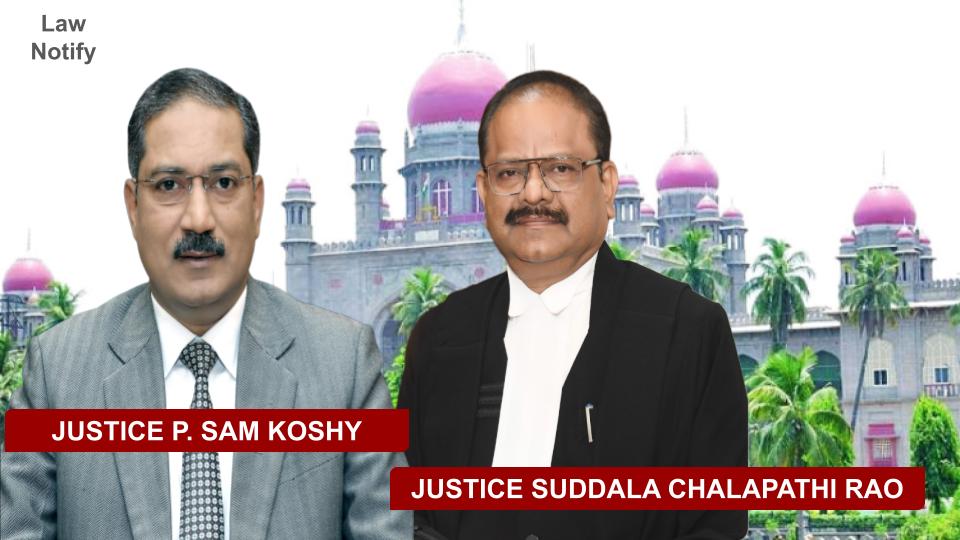
Rejecting this argument, the Division Bench of Justice P. Sam Koshy and Justice Suddala Chalapathi Rao clarified that Section 6 must be read as a whole. While the statute prescribes a three-member composition, it also explicitly allows the Adjudicating Authority to function through benches consisting of one or two members, depending on the circumstances.
The Court emphasized that interpreting the law to mandate a three-member bench in all cases would render other provisions particularly those permitting flexible bench composition ineffective. It relied on prior rulings, including decisions of the Delhi High Court and earlier judgments of the Telangana High Court, which have consistently upheld the legality of single-member benches under the PMLA framework.
On the issue of whether the absence of a judicial member invalidates proceedings, the Court held that the statute does not require all members of the Adjudicating Authority to have a judicial background. It noted that members may come from fields such as law, finance, accountancy, or administration, and that the presence of a judicial member is not mandatory for every proceeding.
The Bench also declined to entertain the writ petition on the ground that the petitioners had an effective alternative remedy under the PMLA. The law provides a structured appellate mechanism, including appeals to the Appellate Tribunal and further to the High Court. The Court reiterated that writ jurisdiction under Article 226 should not ordinarily be invoked when such statutory remedies are available, unless exceptional circumstances exist.
Finding no merit in the petitioners’ claims, the Court dismissed the writ petition and upheld the validity of the show-cause notice.
Case Reference : WP No.40454 of 2025, B. Sreenivasa Gandhi v. Adjudicating Authority under the Prevention of Money Laundering Act, 2002; Counsel for Petitioners: Mr. Syed Ahmed Saud for Mr. Mir Mukaram Ali; Counsel for Respondents: Mr. B. Mukherjee for Mr. N. Bhujanga Rao, Deputy Solicitor General of India (R-1), and Mr. Dominic Fernandes, Standing Counsel for Enforcement Directorate (R-2).