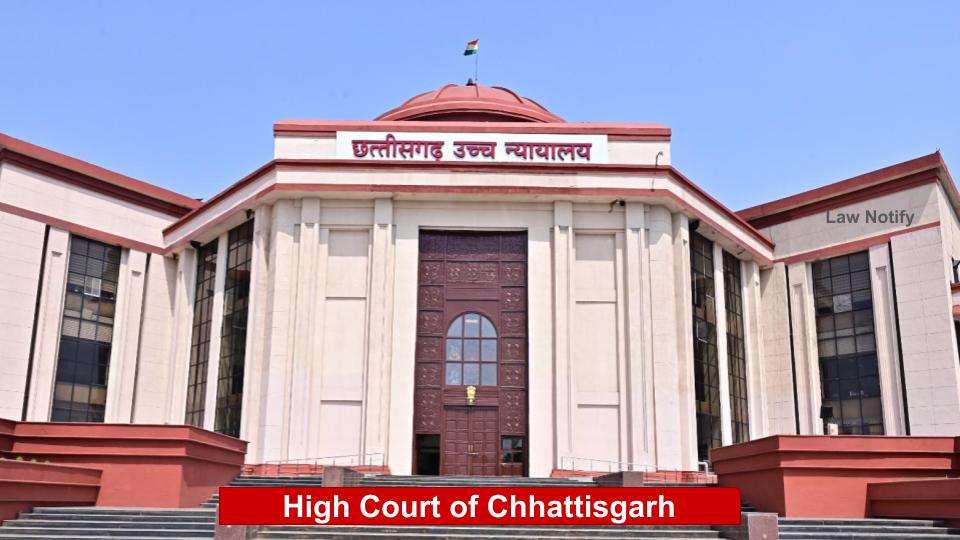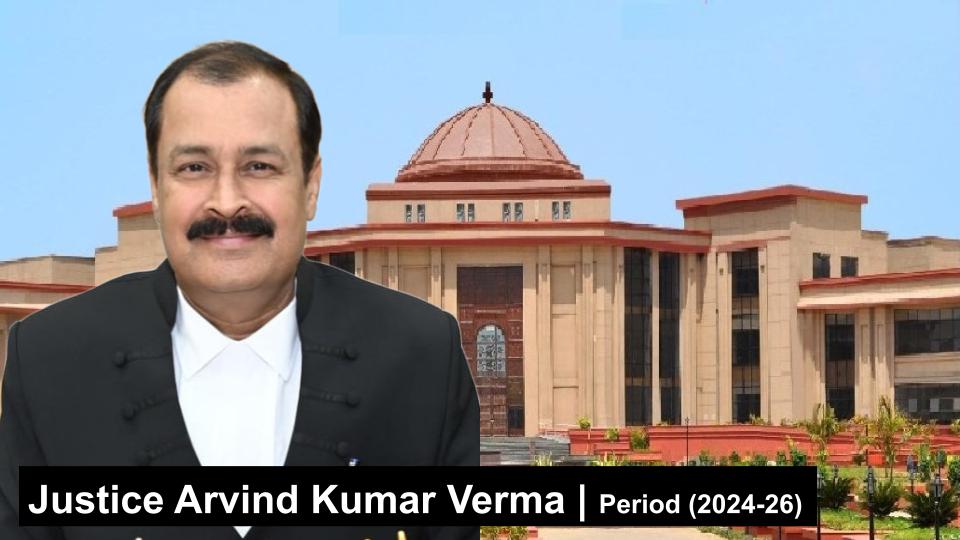
April 7, 2026 : Hon’ble Mr. Justice Arvind Kumar Verma’s tenure at the Chhattisgarh High Court, spanning from January 23, 2024 to April 7, 2026, stands out for both its scale and consistency. His judicial work reflects a clear orientation towards criminal law, coupled with a steady engagement across writ and civil jurisdictions.
During this period, Justice Verma authored an impressive 9,821 judgments, indicating a notably high rate of disposal. The distribution of his caseload underscores a pronounced focus on criminal matters, which formed the largest segment of his docket, followed by writ and civil cases.
Justice Verma’s educational background includes an M.Sc. in Geology from Pt. Ravishankar Shukla University and an LL.B. from Guru Ghasidas University.
Breakdown of Judicial Output
- Criminal Cases: 5,458
- Writ Cases: 2,880
- Civil Cases: 1,483
Key Judicial Contributions
Justice Verma’s decisions reveal a consistent emphasis on constitutional safeguards, individual liberty, and procedural fairness. Several rulings during his tenure illustrate this approach:
- The Court held that imposing a minimum landholding requirement of two acres absent in the original rehabilitation policy for granting employment to land-losers was arbitrary. Such a condition was found to be violative of constitutional guarantees, and authorities were directed to reconsider affected claims.
- In the matter of bail, Justice Verma held that the doctrine of parity flows directly from Article 14 of the Constitution, which mandates that similarly situated persons must receive similar treatment in matters of personal liberty. The Court further held that the doctrine of parity, a settled concomitant of Article 14 equality, mandates uniform application in bail jurisprudence unless countervailing circumstances exist.
- In Satyendra Prakash Suryawanshi v. State of Chhattisgarh, the Court held that students pursuing simultaneous academic programs cannot seek rescheduling of examinations due to timetable clashes, treating such conflicts as a consequence of personal choice.
- Clarifying the scope of maintenance under Section 125 CrPC, the Court ruled that a divorced woman living in adultery is not entitled to maintenance, recognizing adultery as a continuing disqualification.
- In Sandeep Sharma v. Smt. Anita Sharma, the Court firmly rejected the practice of compelling a woman to undergo a virginity test, holding it to be an affront to dignity, privacy, and personal liberty under Article 21.
- On juvenile justice, the Court emphasized that bail under Section 12 of the Juvenile Justice Act is not automatic. It may be denied in cases involving heinous offences where release would undermine the interests of justice.
Overall Assessment
Justice Verma’s tenure is marked by a rare combination of volume and thematic consistency. His substantial output, particularly in criminal law, reflects both administrative efficiency and subject-matter focus. At the same time, his rulings demonstrate a steady commitment to constitutional principles, especially in safeguarding liberty, dignity, and fair process.
Taken together, his body of work leaves a clear imprint of a judge who balanced high productivity with a jurisprudence rooted in fundamental rights and procedural integrity.
In addition to his judicial work, Justice Verma participated in the inaugural All India Judges Badminton Championship held on 29–30 November 2025 at Thyagraj Stadium, New Delhi. The event brought together over 70 High Court judges to promote camaraderie and wellness within the judiciary. Notably, Justice Arvind Kumar Verma, along with Justice Ravindra Kumar Agarwal, secured the runner-up position in the Men’s Doubles category.