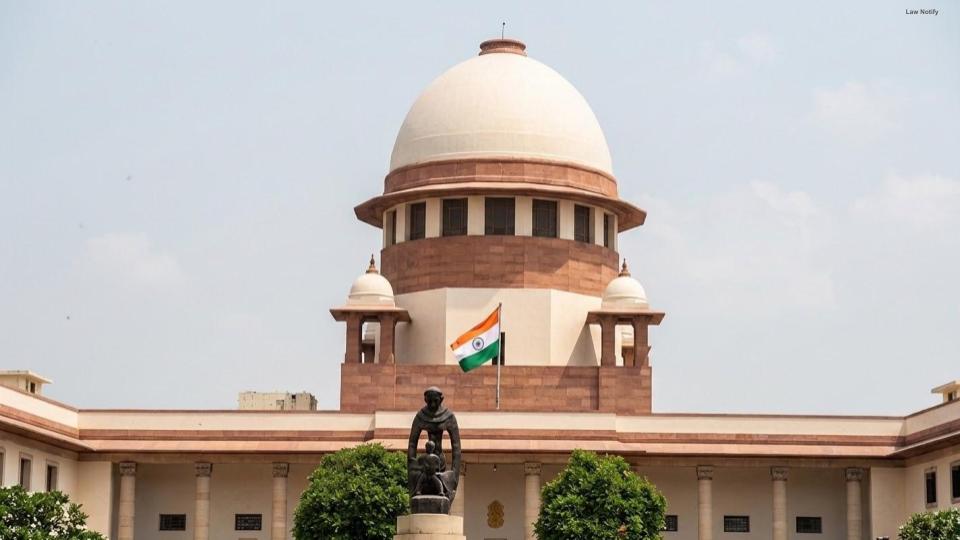
April 28, 2026 : The Supreme Court of India on Tuesday directed that a high-level meeting be convened on May 6 to examine how states are utilising funds allocated for installing CCTV cameras in police stations across the country.
A bench comprising Justice Vikram Nath and Justice Sandeep Mehta asked Senior Advocate Siddhartha Dave, appearing as amicus curiae in a suo motu case on non-functional CCTVs, to organise the meeting. The court said the meeting should include the Union Home Secretary or a nominee not below the rank of Joint or Additional Secretary, along with Home Secretaries of all states and Union Territories.
The direction came after the amicus raised concerns about whether funds provided for CCTV installation were being properly used. Dave informed the bench that the Centre fully funds Union Territories, provides 90 percent funding to hilly states, and shares costs in a 60:40 ratio with other states.
The bench suggested narrowing the focus of responses to the issue of fund utilisation and asked the amicus to submit a report after the meeting. The matter is scheduled for further hearing on May 13.
Earlier, on April 7, the Centre had assured the court that issues related to CCTV installation would be resolved within two weeks. R Venkataramani, the Attorney General for India, had told the court that the government was actively reviewing the situation.
The case stems from the court’s continuing concern over surveillance gaps in police stations. On February 26, it had directed stakeholders to deliberate on feasibility, implementation mechanisms, and the creation of a centralised dashboard along with standardised CCTV infrastructure.
The proceedings trace back to the court’s 2018 order mandating CCTV installation in police stations to curb human rights violations. In December 2020, the court expanded the directive to include central agencies such as the Central Bureau of Investigation, the Enforcement Directorate, and the National Investigation Agency.
The court has consistently emphasised comprehensive coverage, directing that cameras be installed at all entry and exit points, lock-ups, corridors, reception areas, and surrounding premises. It also mandated that CCTV systems must include night vision, audio-video recording, and storage capacity of at least one year. (PTI)