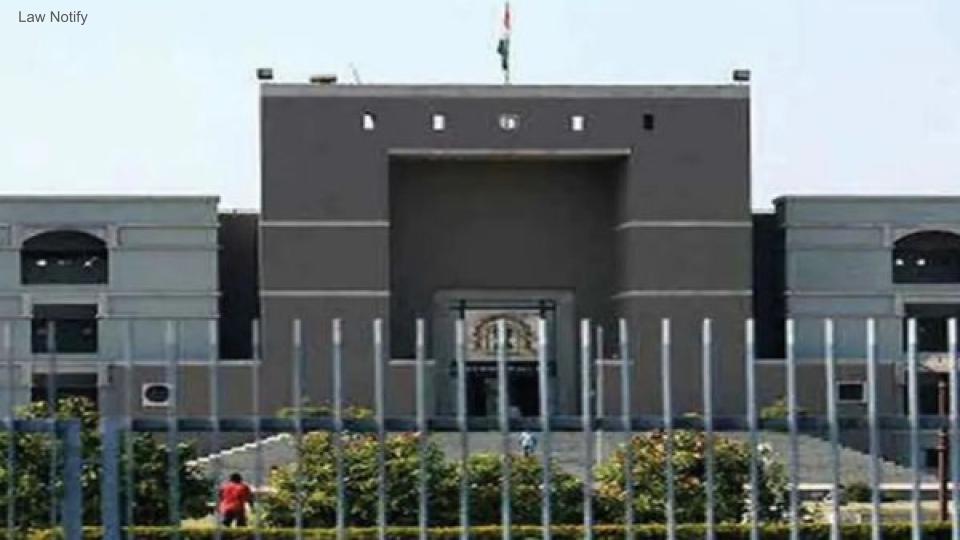
April 28, 2026 : The Gujarat High Court, per Justice J. C. Doshi, dismissed two first appeals and affirmed a 1999 decree of the City Civil Court granting specific performance of an agreement to sell dated 01.10.1985 concerning immovable property in Ahmedabad.
The original owner (defendant no.1) had agreed to sell the property to the plaintiff for Rs.16,000, receiving Rs.2,000 as earnest money under a registered agreement. The plaintiff asserted further payments and maintained that he remained continuously ready and willing to perform his obligations. However, despite repeated demands, the sale deed was not executed. During the pendency of the suit, and in breach of an injunction order, defendant no.1 executed a subsequent sale deed in favour of defendant no.2.
The trial court decreed the suit for specific performance, declared the subsequent sale void, and directed execution of the sale deed along with delivery of possession. Both defendants challenged the decree.
The High Court reaffirmed that under Section 16(c) of the Specific Relief Act, 1963, the plaintiff must establish continuous readiness and willingness to perform the contract. It clarified that such readiness need not always be demonstrated through explicit acts but may be inferred from the conduct of the parties and surrounding circumstances.
On facts, the Court found the plaintiff’s conduct consistent with readiness and willingness throughout the subsistence of the contract and litigation. In contrast, defendant no.1’s unilateral termination of the agreement, forfeiture of earnest money without contractual basis, and execution of a sale deed during subsistence of an injunction weighed heavily against him.
Rejecting the contention that time was of the essence, the Court held that mere stipulation of a six-month period does not make time essential in contracts relating to immovable property, absent clear consequences for non-performance within that period.
The Court also disbelieved the defence of defendant no.2 as a bona fide purchaser, holding that he failed to undertake reasonable inquiry and was fixed with constructive notice of the prior agreement and pending litigation.
Noting inconsistencies in defendant no.1’s testimony and adverse findings regarding his conduct, the Court concluded that the trial court’s decree was justified. Accordingly, both appeals were dismissed with costs, and the decree for specific performance was confirmed, with a limited stay on execution for two weeks.