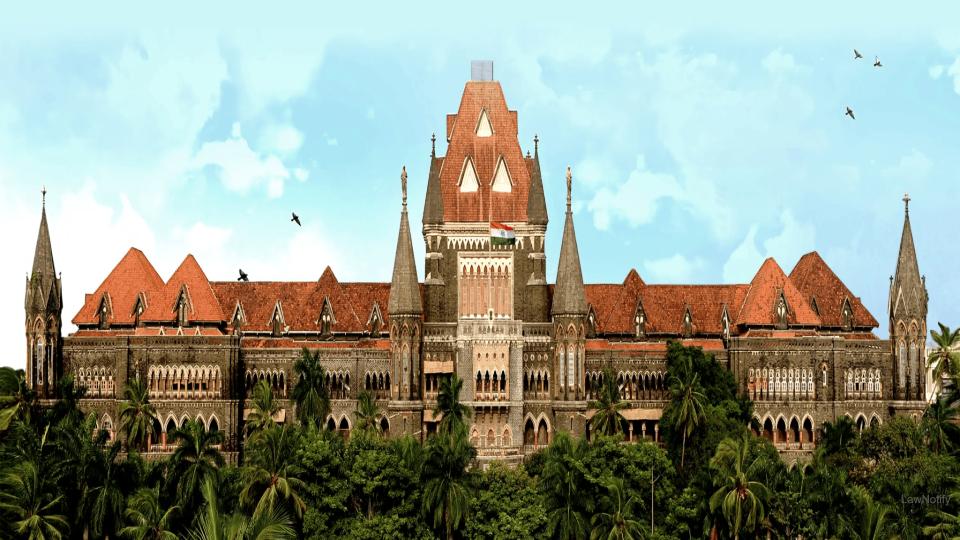
April 28, 2026 : The Bombay High Court refused to grant interim relief to a developer challenging termination of a redevelopment agreement, holding that the right of housing society members to secure safe and improved living conditions outweighs a developer’s commercial interest in the project. Justice Sandeep V. Marne emphasised that a developer who fails to act on its contractual obligations cannot obstruct redevelopment at the cost of residents living in unsafe and dilapidated structures.
The dispute arose from a petition under Section 9 of the Arbitration and Conciliation Act, 1996 filed by M/s Pioneer Constructions, seeking to restrain Sahakarnagar Co-operative Housing Society Ltd. from proceeding with redevelopment through a newly appointed developer. The Society comprises over 800 residential units across 46 buildings constructed in 1957 and had initiated redevelopment due to their deteriorating condition.
The petitioner was appointed in 2013, with development agreements executed in 2015 and revised in 2016. However, despite more than a decade having elapsed, no substantive progress was made. The Society initially terminated the developer’s appointment in September 2023; although this was temporarily withdrawn in April 2024, continued inaction led to a fresh termination in September 2024, followed by the appointment of a new developer in January 2026.
The Court noted the petitioner’s persistent failure to take meaningful steps even after being afforded multiple opportunities. It also found that the petitioner approached the Court belatedly despite being aware of both the termination and subsequent developments.
Rejecting the contention that termination was impermissible in the absence of an express termination clause, the Court clarified that redevelopment agreements stand on a distinct footing from agreements for sale. A developer does not acquire proprietary rights in the land, and its entitlement to sell flats arises only upon performance of contractual obligations. Consequently, prolonged delay or non-performance justifies termination by the society.
The Court further found suppression of material facts by the petitioner, including the setting aside of a no objection certificate previously obtained. The plea regarding lack of member consent was also rejected as an afterthought, not raised at earlier stages.
Highlighting the public interest dimension, the Court underscored that society members had been residing in unsafe structures for decades and awaiting redevelopment for over 13 years. It held that their right to safe housing far outweighs the developer’s profit motive. The Court observed that the petitioner had “not moved even a single brick” and appeared to treat the project as a speculative commercial venture.
On the balance of convenience, the Court held that refusal of interim relief would not cause irreparable harm to the developer, as monetary compensation could be pursued in arbitration. In contrast, granting relief would significantly prejudice residents by indefinitely delaying redevelopment and exposing them to continued risk.
Accordingly, the Court dismissed the Section 9 petition. In view of the arbitration clause and with consent of parties, it appointed Advocate Amrut Joshi as the sole arbitrator to adjudicate disputes between the parties, thereby allowing the Society to proceed with redevelopment through a new developer.