News Citation : 2026 LN (HC) 298
February 6, 2026 : In a significant ruling on the taxation of healthcare services, the High Court for the State of Telangana has held that hospitals are not liable to pay Value Added Tax (VAT) on surgical implants, stents, valves, and disposable medical items used during treatment. The Court clarified that such supplies are incidental to the provision of medical services and cannot be treated as independent sales.
The judgment came in a writ petition filed by M/s Asian Institute of Gastroenterology Pvt. Ltd., challenging a VAT assessment order for the financial year 2005–06. The tax authorities had sought to levy VAT on surgical goods used in procedures, along with penalties and interest.
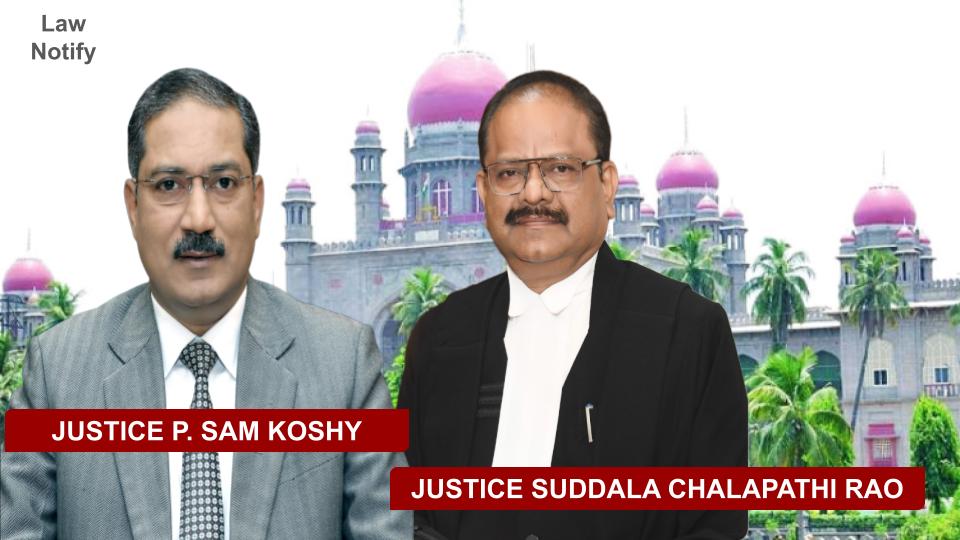
The Bench comprising Justice P. Sam Koshy and Justice Suddala Chalapathi Rao examined whether the supply of implants and consumables during medical procedures constitutes a “sale” under the Andhra Pradesh Value Added Tax Act, 2005, or remains part of a broader service contract.
The hospital argued that medical treatment is a composite service involving professional skill, where the use of implants and medicines is merely incidental. It relied on the Supreme Court’s ruling in Bharat Sanchar Nigam Limited vs Union of India, which held that only specific categories of composite contracts can be split for taxation purposes.
On the other hand, the tax department contended that there is a clear transfer of property in goods such as stents and surgical consumables, making them taxable under VAT laws. It argued that these items are separately billed and constitute identifiable sales.
Rejecting the Revenue’s stand, the Court held that medical services cannot be artificially divided into service and sale components unless they fall within the limited categories recognized under Article 366(29A) of the Constitution. The Bench emphasized that healthcare services do not fall within those categories, and therefore cannot be subjected to VAT through such bifurcation.
The Court further observed that implants like stents and valves, once used, become part of the patient’s body and are inseparable from the medical procedure. Similarly, disposable items such as syringes and gloves are single-use and destroyed after treatment, leaving no scope for independent commercial use.
Highlighting the nature of medical practice, the Court noted that the dominant intention of the transaction between a hospital and a patient is the provision of medical care, not the sale of goods. Any transfer of materials is only incidental to that service.
In its final order, the High Court quashed the VAT assessment and directed authorities to restore the earlier clarification that exempted such medical supplies from tax. The writ petition was allowed in favour of the hospital, with no order as to costs.
This ruling is expected to have wider implications for hospitals and healthcare providers, reinforcing the principle that medical services should not be fragmented for taxation in a manner inconsistent with constitutional limits.
Case Reference : Writ Petition No. 24551 of 2006, M/s Asian Institute of Gastroenterology (P) Ltd. v. Commercial Tax Officer; Counsel for the Petitioner: Mr. S. Suri Babu; Counsel for the Respondents: Mr. T. Chaitanya Kiran, Assistant Government Pleader, representing Mr. Swaroop Oorilla, Special Government Pleader.