News Citation : 2026 LN (HC) 302
April 21, 2026 : The High Court for the State of Telangana at Hyderabad has taken up a significant challenge to an Enforcement Directorate (ED) arrest under the Prevention of Money Laundering Act (PMLA), in a case that centres on the scope of arrest powers, procedural safeguards, and the requirement of a valid predicate offence.
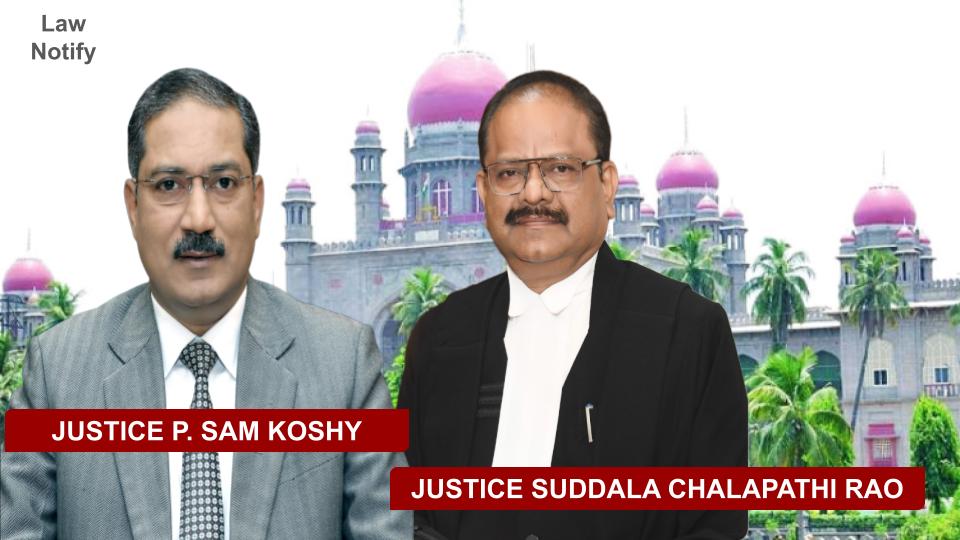
The writ petition was filed by Dr. Pachipala Namratha, a fertility specialist, who questioned the legality of her arrest on February 12, 2026, as well as the subsequent remand orders. The matter was heard by a division bench comprising Justice P. Sam Koshy and Justice Narsing Rao Nandikonda, with the petitioner seeking quashing of the arrest and immediate release from custody.
The case traces back to multiple FIRs registered in 2025 alleging illegal surrogacy practices and related offences under the Bharatiya Nyaya Sanhita and other statutes. These FIRs were later consolidated and transferred to the Central Crime Station. Based on these predicate offences, the ED registered an ECIR in September 2025 and conducted searches at the petitioner’s premises, including her clinic and residence. The agency also recorded statements under the PMLA before proceeding to arrest her in February 2026.
Challenging the arrest, the petitioner argued that the ED’s action was arbitrary and violated both statutory safeguards under Section 19 of the PMLA and constitutional protections under Articles 14, 21 and 22. It was contended that the power to arrest under the PMLA is not meant to be used as an investigative tool and can be exercised only when there is credible material showing involvement in money laundering. According to the petitioner, the “reasons to believe” recorded by the ED were vague and lacked any specific linkage between alleged proceeds of crime and her role. The grounds of arrest, she argued, were a mechanical reproduction of statutory language without disclosing concrete facts necessary to enable her to defend herself or seek bail effectively.
The petitioner further submitted that the alleged offences relating to surrogacy do not constitute scheduled offences under the PMLA, and therefore the very foundation of the ED’s jurisdiction was flawed. It was also argued that the remand court failed to apply its mind and mechanically authorised custody without independently examining whether the statutory requirements for arrest had been satisfied.
On the other hand, the Enforcement Directorate defended the arrest, stating that it was based on substantial material collected during investigation, including financial records, bank transactions and statements recorded under Section 50 of the PMLA. The agency alleged that the investigation revealed a sustained pattern of illegal surrogacy practices and financial irregularities, supported by prior complaints and disciplinary action against the petitioner. It maintained that the authorised officer had formed a valid “reason to believe” based on material in possession, that the grounds of arrest were duly communicated, and that all statutory requirements had been complied with.
The ED also argued that similarity between the “reasons to believe” and the “grounds of arrest” does not indicate non-application of mind, as both may legitimately reflect the same underlying facts. It further contended that the petitioner’s challenge raises disputed factual issues that are more appropriately addressed in bail proceedings rather than in a writ petition, especially at an early stage of investigation.
The case brings into focus key legal questions surrounding the threshold for arrest under Section 19 of the PMLA, the necessity of a demonstrable money trail linked to a scheduled offence, and the extent to which courts can scrutinise ED action at the pre-trial stage. The High Court’s ruling is expected to have broader implications for how investigative agencies exercise arrest powers in complex financial and regulatory cases.
Case Reference : WP No.6550 of 2026, Dr. Pachipala Namratha @ Athaluri Namratha vs Union of India, Ministry of Finance, Department of Revenue, represented by its Principal Secretary; Counsel for the petitioner: Mr. Naga Muthu, Senior Counsel for Mr. Y. Soma Srinath Reddy; Counsel for the respondent: Mr. Dominic Fernandes, Senior Standing Counsel for ED.