News Citation : 2026 LN (SC) 450
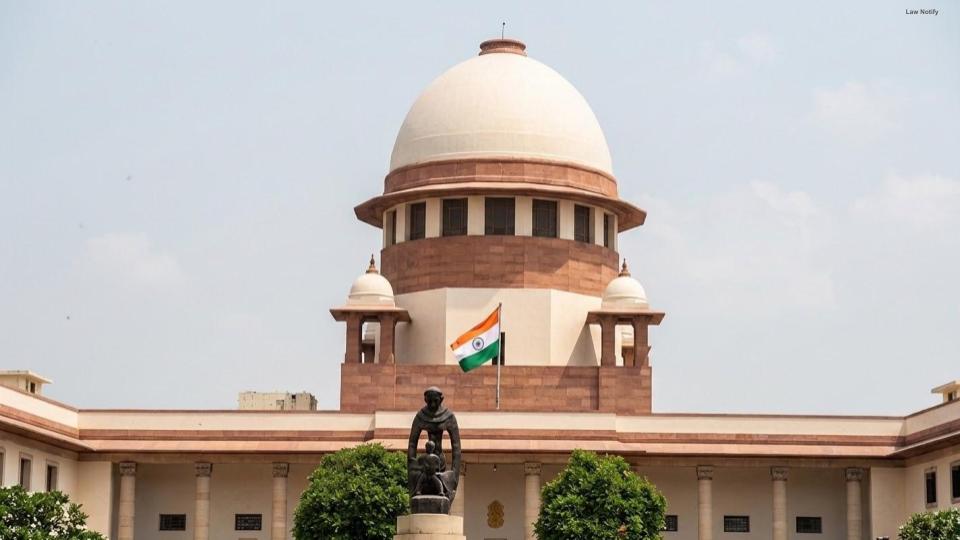
May 7, 2026 : The Supreme Court has reaffirmed that entries in revenue records neither confer nor extinguish proprietary title, holding that such records are maintained primarily for fiscal purposes and cannot substitute primary title documents like pattas or grants. The Court further clarified that writ jurisdiction under Article 226 cannot be expanded to adjudicate disputed questions of title.
A Bench comprising Justice Pankaj Mithal and Justice S. V. N. Bhatti dismissed a civil appeal filed by Vadiyala Prabhakar Rao and others concerning approximately 600 acres of land in Survey No. 81 of Kalvalanagaram Village, presently situated in Bhadradri Kothagudem District, Telangana. The appellants had claimed that the then Nizam of Hyderabad granted pattas to their predecessors during 1931-32.
The dispute traces back to a Gazette Notification issued on February 6, 1950, proposing to include around 787 acres in Survey No. 81 as reserve forest land under the Hyderabad Forest law. The appellants sought exclusion of their claimed 600 acres from the proposed reserve forest area.
The appellants relied heavily on revenue extracts including Faisal Patti, Vasool Baqi, Pahanies, mutation petitions, land revenue receipts, and proceedings before Land Reforms Tribunals to establish ownership. However, the Joint Collector, Khammam, rejected their claim in 2003 after finding that the original pattas or title deeds were never produced. The authority also noted that the land remained uncultivated and covered with forest growth for decades.
Although a Single Judge of the erstwhile Andhra Pradesh High Court later allowed the writ petition and declared the forest reservation proceedings ultra vires, the Division Bench reversed that decision. The High Court held that revenue entries unsupported by title documents lacked legal sanctity and could not establish ownership rights.
Affirming the Division Bench’s ruling, the Supreme Court summarised settled legal principles governing revenue records:
- Entries in revenue records or jamabandi serve only a fiscal purpose and merely identify the person liable to pay land revenue.
- Revenue records are not documents of title and do not create ownership rights.
- Mutation entries neither create nor extinguish title and possess no presumptive value regarding ownership.
- Payment of land revenue or municipal taxes does not estop the State from disputing ownership.
- Revenue records may at best raise a limited presumption regarding possession.
- Stray or isolated entries cannot override long-standing consistent revenue records.
- Fabricated or manipulated entries cannot defeat lawful claims of the State or actual cultivators.
The Bench observed that several entries relied upon by the appellants themselves described the land as “Jungle,” which supported the State’s case that the area formed part of forest land. The Court also found the records to be truncated, contradictory, and unsupported by lawful mutation orders or original pattas.
The Court criticised the Single Judge for effectively declaring title in writ proceedings despite serious factual disputes. The Bench observed:
“A writ forum is not the appropriate Forum for declaring title to the property in a contest between the parties.”
The Court further held that the Single Judge had improperly expanded the scope of judicial review under Article 226 by granting declaratory relief on title issues. According to the Bench, proceedings for certiorari are confined to jurisdictional errors, violations of natural justice, or errors apparent on the face of the record, and cannot substitute a full-fledged civil adjudication on disputed ownership claims.
Rejecting the appellants’ plea to keep the issue open for fresh adjudication before another forum, the Court concluded that no useful purpose would be served by prolonging litigation that had already continued for over seven decades. The civil appeal was consequently dismissed without costs.
Case Reference: Vadiyala Prabhakar Rao & Ors. v. The Government of Andhra Pradesh & Ors.