News Citation : 2026 LN (SC) 451
The Supreme Court has clarified that filing a formal application under Section 28 of the Specific Relief Act, 1963 for rescission of a contract is not mandatory where a decree holder fails to comply with the condition of depositing the balance sale consideration within the time stipulated in a decree for specific performance. The Court held that in appropriate cases, courts are empowered to treat the contract as rescinded and the decree as inexecutable even without such an application.
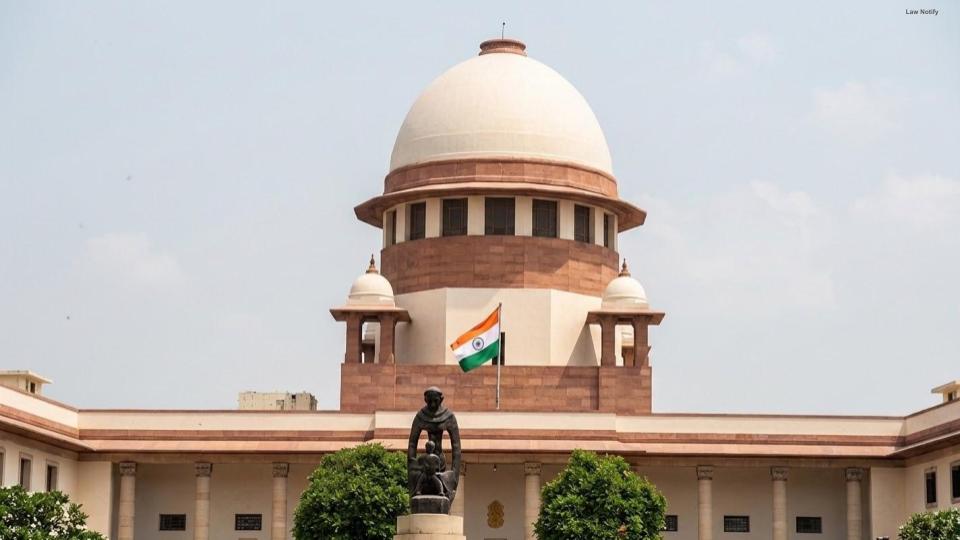
A Bench comprising Justice Pankaj Mithal and Justice S. V. N. Bhatti set aside the Punjab and Haryana High Court judgment as well as the Executing Court order which had rejected the objections of the defendant-appellant. The Bench held that the decree for specific performance had become inexecutable due to the plaintiff-respondent’s failure to deposit the balance sale consideration within the three-month period stipulated in the decree.
The Court observed:
“…it is settled that moving of an application under Section 28 of the Act for rescinding the contract for non-compliance of the condition is not mandatory rather optional and immaterial and that the court in a given circumstance is not powerless to treat the contract as having rescinded for non-compliance of the condition.”
The dispute arose out of an agreement to sell dated October 19, 2005 concerning agricultural land measuring 12 kanals and 19 marlas situated in Mewat, Haryana. Under the agreement, the appellant agreed to sell the land to the respondent at ₹5,00,000 per acre and received ₹80,000 as earnest money. The sale deed was to be executed by March 15, 2006 upon payment of the remaining consideration.
After the sale deed was not executed, the respondent instituted a suit for specific performance. On October 31, 2012, the trial court decreed the suit and directed the defendant to execute the sale deed subject to the plaintiff depositing the balance sale consideration within three months. The decree was affirmed in first appeal and second appeal. However, the respondent deposited the amount only in 2015, well beyond the stipulated period.
The Supreme Court noted that under Order XX Rule 12A CPC, every decree for specific performance must specify the period within which the consideration amount is to be paid. Although the decree did not expressly direct the plaintiff to deposit the amount within three months, the Court held that such an obligation arose by necessary implication because execution of the sale deed was conditioned upon payment of the balance consideration.
Rejecting the respondent’s contention that pendency of appeals and interim orders prevented the deposit, the Court observed that the interim order merely restrained alienation of the property and did not prohibit deposit of the amount. It further noted that the respondent neither deposited the amount within time nor sought extension of time within the stipulated period under Section 148 CPC, Section 151 CPC, or Section 28 of the Specific Relief Act.
The Bench also rejected the argument that the Executing Court’s later permission to deposit the amount amounted to deemed extension of time. Referring to earlier precedents including P.R. Yelumalai v. N.M. Ravi and Prem Jeevan v. K.S. Venkata Raman, the Court reiterated that non-compliance with conditions in a conditional decree for specific performance renders the decree inexecutable and that a separate application for rescission under Section 28 is not indispensable.
Summarising the legal position, the Court held:
- A decree for specific performance is in the nature of a preliminary decree;
- The court retains jurisdiction over such decree until execution of the sale deed or until the decree becomes inexecutable;
- Section 28 empowers the court to rescind the contract where the purchaser defaults in depositing the consideration within the permitted time;
- The power under Section 28 is discretionary and governed by equitable considerations; and
- It is not mandatory to file an application under Section 28 for the court to treat the contract as rescinded for non-compliance.
The Court further emphasised that specific performance is an equitable and discretionary relief. It held that the respondent failed to demonstrate continuous readiness and willingness to perform the contract after obtaining the decree, particularly by not depositing the balance consideration within time. The Bench observed that equity must operate fairly for both parties, especially considering the substantial passage of time since the 2005 agreement and the possibility of significant increase in land prices.
Accordingly, the Court held that the decree dated October 31, 2012 had become inexecutable and that the contract stood rescinded under Section 28 of the Specific Relief Act. It directed closure of the execution proceedings and ordered the appellant to refund the ₹80,000 earnest money with simple interest at 8% per annum from October 19, 2005 until repayment.
Senior Advocate Manoj Swarup appeared for the defendant-appellant, while Advocate Divyesh Pratap Singh appeared for the plaintiff-respondent.
The case is titled Habban Shah v. Sheruddin.