News Citation : 2026 LN (SC) 456
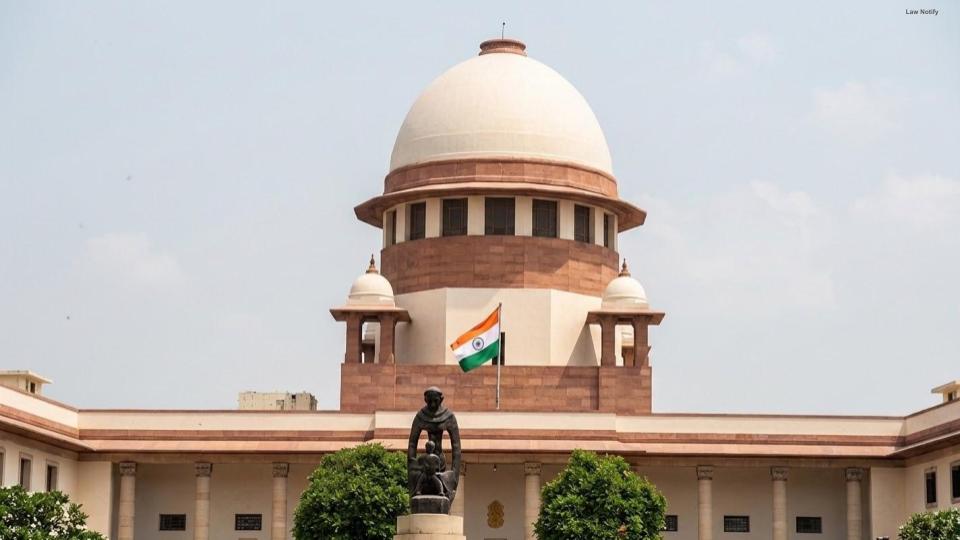
May 7, 2026 : The Supreme Court has granted default bail to an accused booked under the Unlawful Activities (Prevention) Act, 1967, holding that extension of time for completion of investigation is not a mere formality and must be preceded by due application of mind both by the Public Prosecutor and the Court.
A Bench comprising Justice Vikram Nath and Justice Sandeep Mehta observed that the appellant’s continued detention beyond the statutory period became illegal because the Special Court had granted repeated extensions mechanically, without notice to the accused and without recording cogent reasons.
The Court held:
“Under the provisions of Section 167(2) of the CrPC, a clear mandate exists restricting the custody of the accused for a period beyond 60 days or 90 days, as the case may be. If the investigation is not completed and chargesheet is not filed within the aforesaid period, it would give rise to an indefeasible right in favour of the accused to seek default bail.”
The Bench further ruled that the Special Judge had acted in complete violation of the appellant’s rights under Article 21 of the Constitution by extending time for investigation without giving him an opportunity of hearing. The Court observed:
“The learned Special Judge neither provided any opportunity to the appellant to oppose the prayer for extension of time to file the chargesheet nor did it apply its judicial mind while allowing the prayer for extension of time.”
Background
The case arose out of FIR No. 13 of 2023 registered by ATS Ranchi against the appellant, Md. Ariz Hasnain alias Ariz Hasnain, for offences under the Indian Penal Code and Sections 18, 20, 38 and 39 of the UAPA. The appellant was formally arrested on 7 November 2023 and remanded to judicial custody on 8 November 2023.
The statutory period of ninety days for completion of investigation under Section 167(2) CrPC was to expire on 5 February 2024. Before expiry of the period, the Investigating Officer moved an application seeking extension of time to complete investigation. On 2 February 2024, the Special Judge extended the period for filing the chargesheet by twenty-five days.
The appellant contended that the extension proceedings were conducted behind his back while he remained in judicial custody and that he was neither informed about the application nor provided any opportunity to oppose the request. Thereafter, he moved an application for default bail under Section 167(2) CrPC, which came to be rejected on the basis of the extension order already passed.
Supreme Court’s Findings
Examining the trial court record, the Supreme Court found that the appellant had neither been physically nor virtually produced before the Special Judge at the time when the extension application was considered. The order sheets also did not indicate that any hearing opportunity had been granted to him.
The Court relied extensively on Jigar v. State of Gujarat and reiterated that production of the accused at the stage of consideration of an extension application is mandatory because extension directly impacts the accused’s indefeasible right to seek default bail.
The Bench observed:
“The logical and legal consequence of the grant of extension of time is the deprivation of the indefeasible right available to the accused to claim a default bail.”
It further held that failure to produce the accused or inform him about extension proceedings is not a mere procedural irregularity but a “gross illegality” violating Article 21.
The Court also found complete absence of judicial scrutiny in the extension orders. According to the Bench, the Special Judge merely reproduced the prosecutor’s submissions that investigation was pending without discussing progress of investigation or specific reasons justifying continued detention. Even subsequent extension orders contained virtually identical reasoning.
The Court noted:
“The order dated 2nd February, 2024 passed by the learned Special Judge does not reflect application of mind whatsoever for extending the period for completion of investigation.”
Reiterating that extension under special statutes cannot be granted mechanically, the Bench held:
“The extension of time is not an empty formality. The Public Prosecutor has to apply his mind before he submits a report/application for extension. The prosecution has to make out a case and the Court must apply its mind to the contents of the report before accepting the prayer for grant of extension.”
Default Bail Right Stood Crystallised
The Supreme Court further observed that the appellant had already moved an application seeking default bail before filing of the chargesheet. Since the initial extension order itself was held to be illegal, the appellant’s right to default bail stood crystallised upon expiry of the statutory period.
Holding the continued custody of the appellant beyond ninety days to be illegal, the Court set aside the orders passed by the Special Judge and the High Court and directed that the appellant be released on default bail subject to conditions imposed by the trial court.
Case Reference: Md. Ariz Hasnain @ Ariz Hasnain v. State of Jharkhand