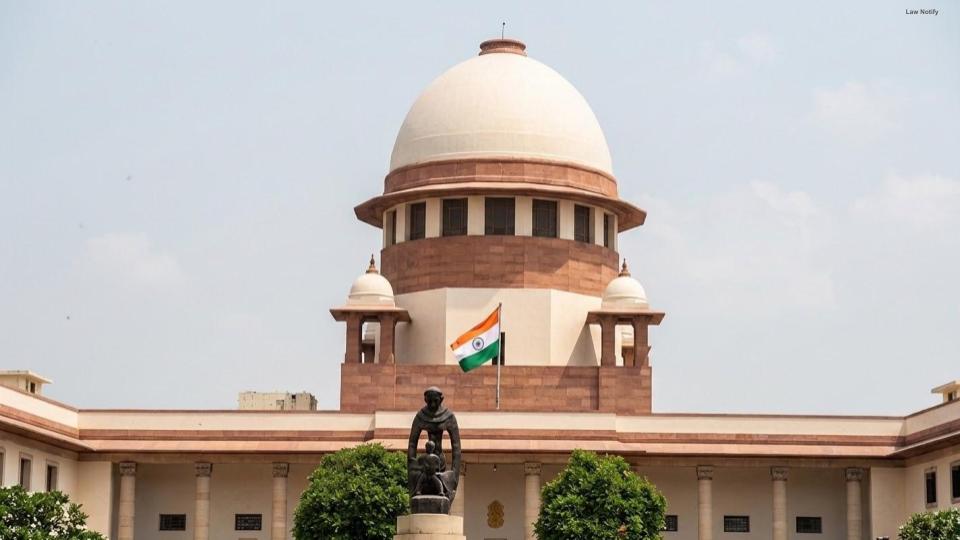
June 12, 2026 : The Supreme Court has declined to interfere with orders passed against a property owner in Goa accused of carrying out unauthorized construction and misusing premises for commercial activities, observing that assurances of future compliance cannot wipe out established violations of statutory and regulatory requirements.
A Bench comprising Justice Satish Chandra Sharma and Justice Sanjeev Sachdeva was hearing a petition challenging findings that the owner had exceeded the scope of permission granted for repair work and later used the property for commercial purposes in violation of applicable regulations.
During the proceedings, the petitioner argued that the premises were currently being used solely as a residential dwelling and offered to remove any construction found to be beyond the sanctioned permissions. The petitioner also gave an undertaking before the Court that the property would not be used for any purpose other than residential use in the future and sought protection from coercive action.
The Supreme Court, however, was not convinced by these submissions. Taking note of the inspection report and findings recorded by the authorities, which had already been upheld by the High Court, the Bench observed that the record clearly indicated commercial use of the premises beyond the scope of the permissions originally granted.
The Court emphasized that the issue was not limited to the property’s present use but concerned violations that had already been established. It held that promises of future compliance could not override findings regarding past breaches of law.
Expressing concern over the petitioner’s conduct, the Bench remarked that the owner appeared to have acted on the assumption that property ownership entitled him to undertake activities beyond the limits prescribed by law and regulatory permissions.
The Court also noted that authorities had already acted against several similarly situated structures found in violation of coastal and building regulations. Highlighting the need for consistency in enforcement, the Bench observed that eight other structures had already been demolished for similar violations. Granting protection to the petitioner despite proven breaches would create unequal treatment and undermine the rule of law.
Rejecting the argument that the petitioner had been selectively targeted, the Court held that no exceptional circumstances existed warranting intervention. Reiterating that post-facto undertakings and offers to rectify violations cannot by themselves justify judicial interference when evidence supports findings of unauthorized construction and misuse, the Bench found no legal infirmity in the conclusions reached by the authorities and affirmed by the High Court.
Accordingly, the Supreme Court dismissed the petition at the admission stage and refused to interfere with the High Court’s order.