News Citation : 2026 LN (HC) 372
June 15, 2026 : The Chhattisgarh High Court has quashed a recovery order directing a government college employee to pay more than ₹4.40 lakh for the alleged shortage of library books, holding that the action was taken without issuing a show-cause notice or providing an opportunity of hearing. The Court emphasized that any order resulting in civil consequences must comply with the principles of natural justice and due process.
The case arose from a petition filed by Dhanraj Singh, an Assistant Grade-III employee posted at Government College, Mohla, Rajnandgaon district. Singh had earlier worked as a Book Lifter at Government Lal Shyam Shah College, Manpur. After receiving a promotion and transfer in 2021, he was relieved from his previous post and was issued a No Dues Certificate. However, several months later, the college administration alleged that 2,651 library books were missing during a physical verification and issued an order on January 21, 2022, directing recovery of ₹4,40,193.60 from the employee in monthly installments spread over five years.
Before the High Court, the petitioner argued that no physical verification had been conducted at the time of his transfer and that he had been relieved from service without any objection regarding library inventory. He contended that the recovery order was passed behind his back, without a show-cause notice, departmental inquiry, charge memorandum, or any opportunity to explain his position. According to the petitioner, the authorities sought to impose financial liability retrospectively despite having issued a No Dues Certificate at the time of his transfer. He further argued that responsibility for library records could not be fastened exclusively on him when other officials, including library authorities and staff, were also involved in managing the institution’s assets.
The State opposed the petition and maintained that the employee had been entrusted with full responsibility for the library due to staff shortages. The government contended that the No Dues Certificate had been issued inadvertently and that the petitioner failed to hand over proper records or inventory details upon his transfer. It was argued that an inquiry committee constituted in September 2021 found significant shortages during physical verification and assessed the value of missing books at over ₹4.40 lakh. The State further claimed that the employee had participated in the verification process and that the recovery was based on factual findings arising from his negligence.
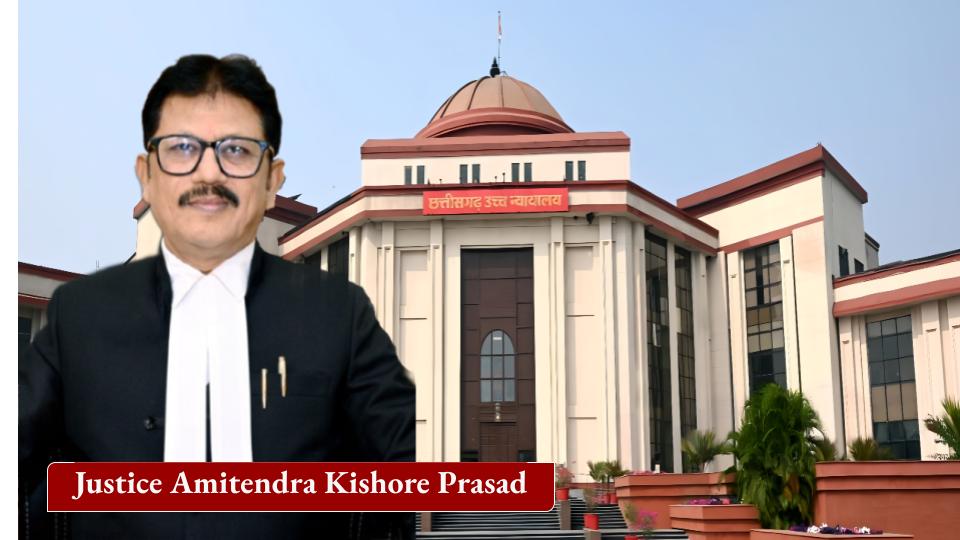
Justice Amitendra Kishore Prasad examined the record and noted that the petitioner had admittedly been granted a No Dues Certificate at the time of his relieving. The Court observed that if the authorities genuinely believed that the employee was responsible for the loss or misappropriation of books, such a certificate would ordinarily not have been issued. The Court found it significant that no objections regarding missing books or financial liability were raised when the petitioner left his previous posting.
The High Court reiterated the settled legal position that administrative actions carrying civil consequences must be preceded by a fair procedure. Referring to Supreme Court decisions in O.K. Bhardwaj v. Union of India, Uma Nath Pandey v. State of Uttar Pradesh, and State Bank of India v. Rajesh Agarwal, the Court stressed that the principle of audi alteram partem requires that no person should be condemned unheard. The Court quoted the established legal principle that “no one should be condemned unheard” and observed that notice and a reasonable opportunity to respond are essential safeguards against arbitrary administrative action.
The Court held that the authorities failed to follow these mandatory procedural requirements. It found that neither a show-cause notice was issued nor any proper inquiry conducted before directing recovery from the petitioner. According to the Court, the authorities should first have informed the employee of the allegations, considered his explanation, and afforded him a personal hearing before imposing any financial liability. “The respondent authorities ought to have issued a show cause notice to the petitioner at the first instance,” the Court observed, adding that any adverse action must follow due consideration of the employee’s reply and compliance with legal procedure.
Finding the recovery order legally unsustainable, the High Court set aside the January 21, 2022 order and declared that it suffered from a “manifest error of law.” However, the Court did not prevent the authorities from taking fresh action. It granted liberty to the department to initiate proceedings again in accordance with law by issuing notice, obtaining the employee’s response, conducting an inquiry, and thereafter passing a reasoned order if liability is established.
The ruling reinforces the constitutional guarantees of fairness under Articles 14 and 16 of the Constitution of India and serves as a reminder that government departments cannot impose recovery or other penal consequences on employees without adhering to procedural safeguards. The judgment is likely to have wider significance for public servants facing recovery proceedings, as it underscores that administrative convenience cannot override the fundamental requirement of natural justice.
Case Reference: Dhanraj Singh v. State of Chhattisgarh & Others, WPS No. 2258 of 2023.