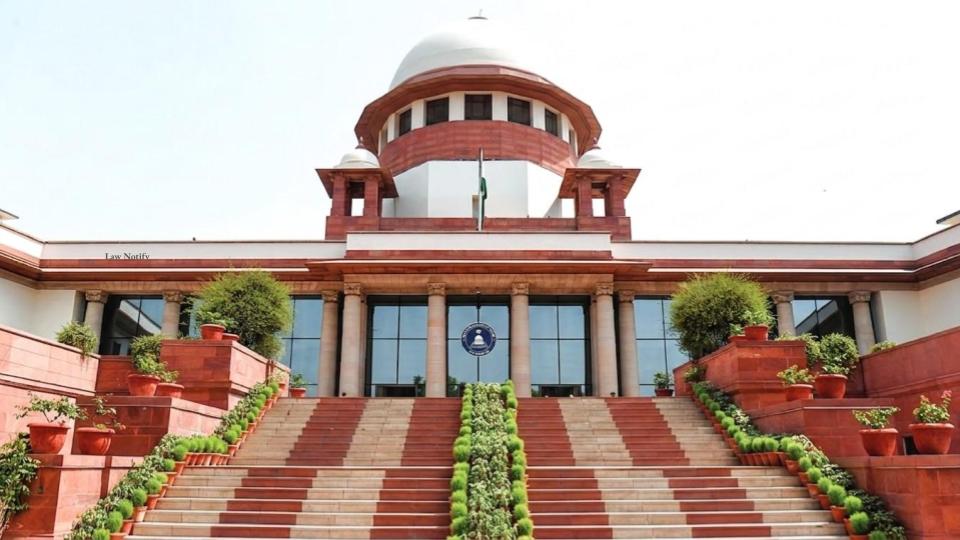
June 16, 2026 : The Supreme Court on Tuesday took suo motu cognisance of the plight of a visually impaired man and his elderly mother in Odisha, who were reportedly living in extreme poverty, and issued a series of directions to ensure they receive all welfare benefits, social security entitlements, housing assistance and basic amenities necessary for a life of dignity.
A Bench comprising Chief Justice of India (CJI) Surya Kant and Justice V. Mohana registered the matter earlier this week as a suo motu case concerning the welfare of differently-abled persons living in extreme poverty. The Court also directed the State of Odisha and the Odisha State Legal Services Authority (OSLSA) to submit detailed compliance reports on the assistance extended to the family.
The Court underscored that its concern was not merely the existence of welfare schemes on paper, but whether such schemes were effectively reaching vulnerable citizens and ensuring a dignified standard of living.
The proceedings were initiated after media reports highlighted the condition of Japa Bhue, who has been visually impaired since birth, and his elderly mother, Radhika Bhue, residents of Bagadia village in Odisha’s Subarnapur district.
During the hearing, the Bench noted that its primary concern was whether Japa Bhue and his mother were receiving the support and benefits they were legally entitled to under various government welfare schemes.
Counsel for the State of Odisha informed the Court that a dwelling unit had been allotted to Radhika Bhue and that Japa Bhue’s brothers had also received housing assistance. The State further submitted that Radhika Bhue receives an old-age pension of ₹3,500 per month, while Japa Bhue receives a disability pension of ₹3,500 per month. They were also stated to be beneficiaries of a free food grain scheme.
While recording these submissions, the Court directed authorities to verify the factual position and provide complete details of all benefits extended to the family.
The Bench ordered the State to file an affidavit through an officer not below the rank of Additional Chief Secretary, detailing whether Radhika Bhue had received her old-age pension, the amount paid, whether arrears had been cleared, and what other social security and welfare benefits under Central and State schemes were available and actually extended to her.
Similarly, the Court sought complete details regarding Japa Bhue’s entitlement to disability pension and other benefits available to persons with disabilities, along with information on the assistance currently being provided.
For an on-ground assessment, the Court directed Aravind Patnaik, Member Secretary of the Odisha State Legal Services Authority, to personally interact with the family and ensure all necessary support is arranged.
The Odisha State Legal Services Authority has also been directed to submit a comprehensive report on the family’s living conditions, housing status, welfare entitlements and any additional assistance required under applicable government schemes.
The Court further ordered that if immediate medical care is needed by either Radhika Bhue or Japa Bhue, the District Legal Services Authority must coordinate with the Chief Medical Officer to facilitate treatment and medical support.
In a notable move aimed at promoting inclusion and empowerment, the Bench directed that Japa Bhue be engaged as a para-legal volunteer. The Court observed that he could assist other persons with disabilities in understanding their legal rights and welfare entitlements under various government schemes. It further directed that he be paid an honorarium not less than the minimum wages prescribed by the State of Odisha under the Minimum Wages Act.
The Court also instructed the Odisha State Legal Services Authority to submit a separate report on the social security measures extended to both Radhika Bhue and Japa Bhue, including details regarding housing allotments.
Observing prima facie that Japa Bhue may be entitled to a separate dwelling unit under applicable housing schemes, the Bench directed the Legal Services Authority to examine his eligibility and, if warranted, pursue the matter with the State Government for appropriate relief.
Reiterating the State’s constitutional obligation toward vulnerable citizens, the Court directed Odisha authorities to ensure that all basic amenities and facilities necessary for a dignified life are made available to the mother and son until further orders.
The Court further directed that all status reports filed before it should contain complete particulars regarding welfare benefits, social security measures and housing assistance extended to both individuals.
The matter arose from media reports highlighting the family’s deteriorating living conditions despite apparent eligibility for several government welfare schemes. Reports indicated that while they had been receiving limited pension and food-grain assistance, they had not been able to access the full range of social security and housing benefits available to them.
The case is scheduled for further hearing in the third week of July. The State Government has been directed to ensure that all eligible benefits are extended in the interim and to place comprehensive compliance reports before the Court prior to the next hearing.