News Citation : 2026 LN (HC) 381
The Chhattisgarh High Court has upheld the conviction of a man who falsely posed as a qualified medical practitioner and treated patients using forged credentials, holding him criminally liable for the death of a patient caused by negligent treatment. In a significant judgment addressing the dangers posed by unqualified medical practitioners, the High Court dismissed a criminal appeal filed by Seemanchal Swai and directed authorities to execute a permanent warrant for his arrest so that he can serve the remainder of his sentence.
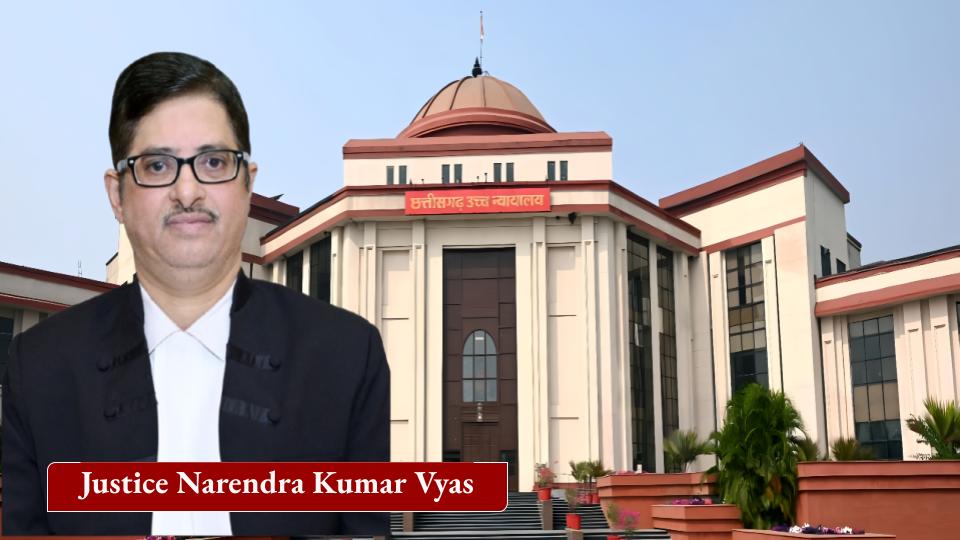
The judgment was delivered by the High Court of Chhattisgarh at Bilaspur on June 15, 2026, in Criminal Appeal No. 1422 of 2000. Justice Narendra Kumar Vyas affirmed the trial court’s findings that the appellant had fraudulently used a forged medical qualification certificate and negligently administered treatment that resulted in a patient’s death.
The case dates back to August 1996 when a complaint was lodged regarding the death of Basant Prabhakar. According to the prosecution, the deceased had been suffering from breathing difficulties and was undergoing treatment from Seemanchal Swai, who represented himself as a doctor. The complainant alleged that after injections were administered by the accused, the patient developed swelling and blisters at the injection site and later died. It was also alleged that the accused falsely claimed to possess MBBS and MD qualifications and practiced medicine using forged credentials. Based on the complaint and subsequent investigation, police registered an FIR and initiated criminal proceedings.
Following investigation, the prosecution filed a charge sheet alleging offences under Section 471 of the Indian Penal Code, which deals with the fraudulent use of forged documents as genuine, and Section 304-A IPC, which punishes causing death by negligence. The trial court eventually convicted the accused and sentenced him to three years’ rigorous imprisonment under Section 471 IPC along with a fine of ₹1,000 and one year’s rigorous imprisonment under Section 304-A IPC, with both sentences directed to run concurrently.
The appeal remained pending for more than two decades. Court records revealed that the appellant was granted bail in June 2000 but subsequently disappeared and could not be traced despite repeated notices, warrants, and directions issued over the years. Reports submitted before the High Court indicated that he had not been residing at the address provided to the court for nearly two decades. The court ultimately appointed legal aid counsel to represent him after repeated efforts to secure his presence failed.
Before the High Court, the defence argued that key prosecution witnesses had not fully supported the case and contended that the prosecution had failed to establish the essential ingredients of the offences beyond reasonable doubt. It was further submitted that the alleged forged certificate had not been properly proved and that there was insufficient evidence linking the treatment administered by the appellant to the patient’s death. Alternatively, the defence sought a reduction of sentence, citing the long passage of time since the incident.
The State opposed the appeal and argued that the conviction was supported by both oral and documentary evidence. The prosecution relied on testimony establishing that the medical registration certificate used by the appellant had actually been issued in the name of another individual and not to him. Witnesses also testified regarding the seizure of signboards displaying medical qualifications allegedly possessed by the accused, including MBBS and MD degrees. When called upon during the investigation to produce records supporting his qualifications, the accused failed to furnish any valid documents.
After examining the evidence, the High Court concluded that the prosecution had successfully established that the appellant was not a registered medical practitioner and had used forged credentials while holding himself out as a qualified doctor. The court found that he administered injections and medical treatment despite lacking the qualifications, training, and legal authority required to do so.
Explaining the legal basis for sustaining the conviction under Section 304-A IPC, the court observed that the appellant’s conduct went beyond a mere error in medical judgment. The court emphasized that he knowingly practiced medicine without possessing any recognized qualification and exposed patients to serious risks. The judgment noted that he “had administered injection to the victim without having either a degree or a qualification or knowledge to do so” and described him as “only a quack” who had committed fraud upon the victim by falsely presenting himself as a doctor.
The High Court further observed, “He did not have the qualification of a doctor yet he projected himself as one. He had played with the life of the victim which has resulted into his death.” According to the court, these facts clearly established negligence sufficient to attract criminal liability under Section 304-A IPC.
In its legal analysis, the court relied on the Supreme Court’s decision in Ravi Kapur v. State of Rajasthan (2012), which explained the concept of criminal negligence, and Poonam Verma v. Ashwin Patel (1996), where the Supreme Court held that practicing a system of medicine without possessing the requisite qualifications constitutes “negligence per se.” The High Court noted that the principles laid down by the Supreme Court squarely applied to the facts of the present case.
The court also affirmed the conviction under Section 471 IPC. It held that the prosecution had proved beyond reasonable doubt that the appellant knowingly used a forged certificate belonging to another person and dishonestly projected it as his own qualification. The evidence demonstrated that the certificate relied upon by the appellant had never been issued in his name and that he was fully aware of its fraudulent nature.
Dismissing the appeal in its entirety, the High Court concluded that the trial court’s findings were neither perverse nor illegal and required no interference. The court directed the concerned trial court to issue a permanent warrant against the appellant and instructed the Superintendent of Police to ensure its execution. Authorities have also been directed to secure the appellant’s presence so that he can undergo the remaining portion of the sentence, after granting statutory set-off for the period already spent in custody following his conviction in 2000.
The ruling carries wider significance in the ongoing efforts to curb illegal medical practice and protect patients from unqualified practitioners. The judgment reinforces the principle that individuals who falsely claim medical expertise and treat patients without recognized qualifications can face not only regulatory consequences but also criminal liability when their actions result in injury or death. It also serves as a warning against the use of forged educational and professional credentials, particularly in professions involving public health and safety.
Case Reference : Seemanchal Swai v. State of Chhattisgarh, CRA No. 1422 of 2000