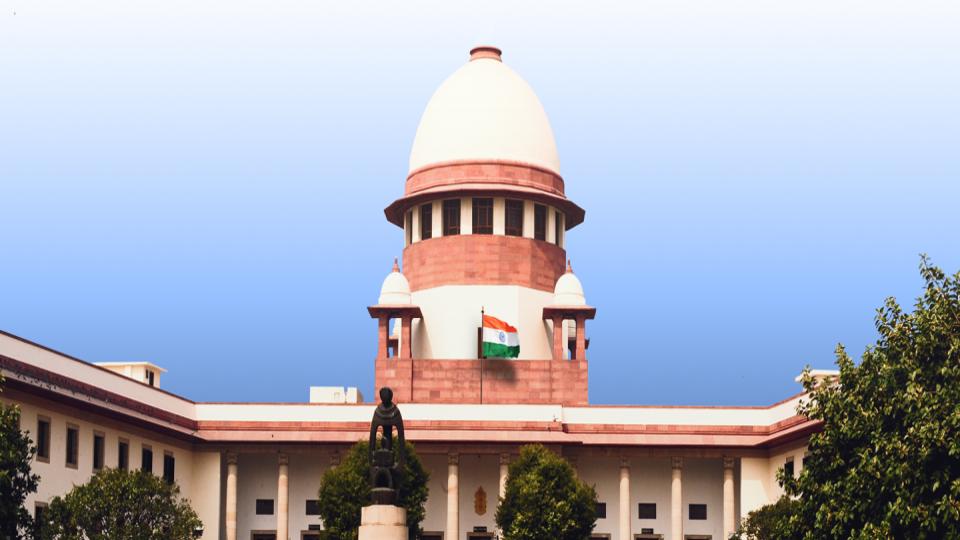
June 4, 2026 : The Supreme Court has strongly criticised the Pharmacy Council of India (PCI) for repeatedly seeking extensions to the regulatory approval and admission schedule for pharmacy institutions, observing that regulatory authorities themselves were contributing to the decline in educational standards by failing to adhere to court-mandated timelines.
A Bench comprising Justice Manmohan and Justice K. Vinod Chandran expressed serious concern over the recurring deviations from the academic calendar prescribed by the Supreme Court in its landmark 2012 judgment in Parshavanath Charitable Trust v. All India Council for Technical Education (AICTE). The Bench noted that despite the schedule remaining in force for nearly 14 years, the PCI had continued to approach the Court almost every year seeking extensions.
During the hearing, the Court questioned the manner in which the PCI was administering the approval process and orally remarked that the regulator appeared to be acting in concert with private colleges. The Bench observed that if governments and statutory regulatory authorities themselves failed to follow prescribed timelines, private educational institutions could hardly be expected to maintain discipline. It further stated that the erosion of educational standards was largely attributable to regulatory failures rather than the institutions alone.
The Court recalled that the uniform academic calendar introduced in the 2012 judgment was intended to ensure timely grant of approvals, affiliations, counselling and admissions so that academic sessions commence on schedule without disrupting professional education. However, despite repeated judicial directions, the PCI had continued to seek extensions year after year.
Appearing for the PCI, counsel submitted that the delay was caused by administrative reasons, including the extension granted for submission of Standard Inspection Format (SIF) applications until February 28, 2026. The Bench was not persuaded by the explanation, observing that the regulator had been aware of the prescribed timelines since 2012 and should have developed an effective administrative mechanism to ensure compliance.
The Supreme Court also rejected the PCI’s attempt to rely on disruptions caused by the Covid-19 pandemic, stating that the pandemic could no longer be cited as a justification for recurring delays several years after normal functioning had resumed.
While expressing its displeasure, the Court nevertheless agreed to extend the approval and admission schedule for the current academic year as a one-time measure in the interest of students and educational institutions. At the same time, it made it clear that the relief was being granted only in exceptional circumstances and would not serve as a precedent for future academic sessions.
The Bench directed the PCI to file an affidavit within three days undertaking that it would strictly comply with the court-prescribed timelines from the next academic year onwards. The matter has been listed for further hearing next week.
The miscellaneous application before the Court sought an extension of the timelines governing regulatory approvals, affiliations, counselling and admissions fixed under the 2012 Parshavanath Charitable Trust judgment. The Supreme Court observed that repeated departures from the judicially mandated academic calendar undermine its integrity and ultimately shift the consequences of regulatory inefficiency onto students and educational institutions.