News Citation : 2026 LN (HC) 396
July 17, 2026 : In an important ruling clarifying the limits of revenue authorities’ powers in land disputes, the Chhattisgarh High Court has held that although the transfer of government lease land without the Collector’s prior permission may violate the Chhattisgarh Land Revenue Code, a Revenue Court or Collector has no jurisdiction to declare a registered sale deed null and void. The Court ruled that such a declaration can be made only by a competent Civil Court exercising powers under the Specific Relief Act.
The judgment came while deciding three connected writ petitions arising out of disputes relating to land originally allotted by the State Government through a patta (lease) in Gariyaband district. The Court partly allowed the petitions by setting aside that portion of the Collector’s orders which declared the registered sale deeds void, while preserving the State Government’s liberty to challenge the transactions before the appropriate Civil Court.
The dispute concerned agricultural land bearing Khasra No. 147/2 situated in Village Gariyaband. According to the record, the land was originally government grassland and was subsequently converted into cultivable land. Thereafter, a patta was granted in favour of Daya Ram, who later acquired Bhoomiswami rights under the Chhattisgarh Land Revenue Code. Following his death, his legal heirs inherited the property and eventually sold it through a registered sale deed to petitioner Sheikh Hameed, whose name was mutated in the revenue records.
Subsequently, the Tehsildar initiated proceedings alleging that the transfer had been made without obtaining prior permission from the Collector as required under Sections 158(3) and 165(7-b) of the Chhattisgarh Land Revenue Code, 1959. Acting on reports submitted by the Tehsildar and the Sub-Divisional Officer (Revenue), the Collector concluded that since the land originated from a government lease, the sale was contrary to the statutory provisions. The Collector declared the registered sale deed void and directed that the land be recorded in the name of the State Government.
Before the High Court, the petitioners argued that the Collector had exceeded the jurisdiction vested in revenue authorities. They contended that after expiry of the statutory ten-year restriction, the original allottee had acquired full Bhoomiswami rights and no prior permission was necessary for transfer. They further submitted that even if the sale violated the Land Revenue Code, the Collector had no authority to invalidate a registered sale deed because such power belongs exclusively to Civil Courts.
The State Government defended the Collector’s action by arguing that land originating from a government lease continues to retain that character and cannot be transferred without prior permission under Section 165(7-b) of the Code. According to the State, any transfer made in violation of these statutory provisions is illegal and could therefore be treated as void by the revenue authorities.
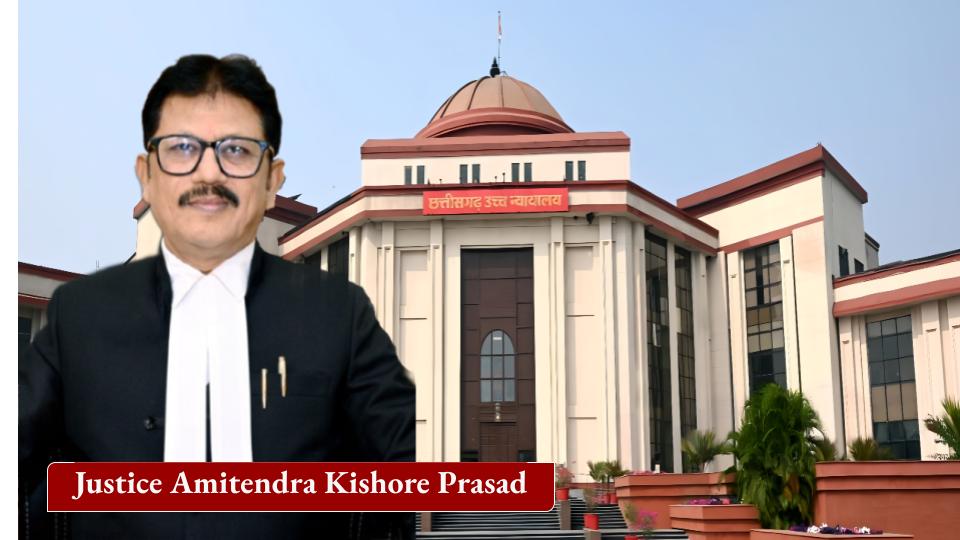
After examining the statutory framework, Justice Amitendra Kishore Prasad framed four principal legal questions relating to the nature of the land, the requirement of prior permission, the validity of transfers made without such permission, and the jurisdiction of Revenue Courts to invalidate registered sale deeds.
On the first issue, the Court found that the land was unquestionably government lease land. Although Bhoomiswami rights had subsequently accrued in favour of the allottee by operation of law, the land continued to retain its original character as government-allotted land.
Interpreting Sections 158(3) and 165(7-b) of the Chhattisgarh Land Revenue Code, the Court observed that persons holding land originally granted by the State Government or Collector cannot transfer such land without obtaining prior permission from a Revenue Officer not below the rank of Collector, unless covered by the statutory exceptions. The Court observed that “once land has its origin in a government lease… it retains its character as leased land,” making prior permission mandatory before any transfer.
The Court further held that any sale executed in violation of these provisions is contrary to law. However, the judgment drew a clear distinction between the illegality of a transaction and the authority competent to declare a registered document invalid.
On the crucial jurisdictional issue, the High Court ruled that Revenue Courts cannot cancel or declare a registered sale deed null and void. Referring to Section 54 of the Transfer of Property Act, 1882 and Section 31 of the Specific Relief Act, 1963, the Court explained that cancellation or declaration of invalidity of a registered instrument lies exclusively within the jurisdiction of Civil Courts.
The Court observed that, “The power to grant a declaration setting aside the registered sale deed vests exclusively within the domain of the Civil Courts. Such jurisdiction does not vest in the Revenue Courts.” It further clarified that “Even if it is assumed that the sale deed was executed without prior permission under Section 165(7-b) of the Code, the Revenue Court is still incompetent to declare the registered sale deed null and void.”
Justice Prasad also relied upon the Supreme Court’s decision in Asset Reconstruction Company (India) Ltd. v. S.P. Velayutham, (2022) 8 SCC 210, wherein the Supreme Court held that challenges to the validity of registered sale deeds must ordinarily be decided by Civil Courts. The Supreme Court had distinguished between cancellation of registration on procedural grounds and declaration that the execution of a document itself is void, holding that the latter falls exclusively within the Civil Court’s jurisdiction.
Applying those principles, the High Court concluded that the Collector had exceeded the statutory limits of revenue jurisdiction by declaring the sale deeds void. According to the Court, although the State may believe the transfers violated the Land Revenue Code, the proper remedy is to institute appropriate civil proceedings instead of deciding the validity of registered sale deeds through revenue proceedings.
Accordingly, the High Court set aside the Collector’s orders only to the extent they declared the sale deeds null and void. At the same time, the Court expressly reserved liberty in favour of the State Government to pursue appropriate remedies before the competent Civil Court in accordance with law. The remaining observations in the Collector’s orders were left undisturbed, and all three writ petitions were disposed of with these directions.
The judgment is significant for land administration in Chhattisgarh because it clearly demarcates the powers of Revenue Authorities and Civil Courts. While revenue officials may examine compliance with the provisions of the Chhattisgarh Land Revenue Code and initiate action where statutory violations are alleged, they cannot assume the role of Civil Courts by cancelling or declaring registered conveyance deeds invalid. The ruling reinforces the principle that disputes concerning the validity of registered property transactions must ultimately be adjudicated by competent Civil Courts, thereby safeguarding procedural fairness and the statutory framework governing property rights.
Case Reference: Sheikh Hameed v. State of Chhattisgarh & Others, WPC No. 2349 of 2022 (along with WPC No. 2439 of 2022 and WPC No. 4192 of 2022)