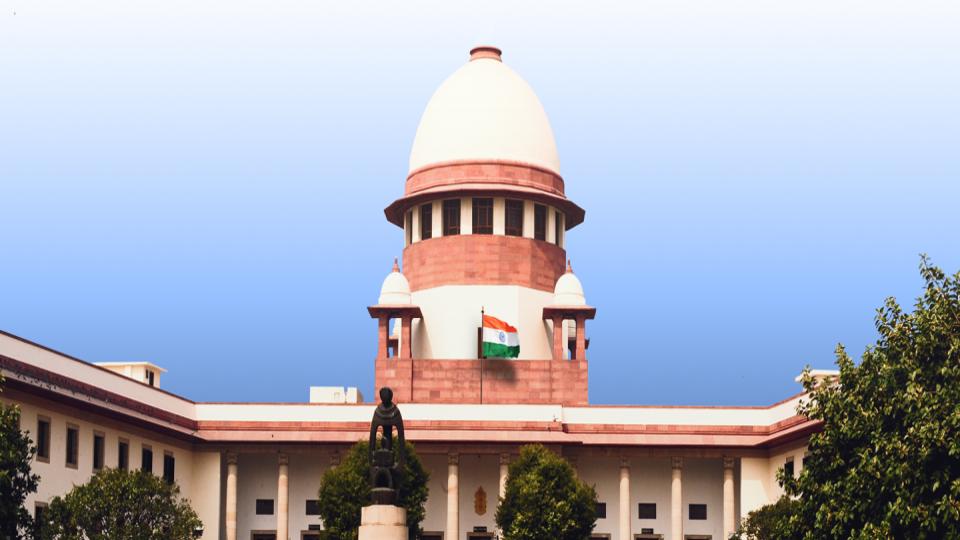
July 30, 2026 : The Supreme Court on Thursday reserved its decision on whether a batch of petitions challenging the constitutional validity of the Chief Election Commissioner and Other Election Commissioners (Appointment, Conditions of Service and Term of Office) Act, 2023 should be referred to a Constitution Bench for authoritative adjudication.
A Bench comprising Justice Dipankar Datta and Justice Satish Chandra Sharma heard arguments on petitions questioning the legality of the 2023 legislation, which governs the appointment of the Chief Election Commissioner (CEC) and Election Commissioners. The petitions contend that the law gives the executive excessive control over appointments, thereby compromising the independence of the Election Commission of India.
During the hearing, the Bench observed that although judicial appointment mechanisms have also evolved over time, the process for appointing members of an independent constitutional institution must not only be fair but should also visibly inspire public confidence. The Court examined the composition of the selection committee under the 2023 Act, which consists of the Prime Minister, the Leader of the Opposition in the Lok Sabha and a Union Cabinet Minister. It noted that this structure provides the executive with a two-to-one numerical majority in the selection process.
The judges clarified that there was no reason to question the integrity of the Prime Minister or the fairness of those involved in the appointment process. However, they emphasized that the institutional design of the mechanism should itself reflect fairness and reinforce the independence expected of a constitutional body entrusted with conducting free and fair elections.
The Bench also referred to concerns expressed by Dr. B.R. Ambedkar regarding the functioning of democracy and sought information from the Union government on the number of States where serving ministers are facing criminal cases.
Appearing for the Union government, Solicitor General Tushar Mehta argued that the petitions involve substantial constitutional questions requiring interpretation by a larger Bench under Article 145(3) of the Constitution. He submitted that the Supreme Court’s Constitution Bench judgment in Anoop Baranwal v. Union of India was intended only as an interim arrangement to address a legislative vacuum until Parliament enacted a law. According to the Union, Parliament’s legislative wisdom cannot be permanently restricted by a judicial arrangement framed in the absence of legislation.
The Court, however, observed that matters referred to Constitution Benches often remain pending for several years. It indicated that before deciding whether such a reference is necessary, it would first examine the merits of the challenge.
Attorney General R. Venkataramani also supported the Union government’s request for referring the matter to a Constitution Bench.
Opposing the request, Advocate Prashant Bhushan and Senior Advocates Vijay Hansaria, Shadan Farasat and Gopal Sankaranarayanan argued that the constitutional issues had already been conclusively decided by the Constitution Bench in Anoop Baranwal v. Union of India. They submitted that the 2023 Act effectively restores executive dominance in the appointment process, contrary to the constitutional mandate under Article 324, which requires the Election Commission to function as an independent constitutional authority to ensure free and fair elections.
The Supreme Court has reserved its order on the limited question of whether the challenge to the 2023 law should be placed before a Constitution Bench, a decision that could determine the future course of one of the most significant constitutional disputes concerning the independence of India’s electoral institutions.