News Citation : 2026 LN (HC) 415
August 5, 2026 : In a significant ruling on disciplinary proceedings against government servants, the Chhattisgarh High Court has held that a departmental charge-sheet issued nearly fifteen years after the employer became aware of the alleged misconduct cannot be sustained in law. The Court quashed disciplinary proceedings initiated against senior State Police Service officer Irfan-Ul-Rahim Khan, observing that an unexplained and inordinate delay defeats the principles of fairness and amounts to an abuse of disciplinary jurisdiction.
The petitioner, Irfan-Ul-Rahim Khan, was serving as In-charge Superintendent of Police, Police Training School, Mana, Raipur, while also holding the additional charge of Additional Superintendent of Police, Bilaspur. He approached the High Court under Article 226 of the Constitution seeking to set aside a memorandum of charges dated 14 February 2023 and all disciplinary proceedings arising from it. The charge-sheet alleged violation of Rule 22(1) of the Chhattisgarh Civil Services (Conduct) Rules, 1965 for contracting a second marriage without obtaining prior government permission.
According to the petitioner, he married his second wife in 2007 after remaining childless in his first marriage for several years and claimed that the marriage was permissible under his personal law with the consent of his first wife. He submitted an application in June 2008 seeking permission under Rule 22(1) of the Conduct Rules. He further argued that the government neither granted nor rejected the application for years. The dispute resurfaced only after complaints were lodged by his second wife between 2017 and 2019, following the breakdown of the marriage and their subsequent divorce in 2016. The petitioner contended that despite the authorities having knowledge of the second marriage since 2008, disciplinary proceedings were initiated only in 2023 without any explanation for the delay.
The State opposed the petition and argued that the petitioner had already contracted the second marriage before seeking permission, thereby violating Rule 22(1). It further claimed that the application for permission had been rejected in 2013 and that an internal inquiry commenced in 2020 before issuance of the charge-sheet. The State also relied on judicial precedents emphasizing that service conduct rules prevail over personal law in matters relating to second marriages by government employees. Respondent No. 6, the petitioner’s former wife, supported the State’s stand.
After examining the record, the High Court found that the petitioner had voluntarily disclosed the second marriage by filing the permission application in 2008. The Court observed that once the employer became aware of the alleged misconduct, it failed to initiate disciplinary proceedings for nearly fifteen years. Even after internal communications in September 2019 acknowledged that the permission application was still under consideration, the charge-sheet was issued only in February 2023. The Court noted that the State’s claim that the application had been rejected in 2013 could not be accepted because there was neither any pleading nor documentary evidence supporting that assertion. On the contrary, official records and information obtained under the Right to Information Act indicated that the application remained under consideration.
The Court emphasized that although no statutory limitation period governs disciplinary proceedings, such proceedings must begin within a reasonable time. It explained that prolonged and unexplained delay undermines fairness because evidence may disappear, witnesses may become unavailable, and the employee loses an effective opportunity to defend himself. The judgment observed that “The object of disciplinary proceedings is to maintain administrative discipline and not to keep a sword hanging over the head of an employee indefinitely.”
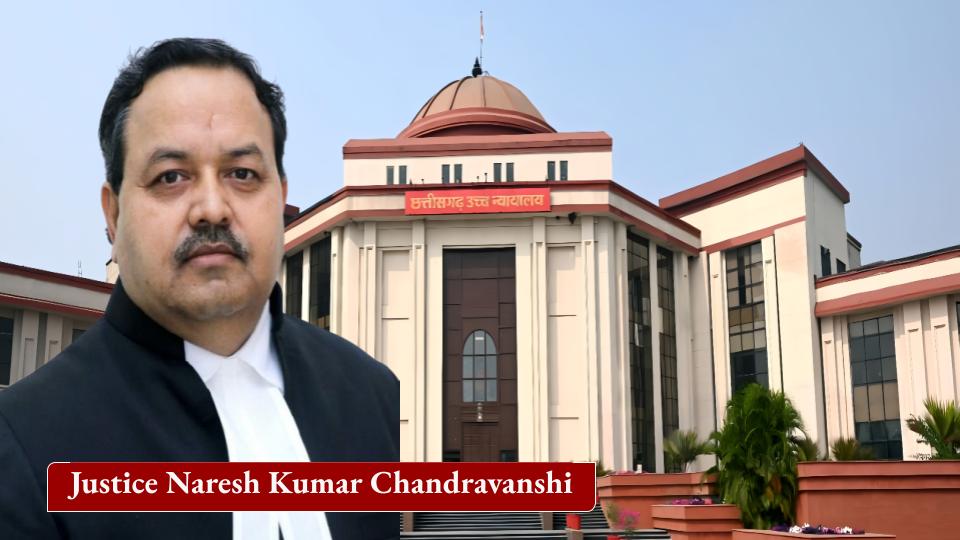
Justice Naresh Kumar Chandravanshi relied on the Supreme Court decisions in State of Punjab v. Chaman Lal Goyal, State of Madhya Pradesh v. Bani Singh, Amresh Shrivastava v. State of Madhya Pradesh, and State of M.P. v. R.N. Mishra. Referring to the doctrine of condonation of misconduct, the Court held that where an employer knowingly allows an employee to continue in service for years without initiating disciplinary action, it may amount to condoning the alleged misconduct. In the present case, the petitioner continued in service, earned promotions, and was entrusted with important assignments despite the department’s knowledge of the second marriage since 2008.
The High Court also clarified that the State’s reliance on the Supreme Court judgment in Union of India v. Pranab Kumar Nath was misplaced. While that decision reaffirmed that service conduct rules prevail over personal law regarding second marriages, the present dispute was not about the legality of the marriage itself. Instead, the controversy concerned whether disciplinary proceedings initiated after an extraordinary and unexplained delay could legally continue. The Court concluded that the precedent did not assist the respondents.
Holding that continuation of the proceedings would be arbitrary and unfair, the Court ruled that the memorandum of charges dated 14 February 2023 was legally unsustainable. It observed that “Permitting the disciplinary proceedings against the petitioner to continue would be arbitrary, unfair and an abuse of the disciplinary jurisdiction.” Consequently, the charge-sheet and all consequential disciplinary proceedings were quashed, and the writ petition was allowed without any order as to costs.
The judgment reinforces an important principle in service jurisprudence that while government employees are bound by service conduct rules, disciplinary authorities must exercise their powers promptly and fairly. The ruling serves as a reminder that unexplained administrative inaction extending over many years can invalidate disciplinary proceedings, particularly where the employer had full knowledge of the alleged misconduct and permitted the employee to continue in service without objection. It is likely to have significant implications for future service law disputes involving delayed departmental action against public servants.
Case Reference: Irfan-Ul-Rahim Khan v. State of Chhattisgarh & Others, WPS No. 1883 of 2023, 2026:CGHC:34039