News Citation : 2026 LN (HC) 416
August 4, 2026 : In a significant ruling on service jurisprudence and compassionate appointment, the Chhattisgarh High Court has held that a government employee cannot be dismissed after his death on the basis of a pending departmental inquiry. Setting aside the termination order issued against a deceased employee, the Court ruled that disciplinary proceedings ordinarily come to an end upon the employee’s death and any order passed thereafter is legally unsustainable. The Court further directed the competent authority to reconsider the deceased employee’s widow’s claim for compassionate appointment within 90 days in accordance with the applicable policy.
The writ petition was filed by Archana Shrivastava, widow of late Vedant Shrivastava, and his father, Brajendra Prasad Shrivastava. Late Vedant Shrivastava had been appointed as a Lab Attendant at the Institute of Hotel Management, Catering Technology and Applied Nutrition, Nava Raipur, in 2011. His services were confirmed in 2013. However, in 2019, the institute issued a show-cause notice alleging irregularities in his initial appointment, claiming that the reservation roster had not been followed and that the experience certificate submitted by him did not conform to the advertisement requirements. Similar notices had also been issued to other employees appointed through the same process.
The employee challenged the show-cause notice before the High Court in an earlier writ petition and obtained interim protection. The matter was later disposed of in April 2024 with a direction to the employer to consider his reply after granting him an opportunity of hearing. While the departmental inquiry was still pending, Vedant Shrivastava died on 19 February 2025 before any final decision could be taken. His widow thereafter applied for compassionate appointment on 6 March 2025. Despite his death, the institute issued a termination order on 15 May 2025 and subsequently rejected the widow’s application for compassionate appointment on 5 August 2025 solely on the ground that the deceased employee’s services had already been terminated.
Before the High Court, the petitioners argued that once the employee had died, the pending disciplinary proceedings automatically abated and there was no legal authority to continue the inquiry or issue a dismissal order thereafter. They relied upon the Supreme Court’s judgment in A.K.S. Rathore (Dead) through LRs v. Union of India, Civil Appeal No. 7028 of 2022, as well as State Government circulars dated 3 March 2012 and 13 July 2026, which recognize that disciplinary proceedings lapse upon the death of the employee. They contended that since the termination order itself was void, the rejection of compassionate appointment based upon that order was equally illegal.
The institute opposed the petition, contending that departmental proceedings could continue even after the employee’s death. It relied upon a judgment of the Jharkhand High Court in Nilam Dubey v. State of Jharkhand, arguing that the employer was entitled to complete the inquiry and that, following the termination order, the employer-employee relationship had ceased, rendering the widow ineligible for compassionate appointment.
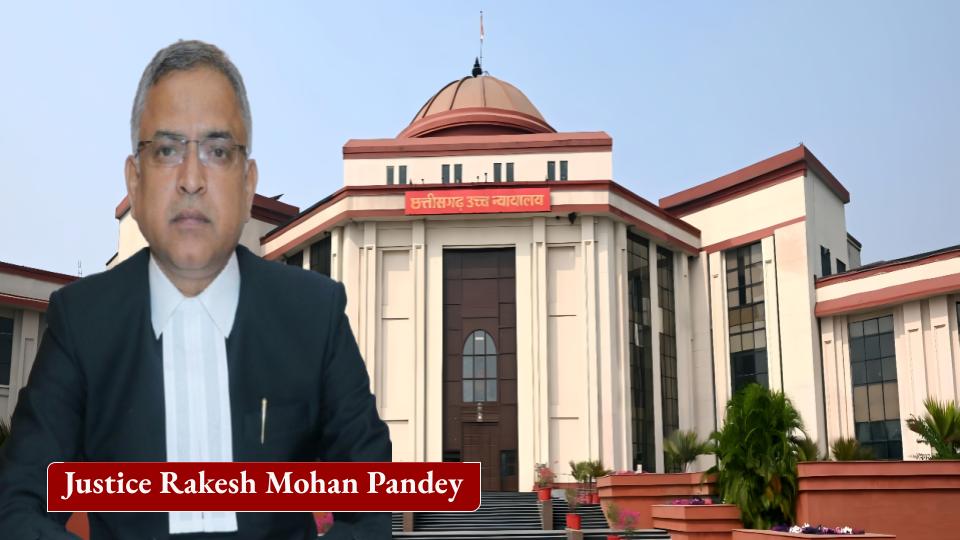
After examining the record, Justice Rakesh Mohan Pandey observed that the allegations against the deceased employee related only to the legality of his appointment and the format of his experience certificate. There were no accusations of financial misconduct, embezzlement, or misappropriation of public funds. The Court distinguished such service-related allegations from cases involving recovery of government money, where limited continuation of proceedings against legal representatives may be permissible for determining recoverable dues.
Referring to the Supreme Court’s decision in A.K.S. Rathore, the High Court reiterated that “no disciplinary proceeding can be initiated or continued against a dead person” and that such proceedings stand abated on the employee’s death. The Court also noted that while the Jharkhand High Court had recognized an exception in cases involving allegations of misappropriation or financial loss, that principle had no application in the present case because the allegations concerned only the validity of the appointment process.
The Court held that continuation of the disciplinary inquiry after Vedant Shrivastava’s death was unwarranted and declared that the termination order dated 15 May 2025 was “illegal and arbitrary” and incapable of being sustained in law. Since the widow’s application for compassionate appointment had been rejected solely because of that termination order, the subsequent rejection order dated 5 August 2025 was also quashed.
Allowing the writ petition, the High Court directed the Institute of Hotel Management to reconsider Archana Shrivastava’s application for compassionate appointment strictly in accordance with the prevailing compassionate appointment policy. The competent authority has been directed to complete the exercise within 90 days from receipt of the Court’s order.
The judgment reinforces an important principle of Indian service law that disciplinary proceedings generally lapse upon the death of an employee unless the case involves exceptional circumstances such as recovery of losses arising from financial misconduct. The ruling also protects the rights of dependent family members by preventing authorities from relying on legally unsustainable posthumous disciplinary orders to deny compassionate appointment or other service benefits. For government departments and public institutions, the decision serves as a reminder that administrative actions affecting the rights of deceased employees’ families must strictly comply with established legal principles and judicial precedents.
Case Reference: Archana Shrivastava & Anr. v. State of Chhattisgarh & Others, WPS No. 9912 of 2025, 2026:CGHC:33940,