News Citation : 2026 LN (HC) 417
August 6, 2026 : In a significant ruling reinforcing the settled principle that election disputes should ordinarily be resolved through the statutory mechanism provided under law, the Chhattisgarh High Court has declined to entertain a writ petition challenging the election process of the District Minor Forest Produce Co-operative Federation, Mahasamund. Holding that the Chhattisgarh Cooperative Societies Act, 1960 provides a complete and effective remedy for election-related disputes, the Court directed the petitioners to approach the competent authority under Section 64(2)(v) of the Act instead of invoking the writ jurisdiction under Article 226 of the Constitution.
The petition was filed by four individuals who questioned the legality of orders dated 24 August 2022 and 26 August 2022 passed by the election authorities in connection with the election of the District Minor Forest Produce Co-operative Federation, Mahasamund. They sought quashing of the impugned orders, setting aside of the election results, and a direction for conducting a fresh election. Alternatively, the petitioners requested that certain voters, including two of the petitioners, who were allegedly prevented from casting their votes, be permitted to vote and that the votes already cast be recounted before declaring the final result.
The petitioners argued that several eligible voters and prospective candidates had been unlawfully denied the opportunity to participate in the electoral process. According to them, the exclusion of eligible voters rendered the election arbitrary, illegal and violative of their legal rights. On this basis, they contended that the High Court could exercise its extraordinary jurisdiction under Article 226 of the Constitution to examine the legality of the election process and the impugned orders.
The respondents, however, raised a preliminary objection regarding the maintainability of the writ petition. It was argued that Section 64(2)(v) of the Chhattisgarh Cooperative Societies Act, 1960 specifically provides that any dispute arising in connection with the election of an officer or representative of a cooperative society must be decided by the Registrar. The respondents submitted that the statutory remedy was complete and effective and that disputed questions of fact relating to elections could not be adjudicated in writ proceedings.
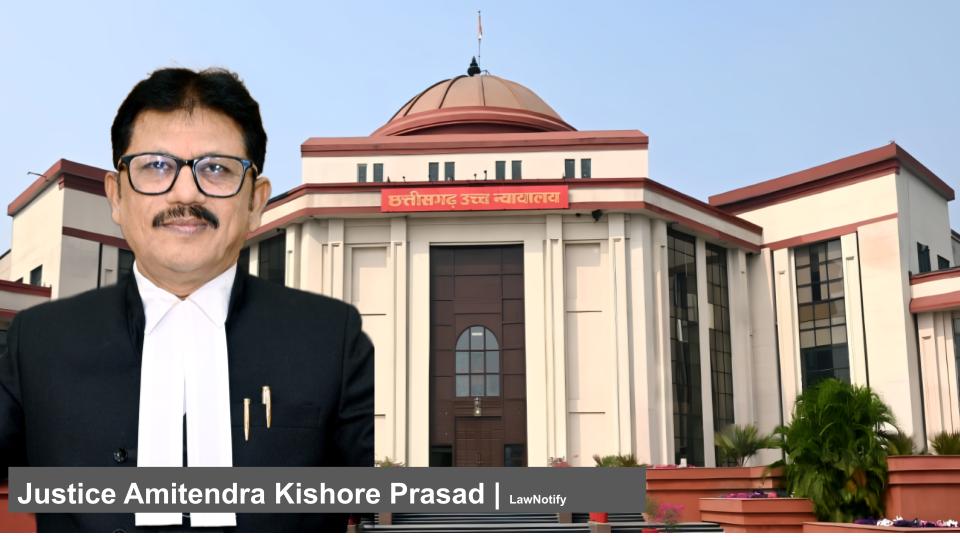
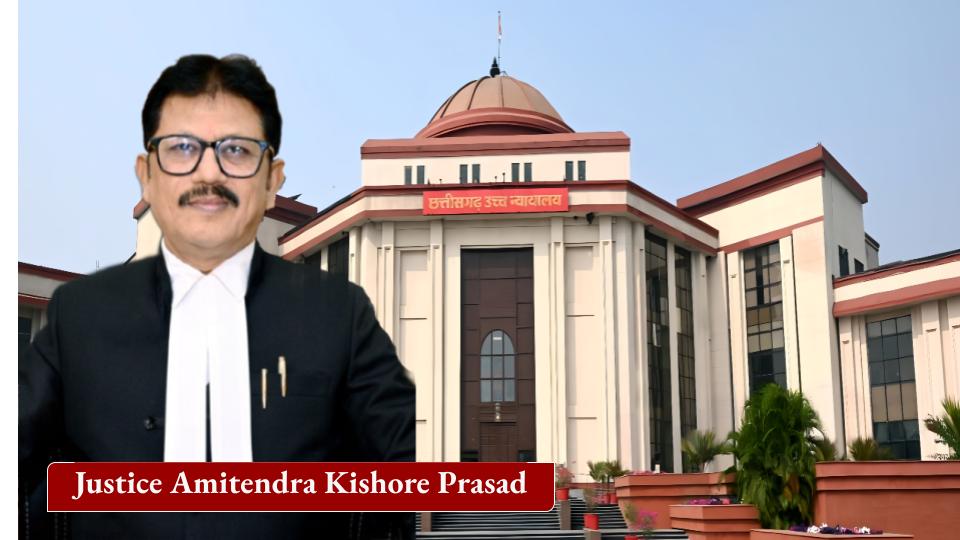
After considering the rival submissions, Justice Amitendra Kishore Prasad examined Section 64(2)(v) of the Cooperative Societies Act, 1960, which expressly includes disputes connected with cooperative society elections within the jurisdiction of the Registrar. The Court observed that where the legislature has created a specialised forum for adjudicating election disputes, parties must ordinarily avail themselves of that statutory remedy instead of directly approaching the High Court.
While dismissing the writ petition as not maintainable, the Court relied extensively on the recent Supreme Court judgment in Ram Chandra Choudhary & Others v. Roop Nagar Dugdh Utpadak Sahakari Samiti Limited & Others (2026 SCC OnLine SC 583). The Supreme Court had reiterated that although the existence of an alternative remedy is not an absolute bar to the exercise of writ jurisdiction, High Courts should ordinarily refrain from entertaining election disputes where an effective statutory mechanism exists. The judgment emphasised that specialised forums created under election statutes are intended to resolve such disputes and should not be bypassed.
The High Court also relied on the Supreme Court’s decision in Meenakshi Natarajan v. Election Commission of India (2026 SCC OnLine SC 1133), wherein the apex court reaffirmed the constitutional principle laid down in the landmark judgment of N.P. Ponnuswami v. Returning Officer, Namakkal Constituency (1952). The Supreme Court has consistently held that courts should avoid interfering with election processes through writ jurisdiction when the law provides a specific mechanism for challenging elections after the completion of the electoral process.
Explaining the legal position in simple terms, the High Court observed that election laws are designed to ensure that electoral disputes are resolved by designated authorities rather than through parallel proceedings before constitutional courts. This approach prevents disruption of elections and ensures uniform adjudication of disputes by specialised forums.
The Court observed that “when the statute provides an appropriate remedy to question the election in accordance with law, then allowing the petitioners to raise an election dispute under Article 226 of the Constitution of India would not be appropriate.” It further held that the petitioners must raise their grievances before the competent authority under Section 64(2)(v) of the Cooperative Societies Act, 1960.
Taking note of the fact that the writ petition had remained pending before the High Court since September 2022, Justice Prasad granted liberty to the petitioners to institute appropriate proceedings before the competent authority. The Court also directed that the period during which the matter remained pending before the High Court should be taken into consideration while examining limitation or other procedural aspects. It further expressed the expectation that the competent authority should decide the election dispute expeditiously after such proceedings are initiated.
The ruling reinforces the long-standing judicial principle that election disputes constitute a distinct category of litigation requiring adjudication through specialised statutory forums. It serves as an important reminder that parties challenging elections of cooperative societies cannot ordinarily invoke the writ jurisdiction of High Courts merely because they dispute the legality of the election process. Unless exceptional circumstances exist, election-related grievances must be pursued before the authority specifically empowered under the governing statute.
The decision is likely to have considerable significance for cooperative societies across Chhattisgarh, as it reiterates the mandatory nature of the dispute resolution mechanism under the Cooperative Societies Act, 1960. It also strengthens judicial consistency with the Supreme Court’s approach of discouraging constitutional courts from intervening in election disputes where an effective statutory remedy is available.
Relevant Legal Provisions: Article 226 of the Constitution of India; Section 64(2)(v) of the Chhattisgarh Cooperative Societies Act, 1960.
Case Reference: Hitesh Chandrakar & Others v. State of Chhattisgarh & Others, WPC No. 4222 of 2022, 2026:CGHC:34475