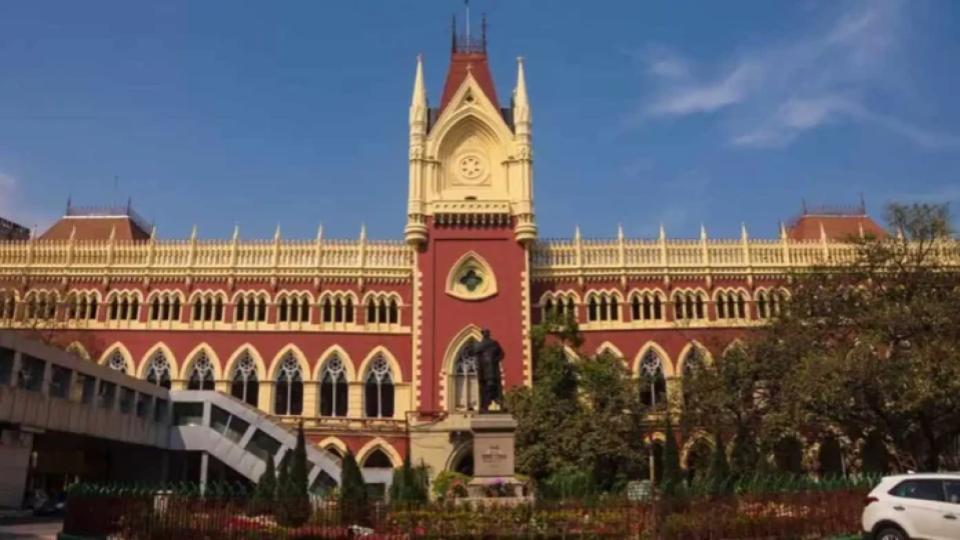
The Calcutta High Court has dismissed a petition filed by Trinamool Congress MLA Kunal Ghosh seeking directions to the West Bengal Assembly Speaker to allow him to participate in legislative debates and raise objections to Bills introduced before the House.
Justice Krishna Rao held that the High Court cannot use its writ jurisdiction to regulate the allocation of speaking opportunities within the legislature. The Court observed that a grievance concerning participation in Assembly proceedings should appropriately be raised before the legislative forum itself.
The Court also relied on Article 212 of the Constitution, which restricts judicial scrutiny of proceedings of a State Legislature on the ground of an alleged procedural irregularity. In view of the constitutional protection available to legislative proceedings, the Court declined to entertain Ghosh’s challenge.
Ghosh, who represents the Beleghata Assembly constituency, had approached the High Court alleging that he was repeatedly denied an opportunity to participate in debates despite several important legislative matters being taken up by the Assembly.
Among the matters referred to in his petition were the Bengal Public Safety and Control of Antisocial Activities Bill, 2026, the Finance Bill and the budget relating to Municipal Affairs. Ghosh sought directions to the Speaker to facilitate his participation in debates and enable him to raise objections concerning legislative business.
The petition was opposed by Senior Advocate Joydeep Kar, appearing for the Opposition Whip. He argued that the writ petition was not maintainable in view of the constitutional protection granted to legislative proceedings under Article 212.
It was also submitted that Ghosh had previously been permitted to address the Assembly, including during the discussion on the Governor’s Address on June 23 and the Budget on June 24. The opposition further contended that Ghosh was not being singled out and that the Speaker had to regulate speaking opportunities among all 294 members of the Assembly.
Additional Advocate General Billwadal Bhattacharya, appearing for the Speaker, argued that the dispute essentially concerned the internal functioning of the legislature and the relationship between the party leadership and one of its members. According to the Speaker’s side, Ghosh had failed to establish any procedural impropriety warranting judicial intervention.
Ghosh’s counsel, Biswarup Bhattacharya, however, argued that while other members belonging to the Trinamool Congress faction were being given opportunities to participate in legislative debates, his client was allegedly being denied a corresponding opportunity to speak on Bills.
The High Court ultimately declined to interfere and held that Ghosh’s grievance could be pursued within the legislative forum. The Court’s decision reiterates the constitutional principle of separation of powers and the limited scope of judicial review over the internal proceedings of a State Legislature.
Article 212 of the Constitution plays an important role in this context. It provides protection against courts questioning proceedings of a State Legislature merely on the ground of an alleged procedural irregularity. The provision is intended to preserve the autonomy of legislative institutions in managing their internal proceedings.
The order also highlights the distinction between the rights of an elected legislator and the internal authority of the legislature to regulate its proceedings. While members may raise grievances concerning their participation before the House, courts do not ordinarily assume the role of regulating the day-to-day allocation of speaking opportunities within a legislative chamber.
Accordingly, the Calcutta High Court dismissed Kunal Ghosh’s petition seeking directions against the Assembly Speaker, leaving him to pursue his grievance through the appropriate legislative forum.