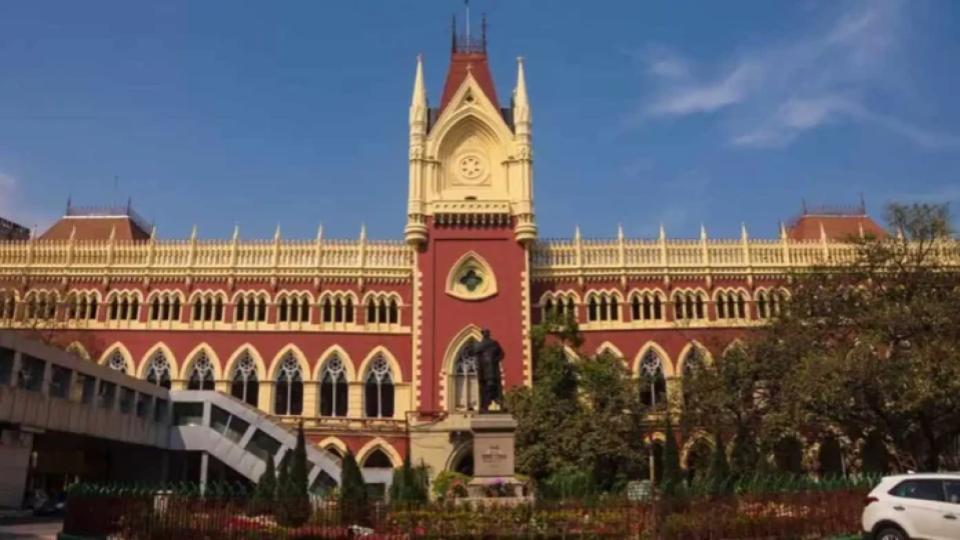
June 16, 2026 : The Calcutta High Court on Tuesday questioned whether the Speaker of the West Bengal Legislative Assembly could disregard the candidate proposed by the opposition party with the highest numerical strength and instead recognise another MLA as the Leader of Opposition (LoP) based on his own assessment.
Justice Krishna Rao raised the issue while hearing a petition challenging the Speaker’s decision to recognise rebel MLA Ritabrata Banerjee as the Leader of Opposition instead of Sobhandeb Chattopadhyay, who was nominated by the faction led by Chief Minister Mamata Banerjee. The petition also contests the recognition of a Chief Whip allegedly backed by a group of rebel legislators.
During the hearing, the Additional Advocate General (AAG), appearing for the Speaker, argued that the Speaker acted within his authority and in line with principles laid down by the Supreme Court in the Shiv Sena judgment. The Court, however, noted that the composition of the Assembly had not changed when the proposal for the LoP appointment was submitted and observed that the nomination came from the political party commanding the largest support among opposition legislators.
Justice Rao framed the key issue as whether the Speaker could ignore the name proposed by the majority opposition party and appoint another individual as Leader of Opposition.
The State argued that the matter depended on the specific facts of the case and that the Speaker was required to examine the internal composition of the political party before taking a decision. It distinguished the present dispute from the Shiv Sena case, stating that the Maharashtra matter involved rival factions and disqualification proceedings, while the present controversy arose under the Bengal Emoluments Act, 1936.
According to the State, the dispute centered on the validity of two resolutions dated May 6 and May 19. It was argued that legislators signed the resolution on May 19 even though the document was dated May 6, raising questions about its authenticity. The State also claimed that the signatures on the resolution appeared in block letters and did not match official Assembly records.
The Court questioned why the Speaker did not raise objections when the original proposal was first submitted. It observed that if around 70 legislators had supported a resolution proposing a Leader of Opposition, the Speaker would ordinarily be expected to act upon it rather than initiate an independent inquiry.
In response, the State maintained that the Speaker was entitled to examine supporting documents accompanying such resolutions and assess whether the process followed the political party’s established procedures. It argued that disputes arose after two MLAs allegedly rebelled, prompting complaints regarding the authenticity of the resolution.
The State further informed the Court that a complaint was lodged on May 20 regarding discrepancies in the resolution and that a communication expelling the rebel MLAs from the party was received on June 1.
Justice Rao, however, noted that the proposal and supporting resolution had already been submitted before the disputes surfaced. The Court repeatedly sought clarification on the basis upon which Ritabrata Banerjee was recognised as Leader of Opposition and whose proposal the Speaker relied upon while making the appointment.
The State replied that the Speaker received another communication backed by 58 Trinamool Congress legislators and considered all relevant materials before reaching a decision. Relying on the Shiv Sena judgment, it argued that the Speaker’s decision was consistent with principles governing legislative party disputes and took into account the constitution of the All India Trinamool Congress.
The Court questioned whether the Speaker could choose between competing proposals from members of the same political party without first rejecting the earlier proposal through a reasoned order. It also asked whether such a course of action was authorised under the Bengal Emoluments Act.
The State argued that legislative recognition is a continuing process and that expulsion from a political party does not automatically sever a legislator’s membership in the legislature party within the Assembly.
Justice Rao further asked how the Speaker could determine the validity of competing proposals without referring the issue to the House. The Court expressed concern that a complaint from two legislators could not easily explain how support for the earlier proposal allegedly dropped from around 70 MLAs to 58. It also questioned why the Speaker subjected the first proposal to extensive scrutiny while readily accepting the later one.
The State maintained that the Speaker was duty-bound to investigate complaints and had examined records, resolutions, and meeting minutes before concluding that discrepancies existed in the documents submitted.
The Court nevertheless observed that allegations of signature forgery alone could not justify ignoring an earlier proposal supported by a larger number of legislators. It stressed that the Speaker was required to adjudicate the dispute rather than simply rely on a subsequent proposal.
Senior Advocate Kalyan Bandopadhyay, appearing for the petitioners, sought an early hearing and interim relief. He argued that a rival bloc was attempting to secure recognition despite settled legal principles governing the relationship between political parties and legislative wings.
The Court has listed the matter for further hearing at 2 p.m. on Wednesday.
The dispute stems from the Speaker’s decision to recognise Ritabrata Banerjee as Leader of Opposition despite the Mamata Banerjee-led faction’s claim that Sobhandeb Chattopadhyay was duly nominated during a meeting of elected MLAs on May 6.
The petitioners argue that the Speaker’s decision violates the Tenth Schedule of the Constitution and established legal principles governing political parties and legislature parties. They contend that the political party’s decision must prevail and that recognition based solely on legislative strength would undermine the anti-defection framework.
The State, opposing interim relief, has argued that the petition contains procedural deficiencies and that all relevant Assembly records, including the impugned order, will be produced before the Court. Meanwhile, the petitioners have expressed concern that consequential actions, including Assembly seating arrangements ahead of the House session on June 18, could prejudice their rights, necessitating urgent judicial intervention.