News Citation : 2026 LN (HC) 425
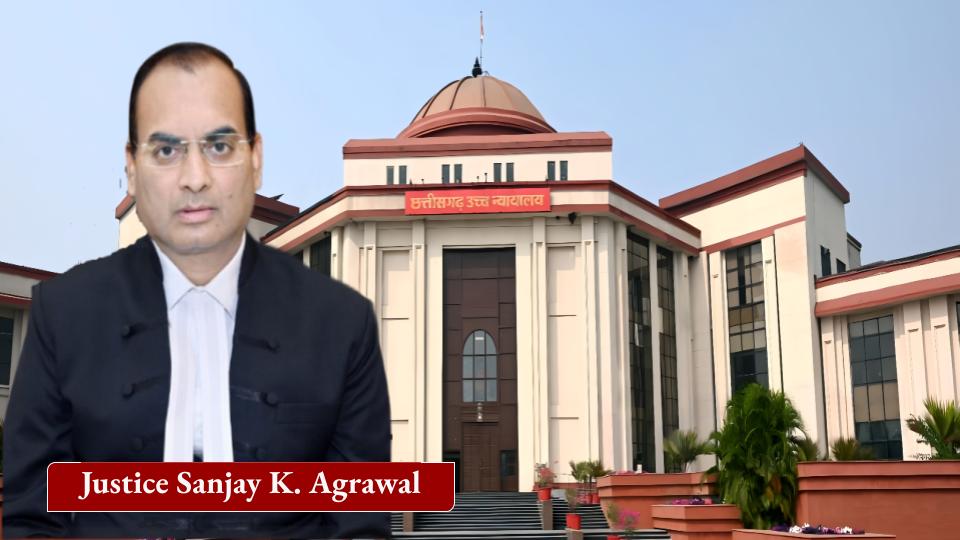
The Chhattisgarh High Court at Bilaspur has held that permission to review an earlier revenue order cannot be granted mechanically or without giving the affected party an opportunity of being heard. Justice Sanjay K. Agrawal, while deciding WPS No. 5088 of 2020 on August 19, 2026, set aside the Commissioner, Durg Division’s order permitting the Collector to review an earlier order, holding that the mandatory requirement of hearing under Section 51 of the Chhattisgarh Land Revenue Code, 1959 had not been followed.
The case was filed by Ishwar Singh, a resident of Village Parri in Balod district, challenging the order passed by the Collector on November 29, 2019 and the subsequent order dated May 5, 2020 passed by the Commissioner, Durg Division. Through the latter order, the Commissioner had granted permission to the Collector to review an earlier order dated September 17, 2018.
Before the High Court, the petitioner argued that the Commissioner had granted permission for review without providing him an opportunity of hearing. According to the petitioner, such an action was contrary to the law laid down by the High Court and therefore the impugned orders were liable to be interfered with. The State opposed the petition and supported the orders under challenge.
The High Court examined Section 51(1)(i) and Section 51(1)(i-a) of the Chhattisgarh Land Revenue Code, 1959. The provision deals with the power of the Board and Revenue Officers to review orders. Importantly, Section 51(1)(i-a) provides that an order cannot be varied or reversed unless notice has been given to the interested parties so that they can appear and be heard in support of the order.
Justice Agrawal observed that the statutory provision makes it clear that permission to review cannot be granted without first notifying and hearing the person who may be affected by such review. The sanctioning authority is also required to apply its judicial mind before granting permission. In other words, the grant of sanction is not merely a formal administrative exercise.
The Court relied upon earlier judicial precedents, including Shaheed Anwar v. Board of Revenue and another, Ravi Narayan v. State of Madhya Pradesh and others and Biharilal v. State of Madhya Pradesh and others. These decisions establish that a sanction for review cannot be granted mechanically and that the order granting such permission must demonstrate proper consideration of the relevant facts.
Referring to the principles emerging from these judgments, the High Court emphasized that the affected party must be given an opportunity to convince the sanctioning authority that the matter does not warrant review. Such a party may also raise objections relating to delay or explain why the original decision does not involve an illegality serious enough to justify reopening the matter.
The Court ultimately found that the Commissioner, Durg Division had permitted the Collector to review the September 17, 2018 order without giving the petitioner an opportunity of hearing. The High Court further concluded that the permission had been granted mechanically and without proper application of judicial mind.
Accordingly, the High Court set aside the Commissioner’s order dated May 5, 2020. The matter has been remitted to the Commissioner, Durg Division, who has been directed to hear the petitioner as well as respondent No. 5 on the question of whether permission should be granted to review the order dated September 17, 2018. The Commissioner has been directed to pass a fresh order within three months from the date of the first hearing of the parties. The writ petition was allowed to this extent, with no order as to costs.
The ruling reinforces an important procedural safeguard in revenue proceedings. Even where a statutory authority possesses the power to seek or grant permission for review, that power must be exercised in accordance with the statute and principles of natural justice. The decision makes clear that an affected person cannot be excluded from the process at the stage when permission is being considered if the eventual review may adversely affect that person’s rights.
The judgment is particularly significant for revenue and land-related proceedings because Section 51 of the Chhattisgarh Land Revenue Code regulates the review jurisdiction of revenue authorities. The High Court’s decision underscores that compliance with the hearing requirement is not a procedural formality but a substantive safeguard against arbitrary reopening of concluded orders.