News Citation : 2026 LN (HC) 431
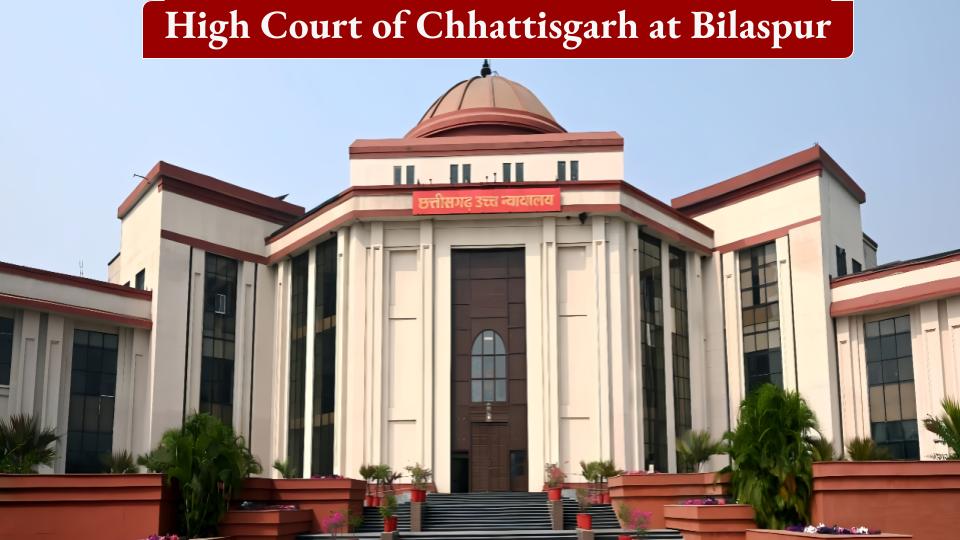
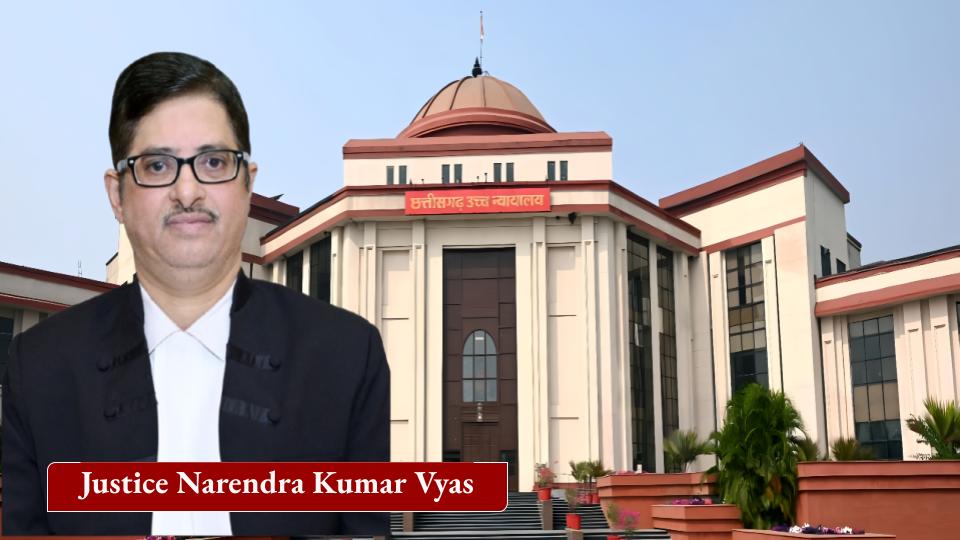
The Chhattisgarh High Court at Bilaspur has dismissed a first appeal filed by Ram Niwas Dewangan against the dismissal of his suit seeking partition and separate possession of disputed family properties in Raigarh and Ambikapur. Justice Narendra Kumar Vyas held that the evidence on record sufficiently established that the partition between the two brothers had already taken place in 1970 and that the Ambikapur property claimed by the appellant as joint family property was, in fact, acquired from the self-earned income of his brother.
The judgment was reserved on July 20, 2026 and pronounced on August 24, 2026 in First Appeal No. 269 of 2005. The appeal challenged the judgment and decree dated November 18, 2005 passed by the Fourth Additional District Judge, Fast Track Court, Raigarh, in Civil Suit No. 10-A/2001. The trial court had dismissed Ram Niwas Dewangan’s suit for partition, declaration and separate possession.
According to the judgment, the dispute arose between two brothers, Ram Niwas Dewangan and the late Hem Kumar Dewangan, concerning residential properties at Palace Road, Raigarh, and property situated at Ambikapur. The plaintiff claimed that the parties were governed by the Mitakshara school of Hindu law and that the properties continued to be jointly owned and possessed. He relied, among other things, on the contention that their father, Bharat Ram, had gone on pilgrimage in 1986 and had not returned, and therefore should be presumed dead under Section 108 of the Indian Evidence Act.
The plaintiff maintained that no partition had taken place between the brothers and sought one-half share in the properties described in Schedules A, B and C. He alleged that despite his request for partition in September 1992 and a legal notice sent on September 28, 1993, the defendant did not agree to partition, leading to the institution of the civil suit.
The defendants, however, took a completely different position. They contended that the family properties had already been partitioned by their father in 1970. According to their version, the house described in Schedule A had fallen to Hem Kumar Dewangan, while the property described in Schedule B had gone to Ram Niwas Dewangan. They further stated that Hem Kumar, who had been employed in government service since 1965, subsequently reconstructed the house allotted to him using his own income.
The defendants also disputed the plaintiff’s claim over the Ambikapur property. Their case was that the property described in Schedule C had been purchased by Hem Kumar from his salary income and was registered in the name of his wife. They argued that it was therefore not joint family property available for partition.
The trial court framed several issues concerning the alleged joint nature of the properties, the plaintiff’s entitlement to a one-half share, the alleged 1970 partition and the source of funds used for construction of the house. After examining the oral and documentary evidence, the trial court rejected the plaintiff’s claim. The first appeal before the High Court therefore principally concerned whether the trial court was legally justified in concluding that the family partition had already taken place and that the Schedule C property was self-acquired.
Before the High Court, counsel for the appellant argued that the disputed properties continued to constitute joint family property and that the trial court should have drawn a presumption in favour of jointness. It was also argued that there was insufficient evidence to establish a previous partition and that merely living separately could not, by itself, establish partition. The appellant further claimed that the Ambikapur property had been purchased from the income or nucleus of joint family property and therefore should also have been treated as jointly owned.
The respondents defended the trial court’s decision and relied upon evidence showing that the partition had taken place in 1970. They also pointed to the plaintiff’s own admissions during cross-examination, as well as the testimony of other witnesses, to contend that the brothers had been living separately for a considerable period. Reliance was placed on Supreme Court decisions including Rangammal v. Kuppuswami and Another, reported in (2011) 12 SCC 220, and A.P. State Wakf Board through Chairperson v. Janaki Busappa and Others, 2026 SCC OnLine SC 673. The respondents also referred to the Patna High Court decision in Chhatradhari Mahton & Others v. Akleshwar Mahton & Others.
Justice Narendra Kumar Vyas examined the evidence concerning the alleged 1970 partition. The High Court noted that the plaintiff himself had made significant admissions during cross-examination. The record showed that the plaintiff had been residing in a mud house and that the house in Schedule A had subsequently become a double-storey structure. Importantly, the plaintiff had not objected when his brother demolished the earlier mud structure in 1982 and spent approximately Rs 1.50 lakh on its reconstruction after obtaining permission.
The High Court also considered a diary produced in evidence as Exhibit D/1, which contained details of expenditure on construction and was stated to have been written in the handwriting of the original defendant. The court found that this material supported the respondents’ case that the pucca house standing on the property allotted to Hem Kumar had been constructed from his own funds.
The evidence of the wife of the deceased defendant was also significant. According to her testimony, their father-in-law had effected the partition in 1970 in the presence of three persons, namely Dharmu, Anand and Bhakti. She stated that one mud house was given to each brother and that Rs 1,000 was also given to each of them. The High Court found that this evidence, together with the other material on record, supported the conclusion that the family had already undergone partition.
The court further noted that evidence concerning the agricultural land also supported the existence of an earlier family arrangement. An admission by Savitri Bai, examined as PW/4, regarding partition of the agricultural land was considered relevant to the overall question of whether the brothers had continued as an undivided family.
On the question of burden of proof, the High Court relied on the principles laid down by the Supreme Court in Shrinivas Krishnarao Kango v. Narayan Devji Kango and Others, reported in (1954) 1 SCC 544. The judgment explains that where a plaintiff asserts that property is joint Hindu family property, the initial burden lies on the person making that assertion. Once the necessary foundation is established, the burden may shift to the person claiming the property as self-acquired.
The High Court also referred to the Supreme Court’s 2026 decision in Dorairaj v. Doraisamy (Dead) Through LRs and Another, 2026 INSC 126. The principle discussed in that decision is that mere existence of a joint Hindu family does not automatically make every property held by its members joint family property. However, where ancestral property capable of generating income is established and acquisitions are shown to have been made during the continuation of the joint family, the evidentiary burden may shift to the person asserting that the acquisition was self-acquired.
Applying these principles to the case, the High Court concluded that the plaintiff had failed to discharge the initial burden of establishing that the properties described in Schedules A and B continued to be joint Hindu family properties. The evidence regarding the earlier partition, the separate possession of the brothers and the subsequent construction of the house supported the findings of the trial court.
With respect to Schedule C, the High Court accepted the finding that the property had been acquired from the self-acquired income of Hem Kumar Dewangan. The court therefore found no sufficient basis to treat the Ambikapur property as joint family property merely because the parties had ancestral property.
The court ultimately answered the central question against the appellant and in favour of the respondents, holding that the trial court’s findings did not suffer from perversity or illegality. The High Court observed that the trial court had properly appreciated the evidence and that there was no legal ground for appellate interference.
The significance of the judgment lies in its reaffirmation of the evidentiary principles governing claims of joint Hindu family property. A person seeking partition cannot establish a right merely by showing that the parties belong to the same Hindu family. The claimant must first establish the joint nature of the property and the factual foundation necessary for shifting the burden to the opposite party. Evidence of an earlier family partition, separate possession, independent income and the source of funds used to acquire or improve property can become decisive in such disputes.
The judgment also illustrates the importance of admissions made during cross-examination. In the present case, the plaintiff’s own evidence concerning the condition of the houses, the subsequent reconstruction of the Schedule A property and the absence of objection to the construction materially supported the respondents’ case.
Since the appeal was found to be without merit, the Chhattisgarh High Court dismissed First Appeal No. 269 of 2005 and directed that a decree be drawn accordingly. The decision leaves intact the trial court’s dismissal of the plaintiff’s claim for partition and separate possession.
Case Reference: Ram Niwas Dewangan v. Late Hem Kumar Dewangan through LRs & Others, First Appeal No. 269 of 2005