News Citation : 2026 LN (HC) 443
September 10, 2026 : The Chhattisgarh High Court at Bilaspur has held that non-production of a power of attorney or Board resolution authorising a company representative to prosecute a complaint under Section 138 of the Negotiable Instruments Act, 1881, is a curable procedural defect. The Court ruled that such a technical omission, by itself, cannot justify dismissal of a cheque-bounce complaint without giving the company an opportunity to produce the necessary authorisation documents.
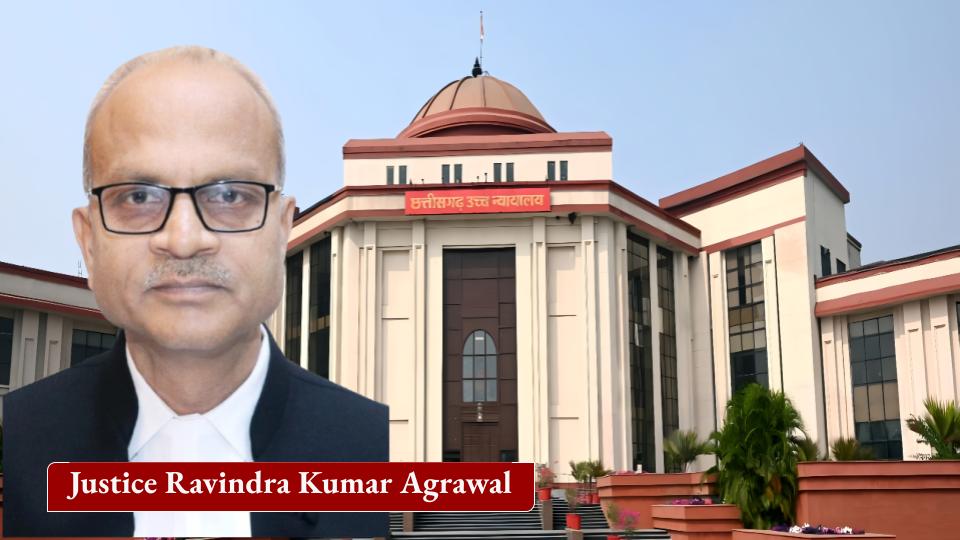
Justice Ravindra Kumar Agrawal delivered the order on September 10, 2026, while allowing an acquittal appeal filed by Bhilai Engineering Corporation Limited against S.R. Global Private Limited and its Managing Director Bhaskar Ghosh. The appeal arose from the judgment dated July 16, 2012, passed by the Judicial Magistrate First Class, Durg, in Complaint Case No. 356/2011, in which the complaint under Section 138 of the NI Act had been dismissed.
The dispute originated from a commercial transaction between the companies. Bhilai Engineering Corporation, a company engaged in manufacturing technical structures and engineering articles, had supplied material to S.R. Global Private Limited pursuant to a purchase order issued in February 1999 for contractual work at the Sinter Plant in Duburi, Odisha. According to the complainant, a cheque dated April 30, 2000, for Rs. 15,52,850 was issued towards payment of the supplied material. When the cheque was presented for clearance on September 25, 2000, it was dishonoured for insufficient funds. A legal demand notice was subsequently issued on October 8, 2000, but the disputed amount remained unpaid. The company thereafter instituted a complaint under Section 138 of the NI Act on November 13, 2000.
The trial proceedings continued for several years. The complaint was registered in December 2000, the particulars of the offence were explained to the accused in July 2006, and evidence was subsequently recorded. After completion of the trial, the Judicial Magistrate acquitted the accused on July 16, 2012. The principal reason was that R.K. Shukla, who had prosecuted the complaint on behalf of Bhilai Engineering Corporation, had not produced a Board resolution or power of attorney establishing his authority to institute and prosecute the proceedings and give evidence for the company.
Bhilai Engineering Corporation challenged the acquittal before the High Court. Its counsel argued that the complaint itself identified R.K. Shukla as the company’s Divisional Manager (Personnel) and power of attorney holder. It was submitted that even if the authorisation document had not initially been filed, the trial court ought to have provided an opportunity to produce it rather than dismissing the complaint on a technical ground. The appellant relied particularly on the Supreme Court’s decision in Haryana State Cooperative Supply and Marketing Federation Limited v. Jayam Textile and Others, reported in (2014) 4 SCC 704.
The High Court agreed with this argument. It examined the legal principles laid down by the Supreme Court in Jayam Textile, M.M.T.C. Limited v. MEDCHL Chemicals and Pharma (P) Limited and A.C. Narayanan v. State of Maharashtra. The Court noted that a company, being a juristic person, necessarily acts through a natural person in court proceedings. However, the absence or later production of the document establishing that person’s authority does not automatically destroy the company’s complaint.
The Supreme Court precedent in M.M.T.C. Limited makes an important distinction between the company as the legal complainant and the individual who represents it in court. The High Court noted that even where there is an initial defect in authorisation, the company can subsequently rectify it by authorising a competent representative. Thus, the complaint cannot simply be terminated on that ground.
The Court also considered A.C. Narayanan, which recognises that a complaint under Section 138 of the NI Act may be instituted through a power of attorney holder, provided the person prosecuting the matter has the requisite authority and knowledge of the transaction. Importantly, the High Court observed that the judgment does not mean that failure to produce an authorisation document at the very beginning must invariably result in dismissal of the complaint.
Applying these principles, Justice Agrawal found that the trial court had not determined that Bhilai Engineering Corporation was not the payee or holder in due course of the cheque. Nor had it found that the cheque was not issued against a legally enforceable liability or that the other ingredients of Section 138 were absent. The complaint had effectively failed only because the authority of R.K. Shukla had not been established through the relevant document.
The High Court held that the proper course would have been to give the company an opportunity to produce the power of attorney, Board resolution or other relevant authorisation. “The defect, if any, relating to the authorization of the representative of the complainant-company was capable of being cured,” the Court observed, and therefore it could not have been made the sole basis for acquittal.
The Court further emphasised the broader principle that procedural requirements should facilitate justice rather than defeat substantive rights. Referring to the Supreme Court’s observations in Jayam Textile, it noted that “procedural defects and irregularities, which are curable, should not be allowed to defeat substantive rights or cause injustice.”
At the same time, the High Court acknowledged that an appellate court hearing an appeal against acquittal must respect the accused’s presumption of innocence and ordinarily interfere only where there are substantial and compelling reasons. However, where an acquittal is based on an incorrect application of law and the trial court has failed to decide the substantive complaint on its merits, the appellate court can intervene and remit the matter for fresh consideration.
Consequently, the High Court allowed the acquittal appeal and set aside the July 16, 2012 judgment of the Judicial Magistrate First Class, Durg. The matter has been remitted to the trial court for fresh adjudication in accordance with law. The complainant company has been permitted to place on record documents establishing R.K. Shukla’s authority to institute and prosecute the complaint and to lead evidence, if required. The trial court has also been directed to provide adequate opportunity of hearing to both sides and decide the complaint on its merits.
The parties have been directed to appear before the trial court on September 29, 2026, with an instruction to make every effort to dispose of the complaint expeditiously.
The ruling is significant for cheque-bounce litigation involving companies because it clarifies that an omission concerning the authority of a company’s representative should not automatically prevent adjudication of the underlying dispute. Section 138 of the Negotiable Instruments Act deals with dishonour of cheques for insufficiency of funds or related reasons, but procedural compliance concerning corporate representation must be distinguished from the substantive requirements for establishing the offence. The decision reinforces that curable procedural defects should ordinarily be corrected through an opportunity to rectify them rather than being used to shut out a claim without examining its merits.
Case Reference: Bhilai Engineering Corporation Limited v. S.R. Global Private Limited & Another, ACQA No. 323 of 2019. The appellant was represented by Mr. Shrishti Attal, Advocate; no one appeared for the respondents.