News Citation : 2026 LN (HC) 420
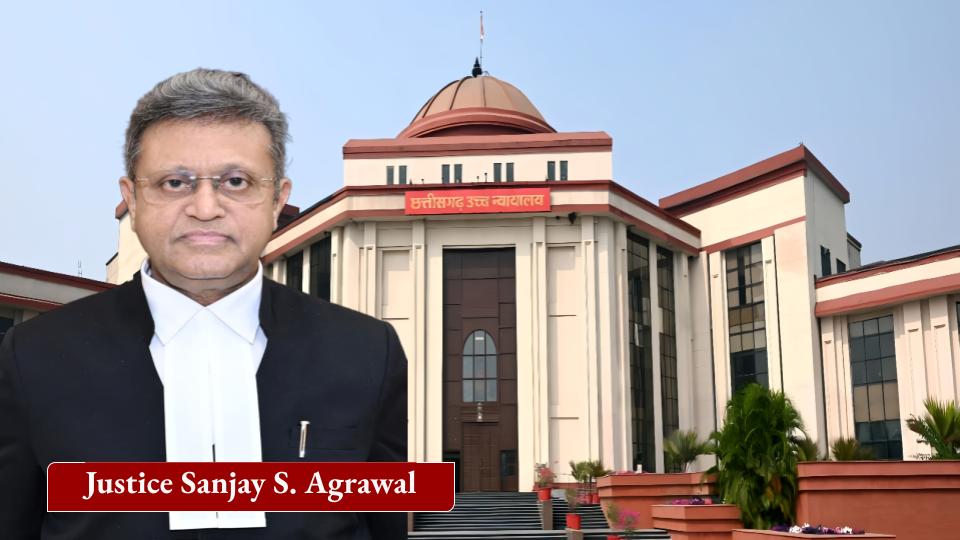
August 17, 2026 : The Chhattisgarh High Court at Bilaspur has dismissed an appeal filed by Vandana Global Limited against the acquittal of Subhash Chouhan in a cheque dishonour case under Section 138 of the Negotiable Instruments Act, 1881. The Court held that the company failed to establish its case through a duly authorised and competent representative who had knowledge of the underlying transaction. The judgment was delivered by Justice Sanjay S. Agrawal on August 17, 2026, in ACQA No. 295 of 2017, reported as 2026:CGHC:36631-DB.
The dispute arose from a commercial transaction concerning the supply of iron ore. According to the case record, Vandana Global Limited had placed an order on October 6, 2007, for 3,600 metric tonnes of iron ore with M/s Cheery Commercials, later known as M/s Minal Traders. The company paid an advance of Rs. 81 lakh, but only 1,880 metric tonnes of iron ore were supplied. Following a meeting between the parties on May 28, 2008, the respondent allegedly agreed to repay Rs. 79,92,612 in instalments towards the outstanding amount.
As part of the alleged repayment arrangement, a cheque for Rs. 3 lakh dated June 14, 2008, was issued by the respondent. When the cheque was presented by Vandana Global Limited, it was dishonoured with the bank remark “not arranged for”. The company subsequently issued a demand notice dated December 1, 2008, which was refused by the respondent. The company thereafter initiated criminal proceedings under Section 138 of the Negotiable Instruments Act.
The Principal Judicial Magistrate, First Class, Raipur, had initially convicted the respondent on April 3, 2017, and sentenced him to six months’ simple imprisonment along with a fine of Rs. 5 lakh, with a further four months’ simple imprisonment in default of payment. However, the Fourth Additional Sessions Judge, Raipur, reversed the conviction in Criminal Appeal No. 119 of 2017 and acquitted the respondent on August 16, 2017. Vandana Global Limited then approached the High Court challenging that acquittal.
Before the High Court, the principal dispute concerned the competence of Ajay Tipte, who had appeared as the company’s witness. The company argued that Tipte had been authorised by its Managing Director through an authority letter and therefore his evidence should not have been rejected. Reliance was placed on the Supreme Court’s decision in TRL Krosaki Refractories Limited v. SMS Asia Private Limited and Another, reported in (2022) 7 SCC 612.
The respondent, however, argued that Tipte had neither been authorised by the company’s Board of Directors to represent the company in the cheque dishonour proceedings nor had personal knowledge of the underlying transaction. Reliance was placed on the Supreme Court’s judgment in A.C. Narayanan v. State of Maharashtra and Another, reported in (2014) 11 SCC 790.
Justice Sanjay S. Agrawal examined the company’s authority documents and the evidence on record and found significant shortcomings in the prosecution of the complaint. The original complaint had been filed through Rabindra Nath Shahi, who had been specifically authorised by a Board resolution dated January 20, 2009, and a corresponding power of attorney. However, the authorised power of attorney holder failed to appear for evidence despite repeated opportunities over several years.
The Court noted that Ajay Tipte subsequently entered the witness box, but the record did not establish that he had been authorised by the Board of Directors to represent the company in relation to the particular cheque dishonour case. The Court also found that Tipte was not shown to have been working for the company at the time of the underlying transaction and, more importantly, his cross-examination indicated that he had no knowledge of the transaction and came to know about it only when the authority letter was issued to him in 2013.
The High Court therefore held that his testimony could not safely be relied upon to prove the allegations contained in the complaint. The Court observed, in substance, that a person who seeks to prove a company’s complaint must have the necessary authority and factual knowledge to establish the transaction forming the basis of the prosecution. An authority letter by itself could not cure the absence of such foundational requirements in the circumstances of the case.
The Court also examined whether the complaint remained maintainable after the discontinuation of the proceedings by the original power of attorney holder. It found that Rabindra Nath Shahi, who had been specifically authorised by the company’s Board to initiate and pursue the criminal proceedings, failed to appear for evidence despite repeated opportunities. The Court noted that he appeared only on limited occasions after filing the complaint and that the proceedings were subsequently sought to be pursued through Ajay Tipte without establishing the necessary authority.
The High Court further distinguished the Supreme Court’s ruling in A.C. Narayanan. That case concerned an individual complainant and the authority of a power of attorney holder acting for that individual. In the present matter, the complainant was a corporate entity. The Court therefore relied on the principle explained by the Supreme Court in TRL Krosaki Refractories, where the position concerning representation of a company was recognised as requiring consideration from a different standpoint.
The High Court nevertheless found that even the principles applicable to corporate complainants did not assist Vandana Global Limited because Tipte was not shown to have been properly authorised by the Board, was not established to have been an employee at the relevant time and lacked knowledge of the transaction. The Court consequently concluded that his evidence could not be used to establish the company’s allegations.
Section 138 of the Negotiable Instruments Act, 1881, criminalises the dishonour of a cheque issued towards a legally enforceable debt or liability, subject to the statutory requirements concerning presentation of the cheque, issuance of the demand notice and failure to make payment within the prescribed period. However, the High Court’s decision in the present case demonstrates that satisfying the ingredients of a cheque dishonour allegation is not sufficient if the complainant, particularly a corporate entity, fails to properly establish its case through a legally competent representative and admissible evidence.
The ruling also highlights the importance of corporate authorisation in criminal litigation. A company acts through its officers and authorised representatives, but the authority of the person appearing before the court must be properly established. Where the representative is expected to prove the company’s transaction and allegations, the court may examine whether that representative had the requisite authority and knowledge to give meaningful evidence.
The High Court ultimately found no merit in Vandana Global Limited’s appeal and dismissed it, thereby leaving the respondent’s acquittal undisturbed. The decision serves as a significant reminder for companies pursuing cheque dishonour prosecutions that board authorisations, powers of attorney, continuity of representation and the witness’s knowledge of the underlying transaction can become decisive issues in establishing a criminal complaint under the Negotiable Instruments Act.
Case Reference: Vandana Global Limited v. Subhash Chouhan, ACQA No. 295 of 2017