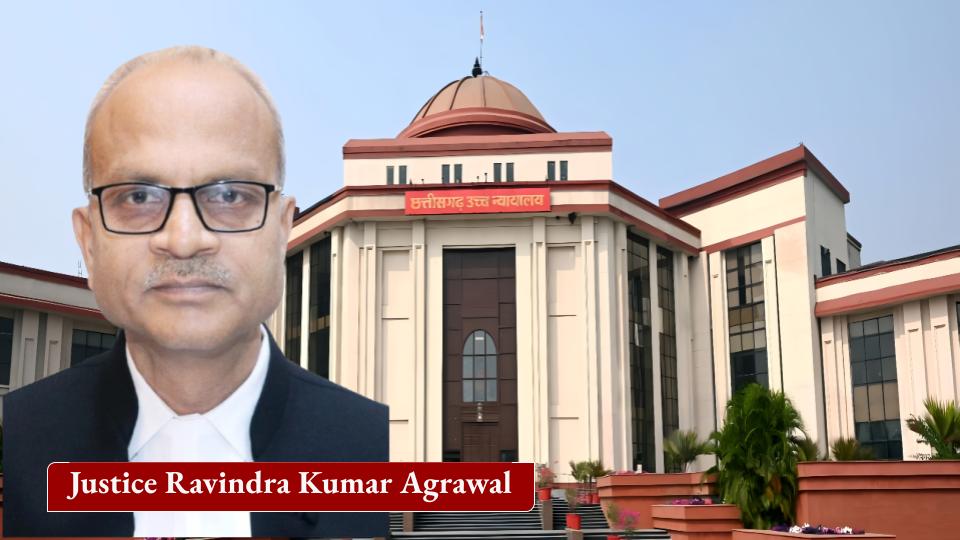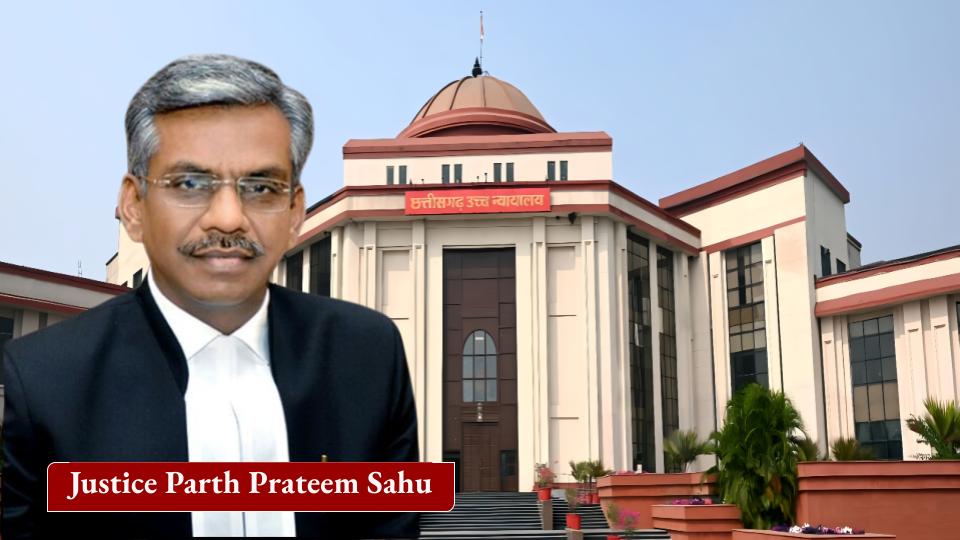
Bilaspur : The Chhattisgarh High Court at Bilaspur has set aside an appellate court order directing a woman convicted in a cheque bounce case to deposit 20% of the compensation amount as a condition for staying its recovery during the pendency of her appeal. Justice Parth Prateem Sahu held that an appellate court has the discretion to waive or modify the deposit requirement in exceptional circumstances, but it must record reasons demonstrating the proper exercise of that discretion.
In the case, Parmeshwari Soni v. Abhay Shukla, the petitioner challenged an order dated September 7, 2026, passed in Criminal Appeal No. 279 of 2026, which required her to deposit 20% of the compensation awarded by the trial court. The High Court, in its order dated October 12, 2026, found that the appellate court had not adequately explained why her financial circumstances did not justify an exemption from the deposit condition.
The dispute originated from proceedings under Section 138 of the Negotiable Instruments Act, 1881, which deals with the offence of dishonour of cheques. The Magistrate had convicted Parmeshwari Soni and sentenced her to one month of simple imprisonment, along with compensation of ₹10,16,381 payable to the complainant, Abhay Shukla.
Challenging the conviction, Soni filed an appeal under Section 415 of the Bharatiya Nagarik Suraksha Sanhita, 2023 (BNSS), corresponding to Section 374 of the Code of Criminal Procedure, 1973. She also sought suspension of her sentence under Section 430(1) of the BNSS, corresponding to Section 389 of the CrPC.
The appellate court suspended her sentence and granted bail. However, while staying recovery of the compensation amount, it directed her to deposit 20% of the compensation by the next hearing, scheduled for October 16, 2026.
Before the High Court, the petitioner argued that she was a widow dependent on a meagre pension and was financially incapable of depositing the required amount. Her counsel, Advocate Parag Kotecha, submitted that the appellate court had imposed the condition mechanically without examining her financial hardship or recording specific reasons for rejecting her request for exemption.
The petitioner contended that an unreasonable deposit condition could effectively deprive her of the opportunity to pursue her statutory appeal. She relied on the Supreme Court’s decision in Jamboo Bhandari v. Madhya Pradesh State Industrial Development Corporation Ltd. and Others, reported in (2023) 10 SCC 446, to support the argument that exceptional cases may warrant suspension of sentence without insisting on the deposit of 20% of the fine or compensation.
High Court explains the discretionary power under Section 148 of the Negotiable Instruments Act
Justice Parth Prateem Sahu examined Section 148 of the Negotiable Instruments Act, 1881, which empowers an appellate court to direct an accused convicted under Section 138 to deposit a sum that is ordinarily subject to a minimum threshold of 20% of the fine or compensation awarded by the trial court.
The provision states that the appellate court “may order” the appellant to deposit the prescribed amount. The High Court emphasised that the statutory language permits judicial discretion and that the deposit requirement should not be imposed mechanically without considering the circumstances of the individual case.
The Court explained that an appellate court may, where justified by the facts, direct the deposit of 20%, require a lesser amount or waive the deposit altogether. However, any departure from the ordinary requirement must be supported by reasons reflecting a proper application of mind.
Supreme Court precedents on waiver of deposit conditions
The High Court relied on the Supreme Court’s ruling in Jamboo Bhandari, which recognised that an appellate court considering suspension of sentence in a cheque dishonour case can examine whether the circumstances constitute an exceptional case warranting relief without the 20% deposit condition. The Supreme Court also clarified that the court must record reasons when it concludes that such an exception is justified.
The Court also referred to Rakesh Ranjan Shrivastava v. State of Jharkhand and Others, reported in (2024) 4 SCC 419. Although that decision concerned interim compensation under Section 143A of the Negotiable Instruments Act, its discussion of judicial discretion and reasoned orders was relevant to the broader principle that financial circumstances and other material factors must be considered while exercising statutory discretion.
Additionally, the High Court cited Rohit Chaturvedi v. State of Uttarakhand and Others, reported in 2026 SCC OnLine SC 865, concerning the importance of reasoned judicial decisions. The Supreme Court’s observation, as reproduced in the High Court order, was that “Recording of reasons is not an empty formality”. Reasons help prevent arbitrariness and make it possible to determine whether relevant considerations have been taken into account.
Why the appellate court’s order was set aside
On examining the challenged order, the High Court found that the appellate court had merely stated that the petitioner did not qualify for waiver and that her case was not exceptional. It had not explained why her plea of financial distress was insufficient to justify exemption from the deposit requirement.
Justice Sahu clarified that the appellate court was not required to deliver an elaborate judgment on the issue. Nevertheless, it had to provide at least prima facie reasons addressing the petitioner’s specific contention that she could not afford the deposit.
The absence of such reasoning meant that the High Court could not ascertain whether the relevant circumstances had been properly considered. The defect was therefore not simply the imposition of a deposit condition, but the failure to demonstrate a reasoned exercise of judicial discretion.
High Court remands the matter for fresh consideration
Allowing the petition under Section 528 of the BNSS, the High Court set aside the impugned order to the extent that it directed the petitioner to deposit 20% of the compensation amount. The matter was remanded to the appellate court for fresh consideration of whether the deposit should be required, reduced or waived.
The appellate court has been directed to reconsider the issue within one month from the date on which a copy of the High Court’s order is produced before the trial court.
The High Court did not acquit the petitioner or set aside her conviction under Section 138 of the Negotiable Instruments Act. It also did not grant a final exemption from depositing compensation. Instead, it required the appellate court to reconsider the question in accordance with law and provide adequate reasons for its decision.
The ruling reinforces an important principle in cheque dishonour litigation: although Section 148 is intended to facilitate payment of compensation during an appeal, its application must remain subject to judicial scrutiny. An appellate court must consider the facts of the case, address relevant submissions and explain its decision, particularly when a litigant raises a specific plea of financial hardship.
For accused persons pursuing appeals in cheque bounce cases, the decision highlights the importance of presenting relevant material in support of a request for waiver or reduction. For complainants, it confirms that the statutory deposit mechanism remains available, subject to a judicially reasoned decision. The judgment therefore seeks to balance the complainant’s interest in securing compensation with the appellant’s right to meaningful consideration of the appeal.
Case Reference: Parmeshwari Soni v. Abhay Shukla, CRMP No. 2642 of 2026.Counsel for the petitioner: Advocate Parag Kotecha.