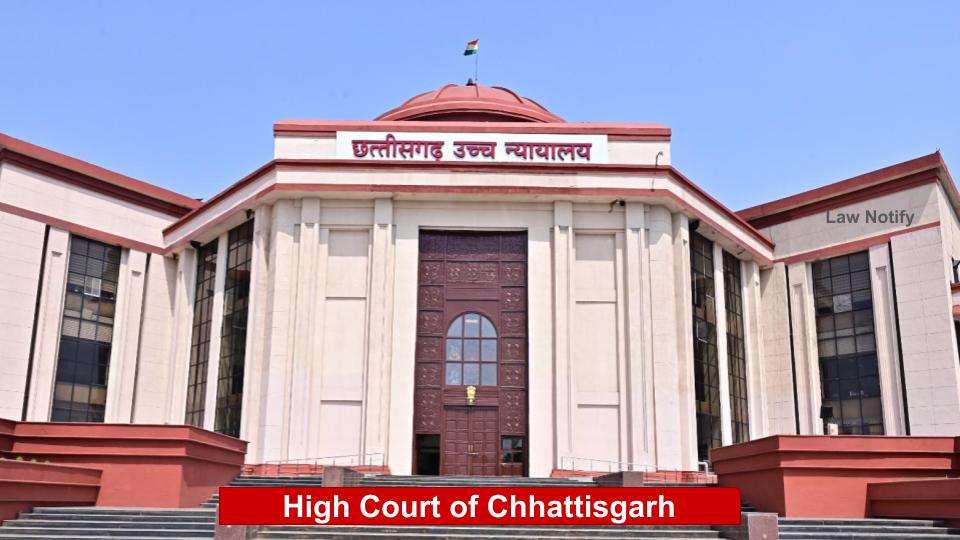
Bilaspur : The Chhattisgarh High Court at Bilaspur has partly allowed an arbitration appeal filed by South Eastern Coalfields Limited (SECL) in a dispute with Punjab Small Industries and Export Corporation Limited over the termination of a coal supply agreement and forfeiture of security deposits. The Division Bench set aside the arbitral award only to the extent that it granted 14% pendente lite interest on bank guarantees furnished towards the security deposit, while leaving the remaining award intact.
In its order dated October 9, 2026, the Court held that an arbitrator cannot award interest during the pendency of arbitration contrary to an express contractual prohibition. At the same time, the Bench declined to disturb the remaining findings of the arbitrator, including those concerning the validity of SECL’s termination of the agreement and the refund of the security deposit.
Dispute Over Coal Supply Agreement and Security Deposit
The dispute arose from a Fuel Supply Agreement executed on December 12, 2011, between SECL, a subsidiary of Coal India Limited, and Punjab Small Industries and Export Corporation Limited, a Punjab Government undertaking. The agreement provided for the supply of 1,02,000 tonnes of coal annually to the respondent for distribution among consumers, including small-scale industries in Punjab.
Under the agreement, the purchaser was required to furnish a security deposit through cash or bank guarantees. The respondent initially furnished a bank guarantee of ₹30 lakh and subsequently provided additional bank guarantees and financial coverage following changes in coal prices.
SECL alleged that the purchaser failed to lift any coal under the agreement and issued a penalty or compensation bill for short lifting. It subsequently issued a termination notice on March 22, 2013, and terminated the agreement on April 23, 2013, forfeiting the security deposit and encashing the bank guarantees.
The respondent challenged the termination and the penalty proceedings. Its earlier writ petition was dismissed on June 14, 2013, with liberty to pursue arbitration under the agreement.
Arbitrator Invalidated Termination and Directed Refund
The arbitral tribunal partly allowed the respondent’s claim, holding that SECL had not followed the procedure prescribed under the agreement for termination on account of inadequate coal lifting. Clause 17 required the seller to exercise the termination right within 60 days of the end of the relevant year and provide at least 30 days’ prior written notice.
The arbitrator found that the termination notice had been issued well beyond the stipulated period. Consequently, the termination and the consequential forfeiture of the security deposit were held unsustainable. SECL was directed to refund the security deposit with interest at 14% per annum from April 26, 2013, until the date of the award. The award also provided for post-award interest at 18% per annum until payment.
SECL challenged the award under Section 34 of the Arbitration and Conciliation Act, 1996. The Commercial Court rejected the challenge on July 26, 2017, and declined to interfere with the arbitrator’s findings. SECL thereafter approached the High Court under Section 37 of the Act.
High Court Examines Limits of Judicial Interference
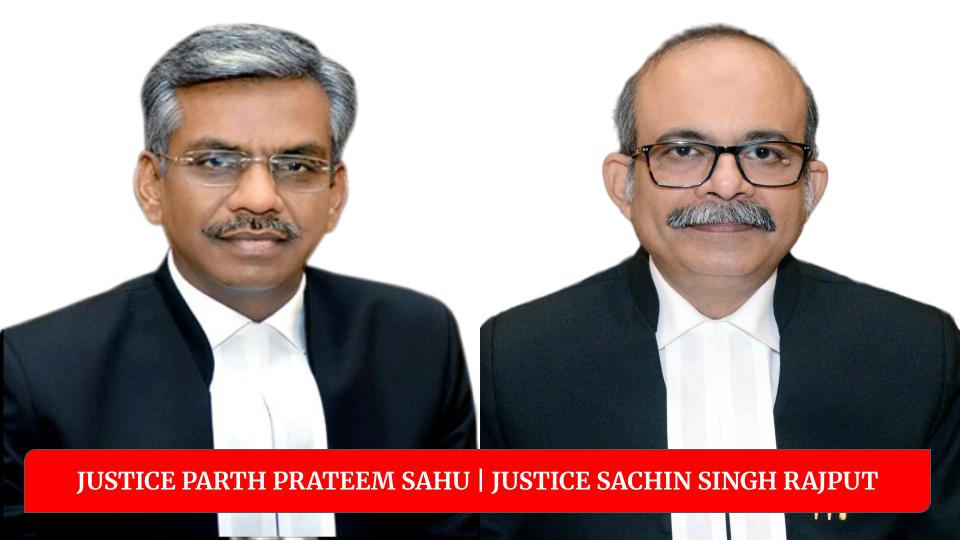
The Division Bench of Justice Parth Prateem Sahu and Justice Sachin Singh Rajput examined whether the arbitrator’s interpretation of the termination clause warranted interference and whether interest could be awarded despite the agreement expressly prohibiting it.
The Court reiterated that the scope of judicial review under Sections 34 and 37 of the Arbitration and Conciliation Act, 1996, is limited. An appellate court cannot ordinarily reassess the evidence or substitute its own interpretation merely because another view is possible. Interference is justified only when the award satisfies the statutory grounds for setting it aside, including patent illegality where applicable.
The Bench observed that the termination clause established a time-bound contractual mechanism. The agreement defined a “year” as the seller’s financial year, running from April 1 to March 31. Therefore, the relevant year for assessing the purchaser’s coal lifting was 2011-12, ending on March 31, 2012.
SECL issued its termination notice on March 22, 2013, substantially beyond the prescribed 60-day period. The Court held that the requirement concerning the timing of the notice could not be treated as redundant merely because the agreement itself was intended to remain in force for 24 months.
The Court explained that the seller’s discretion to terminate the agreement was subject to the conditions expressly incorporated into the contract. The use of the words “may be terminated” did not give SECL an unrestricted right to disregard the agreed time limit.
Contractual Bar on Interest Binds the Arbitrator
The principal modification concerned the interest awarded on the security deposit during the arbitration proceedings.
SECL argued that Clause 3.1.2 of the Fuel Supply Agreement expressly prohibited the purchaser from claiming interest on the security deposit. It contended that the arbitrator had acted contrary to the agreement by awarding interest despite this restriction.
The respondent argued that the arbitrator possessed statutory authority to award interest and, alternatively, that any invalid portion of the award could be separated without disturbing the remaining relief.
After examining the relevant contractual provisions and Supreme Court precedents, the High Court accepted SECL’s objection concerning pendente lite interest. It held that the Arbitration and Conciliation Act, 1996, gives primacy to the parties’ contractual terms when determining entitlement to interest before the award, including interest during the pendency of arbitration.
The Bench concluded that the express prohibition in the agreement prevented the arbitrator from awarding pendente lite interest on the bank guarantees furnished towards the security deposit.
The Court accordingly held that the award of interest at 14% per annum for the period up to the arbitral award could not be sustained. However, it treated this part of the award as severable, meaning that the legally unsustainable portion could be removed without setting aside the remaining findings and directions.
Post-Award Interest and Final Decision
The Court also considered the legal framework governing post-award interest under Section 31(7)(b) of the Arbitration and Conciliation Act, 1996. This provision concerns interest payable on sums directed to be paid under an arbitral award and is distinct from pendente lite interest governed by the contractual restriction considered in the case.
The final order did not set aside the entire arbitral award. Instead, the Bench confined its interference to the portion granting pendente lite interest on the bank guarantees furnished towards the security deposit.
The Court held: “Rest of the award dated 26.11.2015 shall remain as it is.”
Consequently, the arbitration appeal was partly allowed, and the arbitral award was modified only to the extent indicated by the Court. The remaining award, including the findings relating to termination and refund of the security deposit, was left undisturbed.
Legal Significance of the Ruling
The decision reinforces the principle that contractual freedom remains important in arbitration, particularly where parties have expressly agreed to exclude interest on security deposits. An arbitral tribunal’s statutory power to grant interest cannot automatically override a binding contractual restriction applicable to pre-award interest.
The ruling also illustrates the doctrine of severability in arbitration challenges. Where a particular component of an award is legally unsustainable but separable from the remaining relief, the court may set aside that component while preserving the rest of the award.
For public sector companies, government undertakings and commercial entities, the judgment highlights the importance of complying with agreed termination procedures and carefully drafting contractual provisions concerning security deposits, compensation and interest. Contractual rights must be exercised in accordance with the conditions governing them, while arbitral relief must remain consistent with enforceable contractual restrictions.
Case Reference: South Eastern Coalfields Limited & Another v. M/s Punjab Small Industries and Export Corporation Limited, ARBA No. 63 of 2017, 2026:CGHC:43942-DB. Counsel: For SECL, Senior Advocate Abhishek Sinha, assisted by Advocates Himanshu Yadav, Amisha Sinha, Vaibhav Shukla and Astha Shukla. For the respondent, Senior Advocate Ashish Shrivastava, assisted by Advocates Ashutosh Shrivastava and Abhishek Vinod Deshmukh.