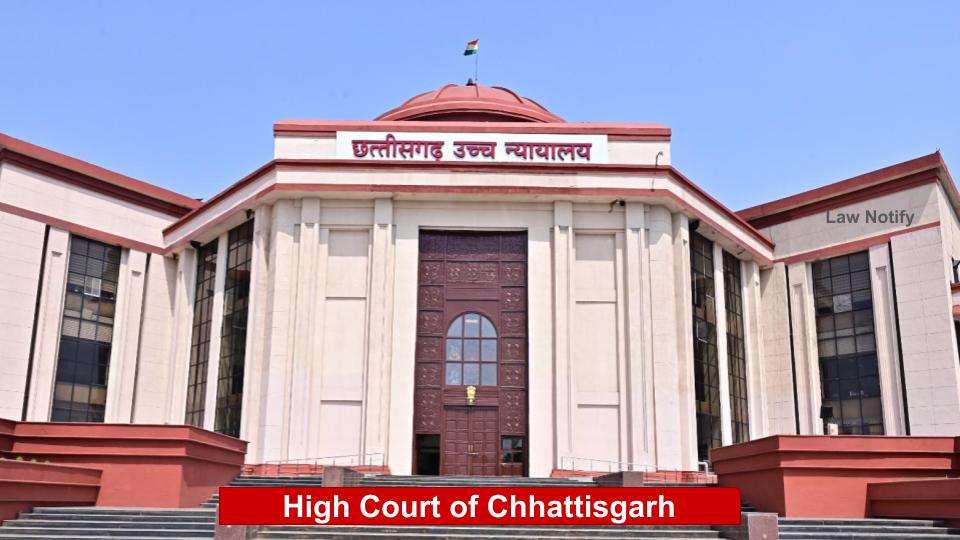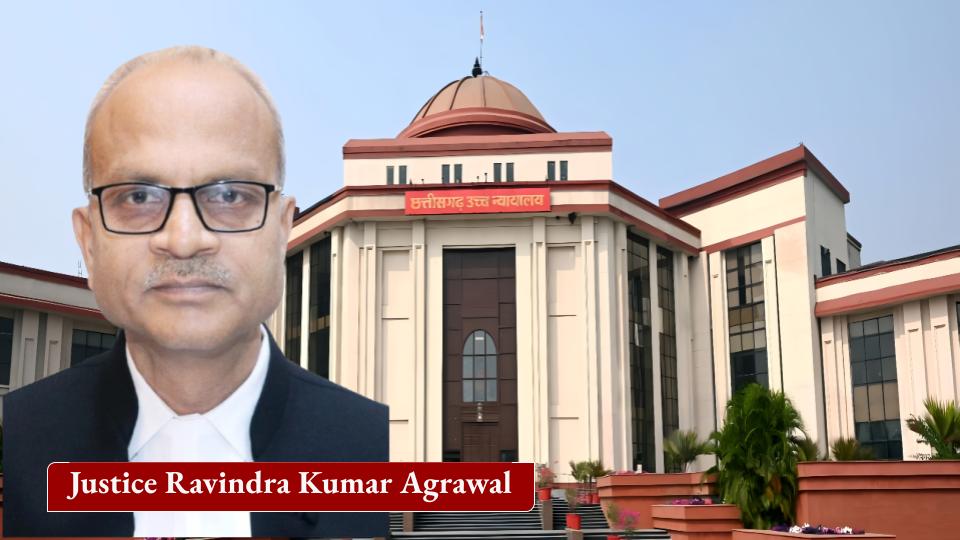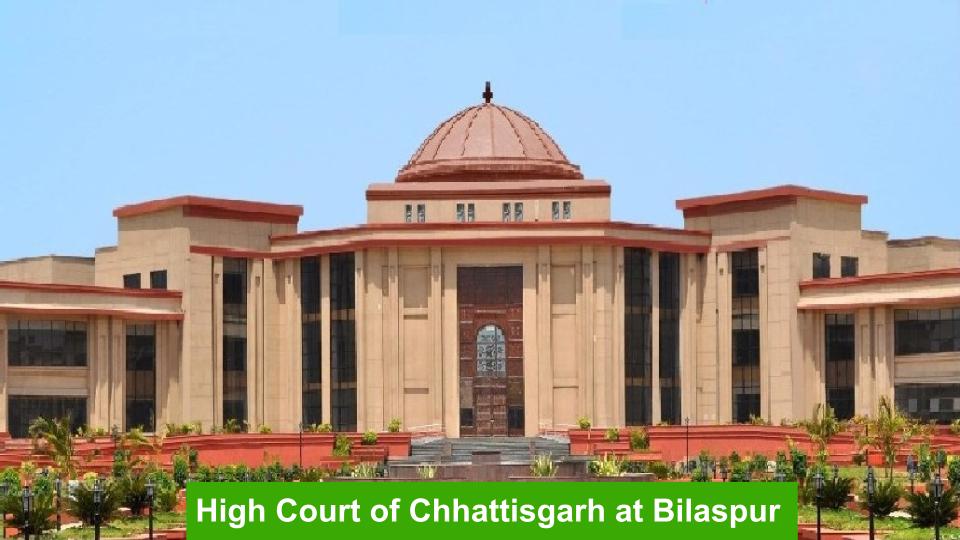
Bilaspur : Chhattisgarh High Court has held that where a generator set was contractually deployed, installed, connected and kept ready for emergency use during an election period, the supplier cannot be denied agreed rent merely because the generator was not actually switched on. The Division Bench dismissed the Election Commission of India’s appeal and upheld the Commercial Court’s decree awarding Rs. 69,69,375 towards generator rental along with interest.
The judgment was delivered by a Division Bench comprising Justice Parth Prateem Sahu and Justice Sushma Sawant in FAM No. 11 of 2023, Election Commission of India through the Chief Electoral Officer v. District Election Officer-cum-Collector, Kondagaon & Others. The order was reserved on September 10, 2026 and delivered on September 26, 2026. The appellant was represented by Mr. Rakesh Kumar Jha, Advocate, while Mr. Manish Nigam, Advocate, appeared for M/s Nilesh Tent House and Light Decoration.
The dispute arose from contracts issued for supplying tents, lights, microphones, generators and other equipment during the 2013 Chhattisgarh Legislative Assembly Elections and the 2014 Lok Sabha Elections in Kondagaon district. M/s Nilesh Tent House and Light Decoration had submitted its bid pursuant to the tender notice dated September 20, 2013, which was accepted and followed by a work order dated October 7, 2013. The supplier subsequently provided the required equipment. A further work order was issued for the 2014 Parliamentary Elections.
After completing the work, the supplier raised bills, but only partial payments were released. The supplier approached the High Court, following which the authorities were directed to examine and decide its claim. On March 31, 2016, the Collector rejected most of the claim and approved only a limited amount. The supplier thereafter instituted a civil suit before the Commercial Court seeking recovery of the outstanding amount.
The Commercial Court partly decreed the suit and awarded Rs. 69,69,375 for generator-set rental, holding that the generator was intended to serve as a backup power source. It also awarded interest at 6.75% per annum from March 31, 2016 until actual payment, making the defendants jointly and severally liable.
The Election Commission challenged the decree before the High Court. Its counsel argued that Clause 12 of the tender conditions clearly provided that rent would be payable only for the period during which the equipment was actually used. It was also argued that the generator sets had never been operated during the election period and that a letter from the Chhattisgarh State Power Distribution Company Limited indicated that there had been no power tripping during the relevant elections. According to the appellant, the supplier had also failed to produce concrete evidence showing actual use of the generators.
The supplier, however, argued that the approved rate for generators was Rs. 885 per KW per day, inclusive of diesel, and that the generators had been installed and kept continuously available at the required sites. According to the supplier, the contract required payment on a per-KW, per-day basis rather than according to the number of hours the generator was actually operated.
High Court’s interpretation of the tender condition
The Division Bench examined the tender document as a whole. The Court noted that Condition No. 12 stated that rent would be paid for the period during which the equipment was actually used. At the same time, the prescribed rate sheet specifically provided for generator rental on a per-KW, per-day basis, inclusive of diesel. The Court also noted that the approved rate list contained a daily rate for generator sets and that the evidence of the Deputy District Election Officer showed that the tender did not prescribe payment on an hourly basis.
The Court emphasized that tender conditions cannot be interpreted mechanically by isolating one clause from the rest of the contractual arrangement. It observed that the conditions must be read “as a whole” while considering the nature and purpose of the contract. The Bench further stressed that tender conditions should be clear and precise because ambiguous terms can otherwise give the executive excessive discretion in interpreting the contract.
The Court found that the generator was not merely required to be physically brought to the site. The supplier was required to install it, connect it and keep it ready for operation whenever electricity was required. Therefore, in the context of this contract, the Court treated deployment and readiness for use as sufficient contractual performance, even though the generator was never actually switched on.
The Bench explained, “Once the generator is installed, connected with electricity line and is ready for use in emergent situation like failure of electricity, it fulfills the term actual usage.” According to the Court, the agreed rent therefore became payable for the period during which the generator remained deployed and available at the site.
Contract must be given business efficacy
While reaching its conclusion, the High Court relied on the Supreme Court’s principles concerning interpretation of commercial contracts. Referring to Union of India v. M/s D.N. Revri & Co., the Court noted that a commercial contract should be interpreted in a common-sense manner so that the agreement remains effective rather than being defeated by an excessively technical interpretation.
The Bench also considered the principle of business efficacy, under which contractual terms should be interpreted so as to give effect to the commercial purpose that the parties reasonably intended. The Court further considered the Supreme Court’s observations in Maharashtra State Electricity Distribution Company Ltd. v. Ratnagiri Gas and Power Pvt. Ltd. regarding interpretation of commercial documents according to their original purpose and intendment.
The High Court ultimately held that the supplier’s entitlement to generator rent had to be determined by the period of contractual deployment and availability in ready-to-use condition, rather than merely by counting the hours for which the generator was switched on. It therefore found no reason to interfere with the Commercial Court’s award of Rs. 69,69,375.
Suit was not barred by limitation
The Election Commission had also argued that the recovery suit was filed beyond the prescribed limitation period because the bills had been submitted in 2013 and 2014. The High Court rejected this argument.
The Bench relied on Article 113 of the Limitation Act, 1963, which provides a three-year limitation period from the date when the right to sue accrues in cases covered by the residuary provision. The Court noted that the authorities had kept the supplier’s claim pending and finally took a decision on March 31, 2016. The civil suit was filed on March 27, 2019, within three years of that decision.
The Court therefore held that the cause of action arose on March 31, 2016, when the authority finally dealt with the supplier’s outstanding claim. Since the suit was filed within three years thereafter, the limitation objection was rejected.
The Bench also rejected the argument concerning non-joinder of necessary parties, noting that the issue had not been properly pressed before the Commercial Court. The Court observed that a party that abandons or fails to argue an issue before the trial court cannot ordinarily seek to raise it for the first time at the appellate stage.
The Chhattisgarh High Court consequently dismissed the Election Commission’s appeal and upheld the Commercial Court’s judgment and decree, with no order as to costs.
The ruling is significant for government procurement and election-related contracts because it highlights the importance of drafting clear tender conditions. The judgment also makes clear that where a contractor is engaged to provide standby equipment and the contractual arrangement requires the equipment to remain installed and ready for emergency use, payment cannot necessarily be denied simply because the contingency requiring actual operation never occurred. The decision also reinforces the principle that government authorities must apply tender conditions consistently with the contractual purpose and the rate structure actually accepted by them.