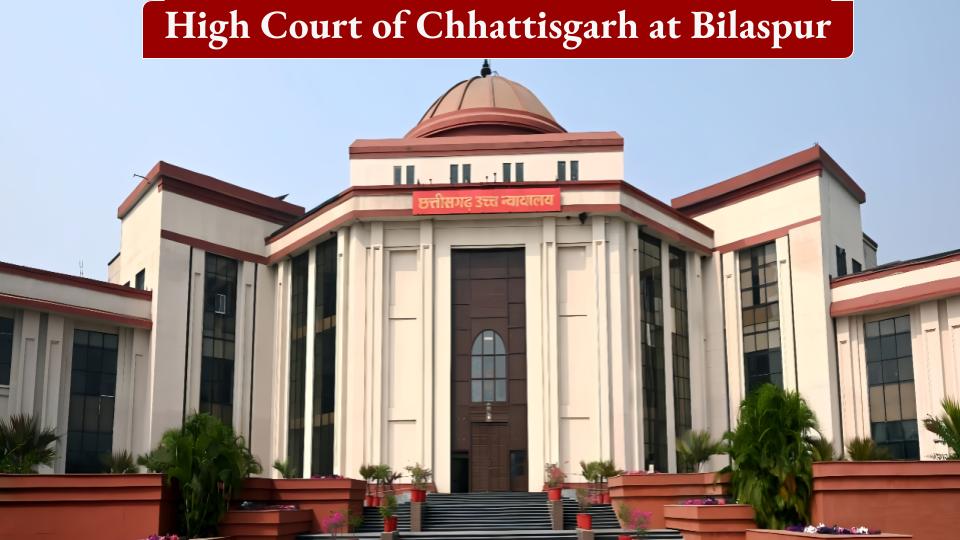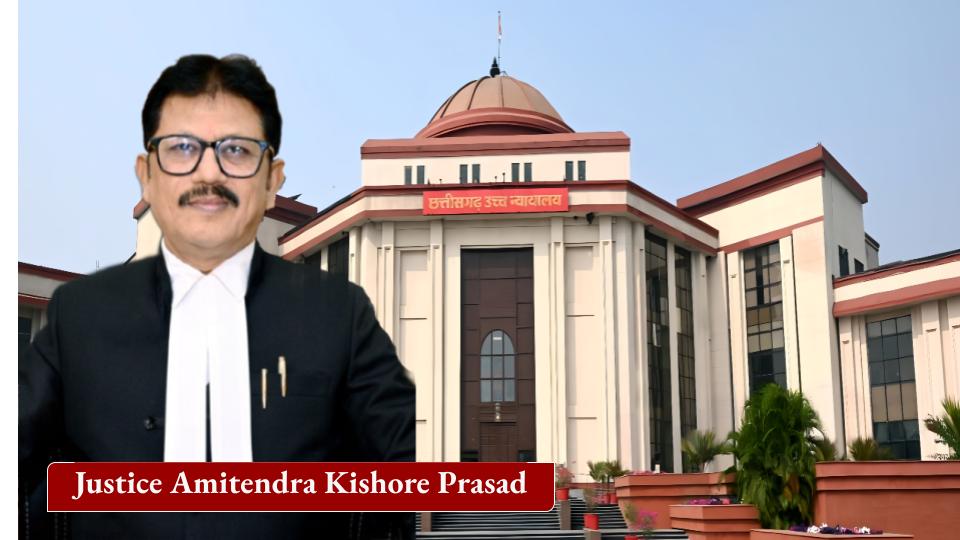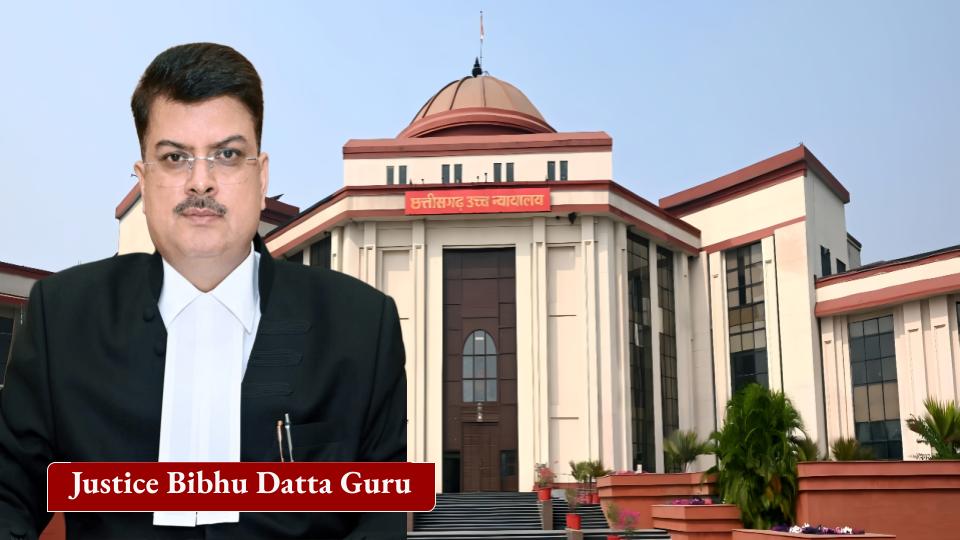
Bilaspur : The Chhattisgarh High Court at Bilaspur has dismissed a batch of writ petitions filed by retired Panchayat employees seeking pensionary benefits, holding that they could not establish any statutory entitlement to pension under the applicable service rules. Justice Bibhu Datta Guru, in a common order delivered on October 5, 2026, held that employees of Janpad Panchayats cannot claim pension merely on the basis of pension payments being made by some other Panchayats through locally created funds.
The petitions arose from orders dated July 21, 2025, by which the authorities had denied pension to the petitioners. The petitioners were employees appointed under different Panchayat establishments and had subsequently been confirmed or permanently appointed before retiring from service. They argued that they had rendered long and unblemished service and that their pensionary benefits were protected under Section 131 of the Chhattisgarh Panchayat Raj Adhiniyam, 1993.
The petitioners also relied upon the fact that employees of certain other Janpad Panchayats, particularly Gunderdehi in Balod district, were receiving pension. According to them, denying the same benefit to similarly situated employees was discriminatory. They further contended that pension was an earned retiral benefit which could not be arbitrarily withheld. Reliance was placed on the Supreme Court decisions in D.S. Nakara v. Union of India and Janpad Panchayat & Zila Panchayat Karamchari Sangh v. State of Madhya Pradesh.
The State opposed the petitions, maintaining that the petitioners were employees of Janpad Panchayats and were not government servants appointed to a civil service or post under the State. It therefore argued that the Chhattisgarh Civil Services (Pension) Rules, 1976 were not applicable to them. The State also pointed out that neither the Chhattisgarh Panchayat Raj Adhiniyam, 1993 nor the Panchayat Services (Recruitment and General Conditions of Service) Rules, 1999 contained a provision granting pension to employees of Gram Panchayat, Janpad Panchayat or Zila Panchayat.
The State further submitted that the petitioners were governed by the Contributory Provident Fund scheme and had already received its benefits. It argued that Section 131 of the 1993 Act was only a saving provision and could preserve an existing pensionary benefit, but could not itself create a new right to pension where no pension scheme or statutory entitlement existed.
A significant issue before the High Court concerned pension being paid to a small number of employees of Janpad Panchayats Gunderdehi and Takhatpur. The State explained that three employees of each Panchayat were receiving pension from locally created pension funds established pursuant to resolutions of their respective General Administration Committees, with contributions from the Panchayats and employees. The State had subsequently issued show-cause notices on August 27 and August 31, 2026, questioning the legal basis for these payments.
The High Court accepted the State’s position that such isolated payments could not create a statutory entitlement for other employees. The Court observed that payment of pension by a particular Janpad Panchayat pursuant to its own resolution or local fund “cannot, by itself, create a statutory right” in favour of similarly situated employees.
Justice Bibhu Datta Guru emphasised the limits of judicial review under Article 226 of the Constitution. The Court held that while exercising writ jurisdiction, it must determine rights according to the existing statutory framework and cannot go beyond legislation enacted by the competent legislature. The judgment relied upon several Supreme Court decisions concerning separation of powers and the limits of judicial legislation.
The Court specifically relied upon the principle that a writ of mandamus cannot be issued to compel the legislature to enact a particular law or to direct the executive to frame rules in a particular manner. Referring to Supreme Court precedent, the Court reiterated: “Neither the court can legislate, nor has it any competence to issue directions to the legislature to enact the law in a particular manner.”
The High Court also explained that the doctrine of separation of powers requires courts to remain cautious when a claimed benefit is not supported by legislation or applicable service rules. “Where the governing statutory provisions do not confer a particular benefit,” the Court held, the benefit cannot be directed merely because it appears desirable or because another authority has extended a similar benefit.
On Section 131 of the Chhattisgarh Panchayat Raj Adhiniyam, 1993, the Court found that the provision operates as a saving clause protecting existing pay, allowances, pension and retirement benefits of permanent employees who were in service when the Act came into force. However, it does not independently create a pension entitlement where no such entitlement existed under the applicable service conditions or statutory scheme.
The Court further noted that the recruitment rules and service conditions applicable to the petitioners at the time of their appointment provided for retirement benefits under the Provident Fund Scheme. There had been no subsequent amendment giving them an entitlement to pension. The petitioners also did not dispute that they had received benefits under the Contributory Provident Fund scheme. Consequently, the Court concluded that there was no legal basis for directing payment of pension.
The judgment also considered Article 300-A of the Constitution, under which a person cannot be deprived of property except by authority of law. The petitioners argued that pension constitutes a valuable right and property. The Court, however, clarified that recognition of pension as a property right does not create a pension entitlement where the employee has failed to establish an underlying statutory right to pension.
The Court examined the Chhattisgarh Civil Services (Pension) Rules, 1976 and noted that these rules apply to government servants appointed to civil services and posts connected with the affairs of the State, subject to the exclusions contained in Rule 2. The Court found that the petitioners had not established that their posts were pensionable or that they had acquired the status of civil servants.
The High Court also referred to its recent decision in Hemrai Nishad v. State of Chhattisgarh & Ors., decided on July 17, 2026, where a similar pension claim by Panchayat Secretaries was rejected on the ground that pension and other service-related claims must originate from applicable service rules. The Court also referred to Om Prakash Parhi v. State of Chhattisgarh & Others, in which a similar claim was rejected, noting that the Old Pension Scheme had not been extended to members of the Panchayat service.
The judgment additionally considered a Madhya Pradesh High Court ruling concerning Panchayat employees and reiterated the distinction between Panchayat employees and State government servants. The Court observed that Panchayat institutions are autonomous bodies and their employees are governed by separate recruitment and service rules. Performing public functions does not, by itself, confer the status of a government servant.
Ultimately, the High Court held that the petitioners had failed to establish any statutory entitlement to pension. The Court found that pension being paid from locally constituted funds by certain Panchayats could not create a corresponding statutory right, particularly when the legality of those payments was itself under examination by the authorities. The Court concluded that “an erroneous or disputed benefit extended by one authority cannot be made the basis for issuing a mandamus contrary to the governing statutory framework.”
Accordingly, the Court found no reason to interfere with the impugned orders denying pension and dismissed the entire batch of writ petitions. There was no order as to costs.
The ruling is significant for retired and serving Panchayat employees because it makes clear that pension cannot be claimed merely on the basis of long service, retirement or parity with employees who may have received benefits elsewhere. A pensionary claim must have a legal foundation in the applicable statute, service rules or a valid pension scheme. The decision also reinforces the constitutional limits on judicial intervention in matters involving legislative policy and executive service schemes.
Case Reference: Urmila Panigrahi v. State of Chhattisgarh & Others, WPS No. 11820 of 2025 & connected matters. Advocates: Ms. Meena Shastri with Mr. Ramesh Nayak for the petitioners; Mr. Y.S. Thakur, Additional Advocate General, with Mr. Shahil Singh, Mr. Anadi Sharma and Ms. Apurva Nigam for the State.