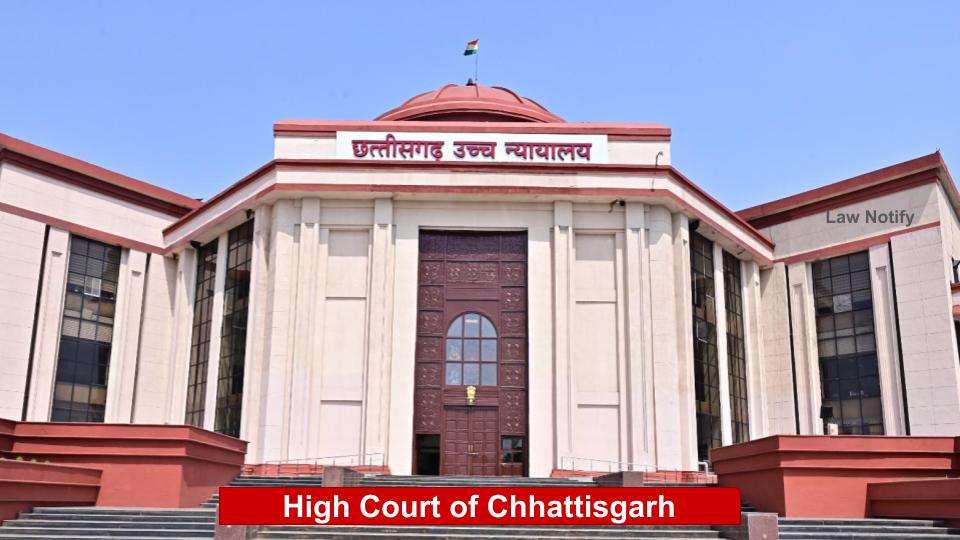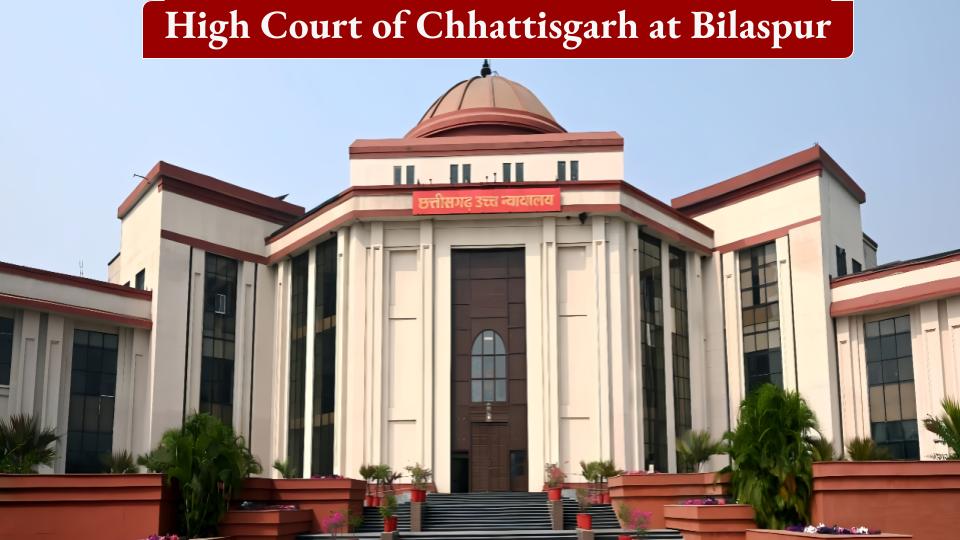
Bilaspur: The Chhattisgarh High Court has set aside a notice issued by the Bhilai Steel Plant for short-closing the housekeeping contract of M/s Himanshu Brothers, holding that the contractual requirement of providing at least 30 days’ notice had to be strictly followed before any decision to terminate or short-close the contract.
A Division Bench comprising Chief Justice Krushna Ram Mohapatra and Justice Santosh Sharma passed the order on September 30, 2026, in WPC No. 4805 of 2026. The petition was filed by M/s Himanshu Brothers through its proprietor Himanshu Khandelwal against Steel Authority of India Ltd. (SAIL), Bhilai Steel Plant and other officials.
The dispute arose after the Bhilai Steel Plant issued a short-closure notice concerning the housekeeping contract awarded to the petitioner. According to the petitioner, the action followed a Vigilance Report based on a police complaint. The petitioner argued before the High Court that Clauses 17.5.1 and 17.5.2 of the General Conditions of Contract expressly required a 30-day notice before the contract could be terminated or short-closed.

The petitioner’s counsel, Senior Advocate Mateen Siddiqui, assisted by Advocate Apoorva Pandey, submitted that the contract was proposed to be short-closed from October 1, 2026, and therefore sought consideration of the matter on merits. The respondents did not oppose the amendment of the writ petition and the additional contractual documents were taken on record as Annexure P/8.
During the hearing, the respondents themselves acknowledged that the contract required a 30-day notice. However, they pointed out that only 28 days’ notice had initially been given. Their argument was that the notice was tentative and could be treated as the contractual 30-day notice, with any action being taken only after completion of the required period.
The High Court examined Clauses 17.5.1 and 17.5.2 of the General Conditions of Contract. Clause 17.5.1 permits termination for non-performance or other specified contractual grounds by providing a 30-day written notice or cure period. Clause 17.5.2 separately provides that the employer may terminate the contract without assigning a reason by giving a reasonable notice period of not less than 30 days.
After considering the contractual provisions, the Bench concluded that the required notice period could not be bypassed. The Court held, “a 30 days’ notice should have been given to the petitioner before taking a decision to short-close the contract.” It consequently directed that a fresh notice be issued strictly in accordance with Clauses 17.5.1 and 17.5.2 before any further action is taken to short-close the contract.
The Court accordingly set aside the impugned short-closure notice issued through letter dated September 3, 2026, bearing PO No. PO-4270017834. At the same time, the judgment does not prevent the respondents from taking a fresh decision. The authorities may proceed in accordance with the contract, provided the prescribed notice requirements and applicable law are followed.
Importantly, the High Court directed that while issuing any fresh notice, the respondents should not be influenced by the observations contained in the earlier communication dated September 3, 2026. Any subsequent decision must be independently taken in accordance with the contractual terms and applicable law.
The ruling is significant from the perspective of contractual fairness and enforcement of agreed termination procedures. The Court did not adjudicate upon the underlying allegations reflected in the Vigilance Report or determine whether the contractor had committed any contractual default. Instead, the decision focused on whether the employer had complied with the mandatory notice mechanism incorporated into the contract. The judgment therefore reinforces the principle that contractual powers of termination must be exercised in the manner prescribed by the governing contract.
The order also has practical implications for public sector contracts. Where termination or short-closure provisions prescribe a specific notice period, the contracting authority cannot simply proceed on the basis of an incomplete notice and subsequently justify the deficiency. The authority must comply with the agreed contractual procedure before taking consequential action.
No specific provision of the IPC, BNS, CrPC or BNSS was adjudicated upon in the order. The decision primarily concerns enforcement and interpretation of the contractual terms contained in the General Conditions of Contract. The High Court allowed the writ petition and the connected interlocutory application to the extent indicated in the judgment.
Case Reference: M/s Himanshu Brothers through its Proprietor Himanshu Khandelwal v. Steel Authority of India Ltd. & Others, WPC No. 4805 of 2026. The petitioner was represented by Senior Advocate Mateen Siddiqui, assisted by Advocate Apoorva Pandey, while the respondents were represented by Advocate P.R. Patankar.