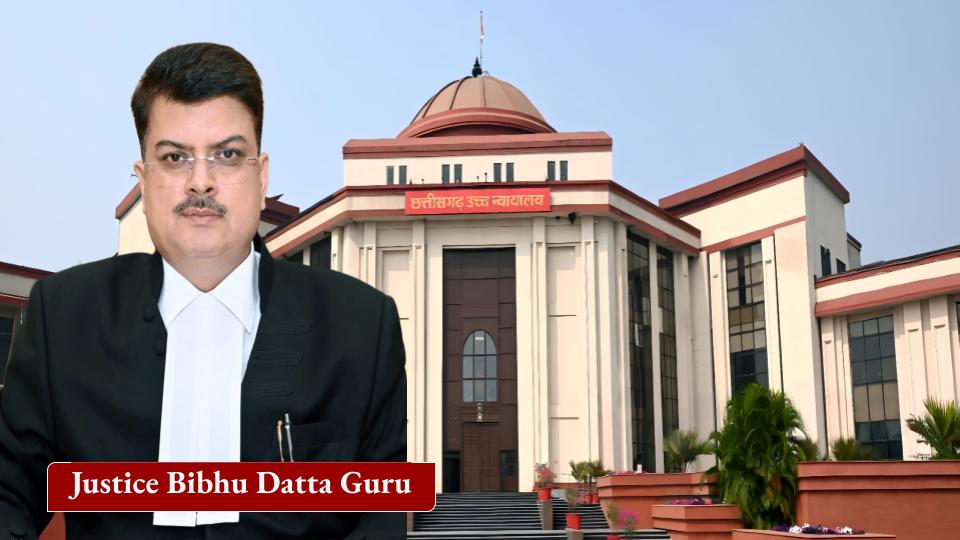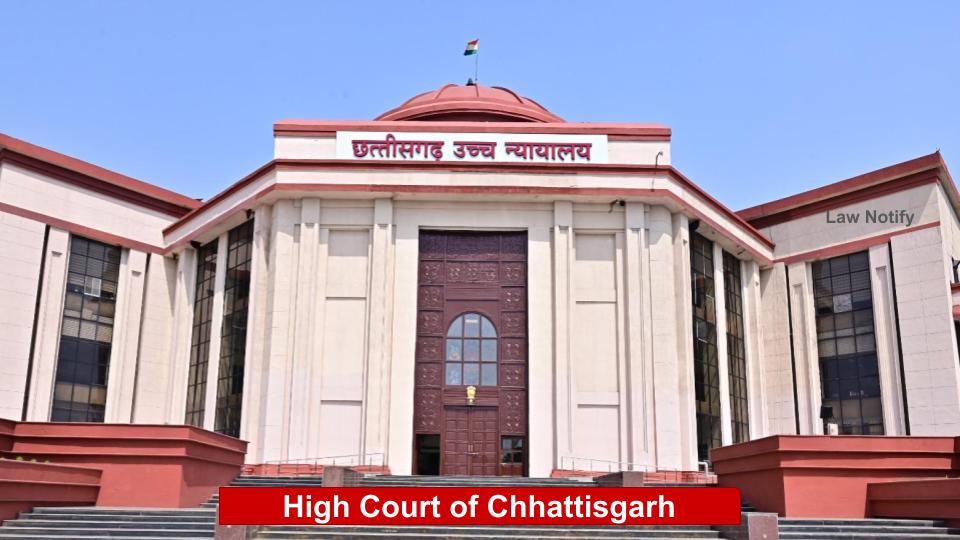
Bilaspur : A division bench of the Chhattisgarh High Court has expressed shock over the deaths of five inmates—four adult women and a five-year-old child—at Gharounda centres, while also voicing serious concern over alleged medical-care lapses, inadequate monitoring, and the absence of documented procedures that the fatalities brought to light.
Gharoundas are group homes built for adults with disabilities as part of a flagship scheme by the state social justice and empowerment ministry.
Taking serious note of the findings of the court commissioner, who inspected the Gharounda centres in Raipur and Bilaspur in light of the inmate deaths, the division bench of Chief Justice Krushna Ram Mohapatra and Justice Santosh Sharma observed on November 3 that the reports and photographs reflected a “sorry state of affairs.” The bench said it was particularly shocked to find that no one was available to communicate with the inmates and understand their difficulties.
The court commissioner’s report revealed that the five deaths at the female Gharounda centre in 2026 included Shobha (30), who died on May 24 due to pneumonia and septic shock; Kumari Bai (35), who died on May 9 after suffering from severe iron-deficiency anaemia, seizure disorder, low sodium levels, and aspiration pneumonitis; Meena (30), who died on June 6 following acute enteritis, severe dehydration, abdominal tuberculosis, and respiratory failure; Kusum (45), who died on September 21, with hospital records indicating extrapulmonary tuberculosis; and a five-year-old child, Kabir, who died on August 10 due to sepsis and refractory shock.
According to the report, while records of hospital treatment and deaths were available, the Gharounda authorities did not furnish separate paperwork to show that the deaths were immediately reported to the police, district-level committee, and senior departmental authorities, as required under Clause 18 of the guidelines. The court commissioner clarified that the absence of post-mortem reports by itself did not constitute a violation of the guidelines, but the crucial issue was whether the prescribed intimation and procedures had been followed and documented.
The death of the child, Kabir, the son of Sapna Nayak—who the report identified as being connected to a women’s Gharounda—raised concerns while also bringing some discrepancies to light. According to the report, when the commissioner questioned the centre’s staff and manager about Kabir’s death, they stated that he was healthy, fell from the bed, suffered seizures, and was subsequently taken to a hospital. However, hospital records revealed several serious medical conditions, including neurocysticercosis, nutritional anaemia, and tuberculosis, besides sepsis and refractory shock as the recorded cause of death.
It was recorded that the child had been admitted to hospital on July 3 and died on August 10. However, the records held discrepancies regarding his age, with seven years mentioned in some hospital documents and five years in a radiology slip. The initial admission history and brain scan reports were also missing from the documents supplied to the commissioner.
The commissioner recommended an independent medical expert inquiry to ascertain the child’s health before the incident, the circumstances leading to the fall and seizures, and whether prompt medical attention and appropriate treatment had been provided. The report, however, did not draw any conclusion regarding negligence or wrongdoing.
The inspection also exposed significant gaps in medical supervision at the Raipur centres. Although the guidelines require qualified doctors to visit twice a week and nurses or paramedical personnel to remain available round the clock, the medical registers showed only one or two doctor visits a month during the preceding three months. No records establishing 24-hour nursing or paramedical assistance or regular psychiatric reviews were found.
The commissioner further pointed out that the medical registers did not adequately document the symptoms noticed among the inmates, when their illnesses were first detected, or what medical assistance was provided before hospitalisation in the cases of Kumari Bai, Shobha, and Meena.
In another disturbing finding at the Bilaspur Gharounda, a male inmate was found tied to the four corners of his bed. The staff reportedly described him as “hyper,” claiming he could do anything. The inmate was photographed lying bare-bodied on a thermocol sheet placed over a wooden cot, with his wrist tied to the cot’s leg using a piece of cloth.
When questioned, the manager said the inmate had been restrained for about half an hour. Following the commissioner’s insistence, he was released. The inmate then walked to the washroom and subsequently sat with other residents waiting for food. The commissioner observed that he appeared to have been unable to communicate his need to use the toilet while restrained. No medical advice or record authorising the physical restraint was produced.
The Bilaspur inspection also found that individual health records of inmates were not maintained. The medical register contained only common entries dated August 14 and September 12, recording a general review and prescription of medicines, instead of individual examination notes and progress reports. Against the prescribed two doctor visits every week, only one common review per month was recorded.
The court commissioners also reported that food served to inmates at the Bilaspur centres was of poor quality and insufficient quantity, while toilet hygiene was unsatisfactory. The report noted that residents were being administered multiple psychiatric medicines despite inadequate food arrangements.
The High Court directed the state government to obtain detailed instructions and file its responses within two weeks. The state was also asked to examine whether the commissioners could be provided access to CCTV cameras installed at the respective Gharounda centres.
The court further directed the nodal officers of the respective districts and persons in charge of the Gharounda centres to share monthly reports with the court commissioners to facilitate better monitoring and assist the court in accordance with Clauses 28 and 30 of the guidelines issued by the government on March 5, 2019.
The directions were issued in response to a PIL filed by Kopal Vani Child Welfare Organisation, Raipur, along with two connected writ petitions.