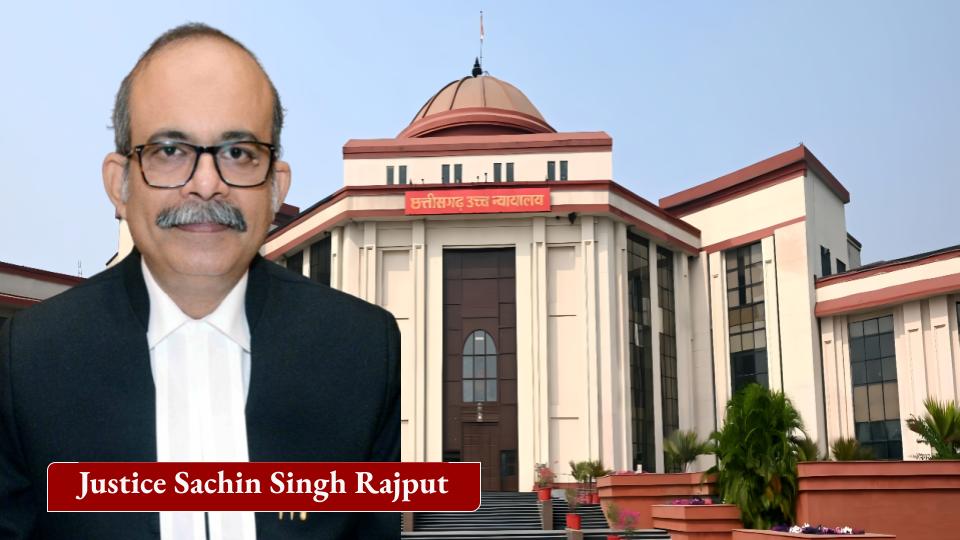
Bilaspur: The High Court of Chhattisgarh has set aside an order of the District Magistrate, Rajnandgaon, which had refused a housing finance company’s request for possession of a mortgaged property on the ground that it had already been sold to a third party. The court held that the District Magistrate, while exercising powers under Section 14 of the Securitisation and Reconstruction of Financial Assets and Enforcement of Security Interest Act, 2002 (SARFAESI Act), acts in a purely ministerial capacity and has no authority to enter into the merits of a dispute or adjudicate questions of title.
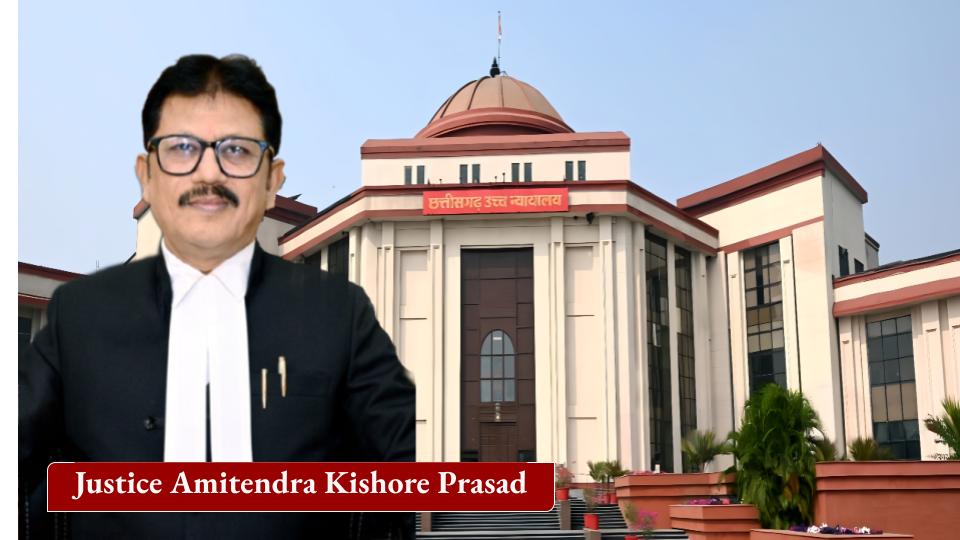
The judgment, delivered on 29 October 2026 by Justice Amitendra Kishore Prasad in WPC No. 4952 of 2021, arose from a petition filed by Aadhar Housing Finance Ltd., which had sanctioned a home loan of Rs 7,96,388 to a borrower couple in 2017. The loan was secured against a house built on land in Rajnandgaon, and the borrowers executed a mortgage agreement on 24 May 2017.
According to the petitioner, the borrowers defaulted on repayment, and their loan account was classified as a Non-Performing Asset on 10 August 2019. The company then issued a demand notice under Section 13(2) of the SARFAESI Act, seeking Rs 8,29,436. When the borrowers failed to pay, the lender moved an application under Section 14 before the District Magistrate, seeking assistance in taking possession of the secured asset.
However, the District Magistrate rejected the application on 6 September 2021, reasoning that the property had already been sold to a third party, respondent No. 3, through a registered sale deed dated 13 December 2019. The Magistrate took the view that possession could not be handed over since the secured asset no longer belonged to the borrowers.
The finance company challenged this order before the High Court, arguing that the District Magistrate had exceeded his jurisdiction. Counsel for the petitioner contended that the powers conferred under Section 14 are ministerial in nature and not adjudicatory, as settled by the Supreme Court in R.D. Jain & Co. v. Capital First & Ors., reported in (2023) 1 SCC 675. It was further argued that any transfer of the mortgaged property in favour of a third party does not extinguish the secured creditor’s right to recover the loan from the secured asset.
The third-party purchaser supported the impugned order, while the State counsel defended the Magistrate’s reasoning that the sale of the property prevented an order for possession.
The High Court framed the central question as whether the District Magistrate, while exercising jurisdiction under Section 14, is empowered to adjudicate disputed questions concerning the rights of the parties. Answering in the negative, the court observed: “While considering an application under Section 14 of the SARFAESI Act, the District Magistrate is not vested with the jurisdiction to adjudicate upon the merits of the secured creditor’s claim or to determine disputed questions of fact concerning the rights of the parties.”
The court reiterated that such adjudicatory issues fall within the domain of the Debts Recovery Tribunal under the statutory scheme of the SARFAESI Act. It noted that the role of the District Magistrate is limited to verifying compliance with the statutory requirements and assisting the secured creditor in taking possession, and that the subsequent sale of the mortgaged asset could not, by itself, confer jurisdiction on the Magistrate to examine the validity or legal consequences of that transfer.
Placing reliance on the Supreme Court’s decisions in R.D. Jain & Co. and Balkrishna Rama Tarle v. Phoenix ARC (P) Ltd., reported in (2023) 1 SCC 662, as well as a Calcutta High Court ruling in Only Wheel and Others v. Bank of Baroda and Others (2025 SCC OnLine Cal 7217), the court held that Section 14 does not involve any adjudicatory process with respect to objections raised by borrowers or third parties. The aggrieved party must instead raise objections before the Debts Recovery Tribunal under Section 17 of the Act.
The High Court concluded that the District Magistrate had “travelled beyond the scope of the jurisdiction vested in him and entered into an adjudicatory exercise which is not contemplated under the said provision.” The impugned order dated 6 September 2021 was accordingly set aside, and the matter was remanded to the District Magistrate for fresh consideration strictly within the scope of Section 14. The court directed that an appropriate order be passed within 30 days of receipt of the judgment, after affording all concerned parties an opportunity to be heard, and asked the finance company to extend full cooperation in the proceedings.
In its headnote, the court summarised the legal position: the powers exercised by the Chief Metropolitan Magistrate or District Magistrate under Section 14 are administrative or executive in nature and do not involve any judicial or quasi-judicial function, and the authority cannot adjudicate disputed questions concerning the rights of the secured creditor, borrower or third party.
The ruling reinforces the settled principle that Section 14 proceedings are meant to be a speedy, ministerial mechanism for enforcing security interests, and that magistrates cannot convert them into forums for resolving complex disputes over property title or third-party claims. For lenders, the judgment affirms that a borrower’s subsequent sale of a mortgaged asset does not automatically defeat the secured creditor’s right to take possession, while purchasers of encumbered properties are reminded that their remedies lie before the Debts Recovery Tribunal under Section 17 rather than before the District Magistrate.
Case Reference : WPC No. 4952 of 2021 — Aadhar Housing Finance Ltd. v. Manpreet Singh & Ors. Petitioner’s counsel: Shri Atul Kumar Kesharwani; Respondent No. 3’s counsel: Shri Pushpendra Kumar Patel; State counsel: Shri Soumitra Kesharwani, PL.