News Citation : 2026 LN (HC) 405
July 22, 2026 : The Chhattisgarh High Court has reiterated that even an alleged encroacher on government land cannot be deprived of shelter through arbitrary demolition without following the procedure established by law. Setting aside the partial demolition of a villager’s house carried out without prior notice, the Court held that authorities must strictly comply with the due process safeguards laid down by the Supreme Court before taking any coercive action affecting residential property.
The case arose from a writ petition filed by Netram Verma, a resident of Rajnandgaon district, who challenged the demolition of a portion of his house allegedly carried out by the Sarpanch of Gram Panchayat Mudhiya. According to the petitioner, he had been residing on the land for nearly three decades after leaving his ancestral home due to a family dispute. He claimed to be landless and homeless, had obtained an electricity connection for the house, and had already submitted a representation to the Collector on June 24, 2023 seeking a lease (patta) or rehabilitation under a government housing scheme. Despite the pending application, part of his house was demolished without any prior notice or hearing, and he feared further demolition.
The State opposed the petition, contending that the petitioner was an unauthorized occupant of government land and that proceedings for removal of encroachment had been initiated in accordance with law. The Gram Panchayat also maintained that the land was reserved for a Gothan and that only the unauthorized construction had been partially removed. However, during the hearing, the Panchayat was unable to produce any show cause notice or demolition order issued by the competent authority before carrying out the demolition.
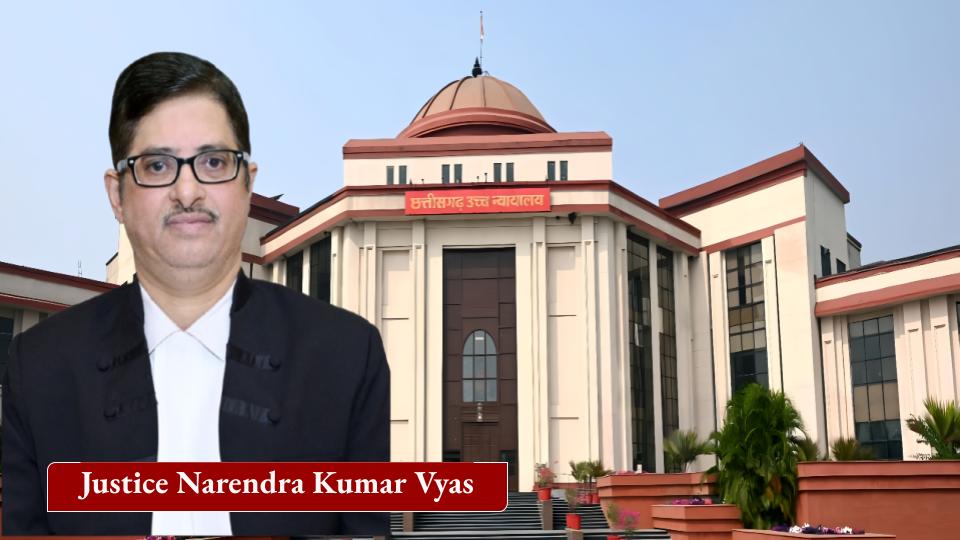
While examining the dispute, Justice Amitendra Kishore Prasad relied extensively on the Supreme Court’s landmark judgment in In Re: Directions in the Matter of Demolition of Structures, (2025) 5 SCC 1, which laid down nationwide procedural safeguards governing demolition of structures. The High Court observed that these directions are binding on all authorities across the country and require issuance of a prior show cause notice, grant of an opportunity of hearing, passing of a reasoned order, and sufficient time for the affected person to challenge the demolition before any structure is removed.
Emphasising the constitutional protection available to every individual, the Court observed that “even assuming that the petitioner is an unauthorized occupant of Government land, the respondents were under a legal obligation to first determine the petitioner’s rights in accordance with law and thereafter proceed strictly in conformity with the procedure prescribed by the Supreme Court.” It further held that “the partial demolition of the petitioner’s residential house without issuance of any notice and without following the procedure mandated by the Supreme Court is wholly arbitrary and unsustainable.”
The judgment is rooted in Article 21 of the Constitution, which protects the right to life and has consistently been interpreted by courts to include the right to shelter. The High Court noted that the Supreme Court has already clarified that authorities cannot render individuals homeless overnight merely through executive action. The Court also referred to the principles of natural justice, particularly the requirement of prior notice and a fair hearing before any adverse administrative action is taken.
Legally, the decision reinforces that removal of encroachments must be carried out strictly through statutory procedure. Administrative authorities cannot bypass constitutional safeguards merely because an occupant is alleged to be unauthorized. The ruling also strengthens judicial oversight over demolition drives and ensures that local bodies, revenue authorities, and panchayats remain accountable to the rule of law while exercising their powers over public land.
Allowing the petition in part, the High Court restrained the Gram Panchayat and other authorities from carrying out any further demolition of the petitioner’s existing residential house except in accordance with due process of law. The Court also directed the Collector, Rajnandgaon, to decide the petitioner’s pending application seeking lease or patta by passing a reasoned and speaking order after granting him an opportunity of hearing, preferably within sixty days. The petitioner has been directed to submit a fresh representation enclosing a certified copy of the judgment within two weeks. Until the Collector decides the application, no further coercive action or demolition can be undertaken except in strict compliance with the Supreme Court’s demolition guidelines.
The ruling is expected to have significant implications for demolition and anti-encroachment drives across Chhattisgarh. It makes clear that even where occupation of government land is disputed, authorities must adhere to constitutional guarantees, principles of natural justice, and the procedural safeguards mandated by the Supreme Court before interfering with a person’s home or shelter.
Case Reference: Netram Verma v. State of Chhattisgarh & Others, WPC No. 3371 of 2023