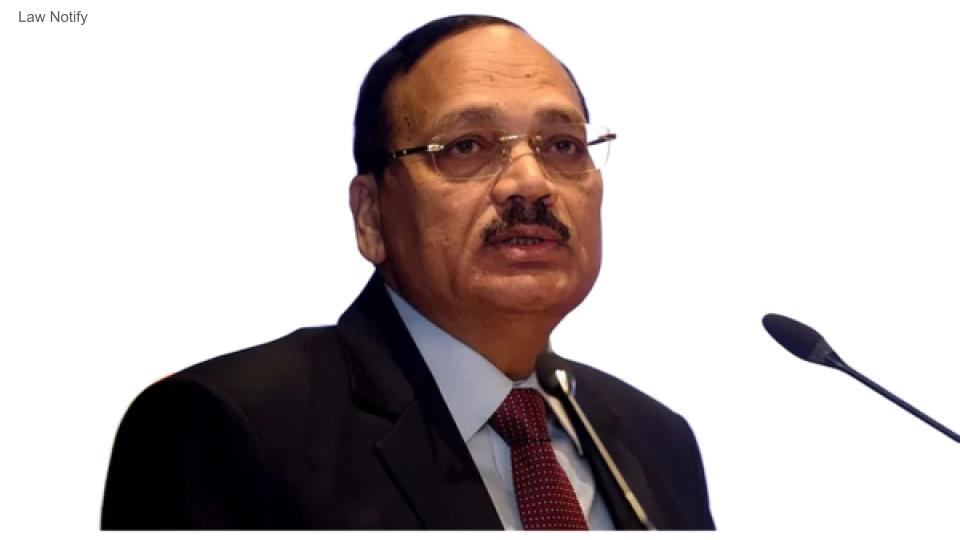
August 8, 2026 : Chief Justice of India Justice Surya Kant on Saturday called upon legal services institutions to ensure that justice is not treated as a distant promise but as a daily practice grounded in dialogue, dignity and inclusion. He said the ultimate objective of legal aid should be to take justice to citizens, particularly those who are unable to approach legal institutions on their own.
The CJI was addressing the inaugural session of the two-day West Zone Regional Conference of the National Legal Services Authority (NALSA) in Indore. The conference, organised by NALSA in association with the Madhya Pradesh State Legal Services Authority, is being held on the theme “Enhancing Access to Justice: United Voice, Stronger Tomorrow.” Judges, judicial officers, legal aid counsels and paralegal volunteers are participating in the conference.
Justice Surya Kant said the three elements of the conference theme were not merely slogans but represented the working definition of effective legal aid. He emphasised that legal aid should involve speaking with people rather than merely speaking to them, treating them as citizens rather than case numbers, and reaching them wherever they are instead of expecting them to find their own way to the justice system.
Drawing upon the history of Indore, the CJI recalled the example of Lokmata Ahilyabai Holkar, who regularly held open courts to directly hear farmers, widows and traders. He observed that what made her administration remarkable was not merely the delivery of justice but its accessibility to ordinary people. According to him, accessibility remains the standard that legal services institutions must strive to achieve today.
Speaking about dialogue as the first pillar of access to justice, Justice Surya Kant said every legal aid application begins with a person narrating a problem. Similarly, legal awareness programmes can succeed only when institutions first understand the realities faced by people at the grassroots level.
He said dialogue within NALSA must extend from the national level to paralegal volunteers who are closest to communities. A united voice, he explained, does not mean that everyone must say the same thing. Instead, it means working towards a common objective while responding to the specific needs of different communities.
Highlighting the diversity of the West Zone, the CJI said the legal requirements of a tribal family in Madhya Pradesh, a fisherfolk community in Goa, a migrant worker in Gujarat and a woman seeking legal assistance in Mumbai are unlikely to be identical. Therefore, he said, the legal services response cannot be uniform and must take local realities into account.
On dignity, Justice Surya Kant stressed that respect is reflected through everyday interactions. A legal aid lawyer patiently listening to a person, a paralegal volunteer explaining the law in simple language and a judicial officer ensuring courtesy in the courtroom are all examples of a justice system that respects human dignity.
The CJI also highlighted the constitutional dimension of legal aid. He said the Legal Services Authorities Act treats assistance to vulnerable sections not as charity but as a matter of constitutional entitlement. Article 39A of the Constitution directs the State to secure equal justice and provide free legal aid so that opportunities for securing justice are not denied because of economic or other disabilities.
Describing inclusion as the most difficult test for institutions, Justice Surya Kant said the real measure of an institution is not how effectively it serves those who can reach it, but how effectively it reaches those who cannot reach it themselves.
The CJI also pointed to several developments in the legal aid system, including more than one crore pre-litigation consultations through Tele-Law, the Nyaya Bandhu platform connecting people with pro bono advocates, and mobile legal aid clinics extending services to remote and tribal areas.
Justice Surya Kant said the ultimate objective should be to create a system where “justice travels to the citizen, rather than expecting the citizen always to travel to justice.” He urged the states in the West Zone to move beyond principles and translate them into concrete practices through stronger coordination and effective institutional frameworks.
Addressing paralegal volunteers, he said the promise contained in Article 39A “lives equally in your hands” and would have real meaning only when legal assistance reaches the households for which the constitutional guarantee was intended.
Concluding his address, the CJI said a stronger tomorrow is not something that institutions should simply wait for, but something that must be built through present action. He ended his address with “Jai Hind.”