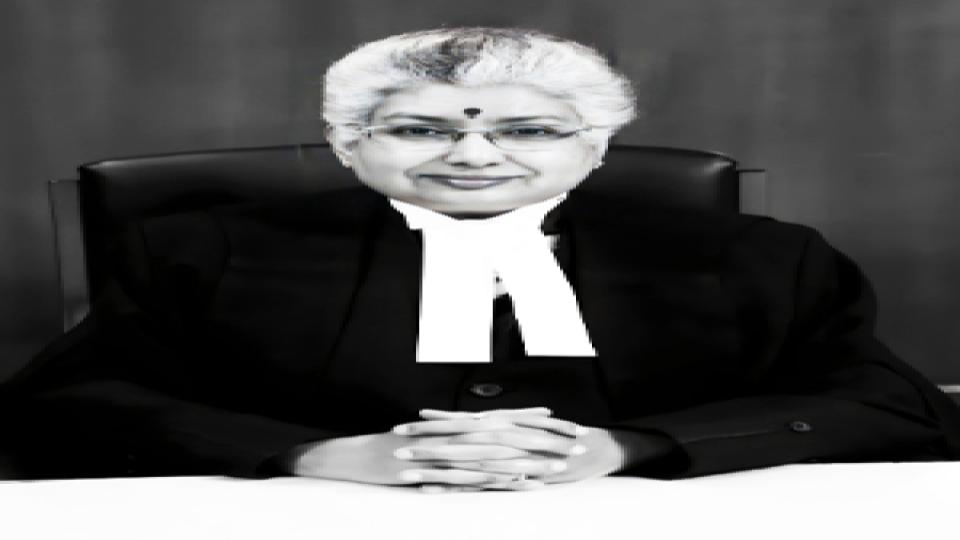
April 18, 2026 : Supreme Court judge Hon’ble Justice B. V. Nagarathna on Saturday emphasised that judges must cultivate courage and independence in the discharge of their duties, warning against any external or internal influence in decision-making.
Speaking at the 22nd Biennial State-Level Conference of Judicial Officers organised by the Karnataka State Judicial Officers Association in Bengaluru, she observed that for a large section of citizens, the district judiciary remains the primary point of contact with the justice delivery system.
Justice Nagarathna noted that the implementation of the Second National Judicial Pay Commission’s recommendations, including improved salaries and allowances, removes any justification for ethical compromise within the judiciary. She stressed that independence must extend beyond protection from outside pressures and include insulation from influence within the institution, even from fellow judges.
She cautioned that any tainted decision undermines public trust and damages institutional credibility. Judges who deviate from lawful sources of income or yield to inducements, she said, must be removed to preserve the integrity of the system.
Highlighting the importance of personal discipline, she stated that judicial decision-making must remain free from coordination or interference. The legitimacy of the justice delivery system, she added, ultimately depends on the courage and independence of those on the Bench.
Raising concerns about the growing use of Artificial Intelligence in legal research, Justice Nagarathna pointed to instances where incorrect or fabricated case law had been cited in court proceedings. She underlined the risks of relying on unverified AI-generated material and called for greater diligence and accountability.
While acknowledging that AI can assist in administrative and research functions such as filing, listing, transcription and case analysis, she made it clear that it cannot replace human adjudication. Excessive dependence on such tools, she warned, could subtly influence judicial reasoning and must be approached with caution.
She also flagged issues relating to data privacy and confidentiality, noting that courts routinely handle sensitive personal and financial information, which requires robust safeguards against misuse or unauthorised access.
On the administrative side, Justice Nagarathna reiterated that High Courts have a constitutional responsibility under Article 235 to ensure fairness and transparency in matters of postings, transfers, promotions and leave of judicial officers. Efficient administrative systems, she said, are essential to maintaining both independence and morale in the district judiciary.
She pointed to shortcomings in High Court registries, observing that delays and inaction often leave judicial officers without adequate institutional support. Timely grievance redressal, she added, is crucial for sustaining confidence within the system.
Addressing infrastructural concerns, she noted disparities across district courts despite progress in digitisation, and called for greater attention to ensuring uniform access to basic facilities.
On gender inclusion, she stressed the need for a comprehensive approach to ensure safety, dignity and supportive working conditions for women judges, including safeguards against bias and harassment.
Justice Nagarathna concluded that while technology can support the judicial process, the administration of justice must remain rooted in human adjudication, guided by constitutional values, the rule of law and a firm commitment to fairness.
Among those present at the event were Chief Justice of India Justice Surya Kant, Supreme Court judge Justice Aravind Kumar, Karnataka Chief Minister Siddaramaiah, Karnataka High Court Chief Justice Justice Vibhu Bakhru, along with other judges and members of the judicial fraternity.