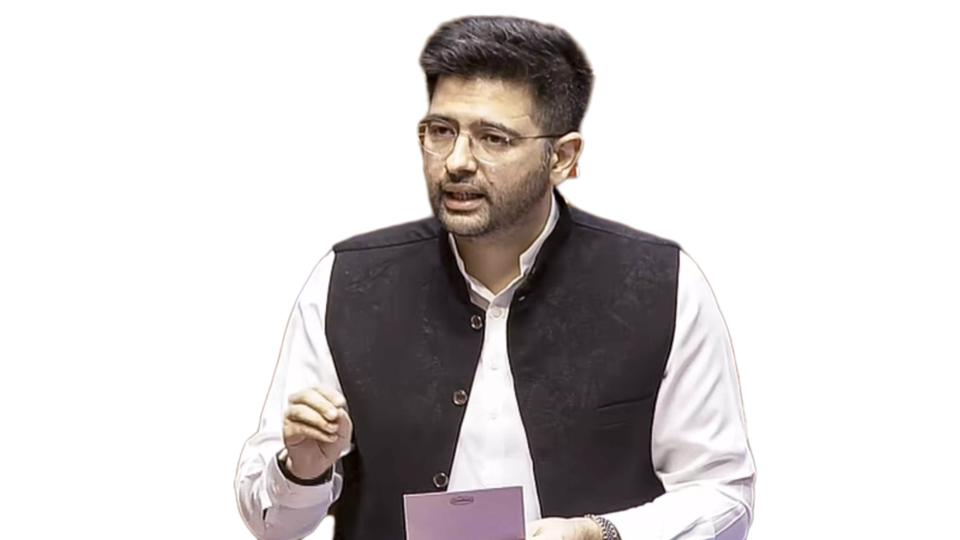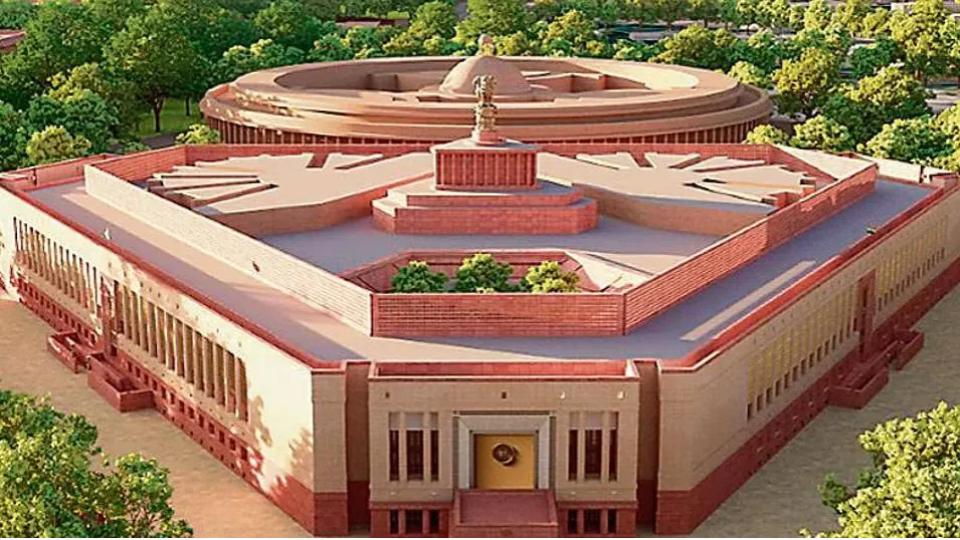
April 18, 2026 : In a significant parliamentary setback for the Union Government, the Lok Sabha on April 17, 2026 voted down the Constitution (One Hundred and Thirty-First Amendment) Bill, 2026, marking the first instance of a constitutional amendment introduced by the present government failing to secure passage in the lower house.
The Bill fell short of the constitutionally mandated special majority under Article 368 of the Constitution of India. Out of 528 Members of Parliament present, 298 supported the Bill while 230 opposed it. The government required 352 votes, two-thirds of those present and voting, but missed the mark by 54 votes.
Following the defeat, Union Minister Kiren Rijiju announced the withdrawal of the Delimitation Bill, 2026 and the Union Territories Laws (Amendment) Bill, 2026, both of which formed part of a broader legislative package tied to parliamentary seat redistribution and women’s reservation.
What the Amendment Sought to Change
Introduced a day earlier on April 16, the proposed amendment aimed to substantially reconfigure India’s parliamentary structure by modifying Article 81 of the Constitution of India, Article 82 of the Constitution of India, and Article 334A of the Constitution of India.
The Bill proposed expanding the Lok Sabha from its current strength of 543 seats to 850, with up to 815 members representing States and 35 representing Union Territories. This would have marked the most substantial expansion of the House since the Constitution came into force in 1950.
A key feature of the proposal was to delink delimitation from the post-2026 Census requirement. By amending Article 82, the government sought to enable delimitation based on existing Census data, specifically the 2011 Census, instead of waiting for the next Census cycle.
This move would have effectively overridden the population-freeze framework established through the 42nd Constitutional Amendment Act, 1976 and later extended by the 84th Constitutional Amendment Act, 2001. These amendments were designed to ensure that states undertaking population control measures were not disadvantaged in parliamentary representation.
Women’s Reservation Linkage
The Bill also attempted to operationalise the one-third reservation for women in Parliament by modifying Article 334A. It proposed that reservation be implemented immediately after delimitation, rather than waiting for a post-Census exercise.
This was closely tied to the Constitution (106th Amendment) Act, 2023, which introduced women’s reservation but made its implementation contingent upon delimitation following the first Census conducted after the law’s enactment.
Although the 106th Amendment was notified into force on April 16, 2026, its practical implementation now remains uncertain due to the failure of the accompanying delimitation framework.
Federal Concerns and Opposition
Opposition to the Bill centred on its reliance on 2011 Census data, which several states argued would disproportionately alter representation in favour of high-population states. Southern states, in particular, raised concerns that the proposed redistribution would penalise regions that had successfully implemented population stabilisation policies.
Projections discussed during parliamentary debates indicated that states like Tamil Nadu and Kerala could see a reduction in seats if the existing Lok Sabha strength were maintained, while states such as Uttar Pradesh and Bihar stood to gain.
During the debate, Union Home Minister Amit Shah indicated that the government was open to guaranteeing a uniform 50% increase in seats across all states to preserve proportional balance. However, no formal amendment to that effect was moved before the vote.
Legal and Institutional Implications
With the withdrawal of the Delimitation Bill, 2026, the existing Delimitation Act, 2002 continues to govern the process of constituency readjustment. The failure of the amendment leaves unresolved the question of whether and how delimitation can proceed using current Census data.
Under the existing constitutional scheme, delimitation remains tied to the publication of the first Census after 2026. The ongoing Census exercise, with a reference date of March 1, 2027, is expected to trigger the next delimitation cycle once officially published.
Given that the next general elections are due in 2029, it is unlikely that delimitation based on the 2027 Census will be completed in time. This also means that women’s reservation in the Lok Sabha is unlikely to be implemented for the 2029 elections.
A Rare Parliamentary Defeat
The rejection of the 131st Amendment underscores the high threshold required for constitutional amendments and the necessity of broad political consensus. Such defeats remain rare in India’s legislative history, particularly for proposals introduced by the ruling government.
As of April 18, 2026, there has been no announcement regarding the reintroduction of the Bill or a revised legislative framework addressing delimitation and women’s representation.