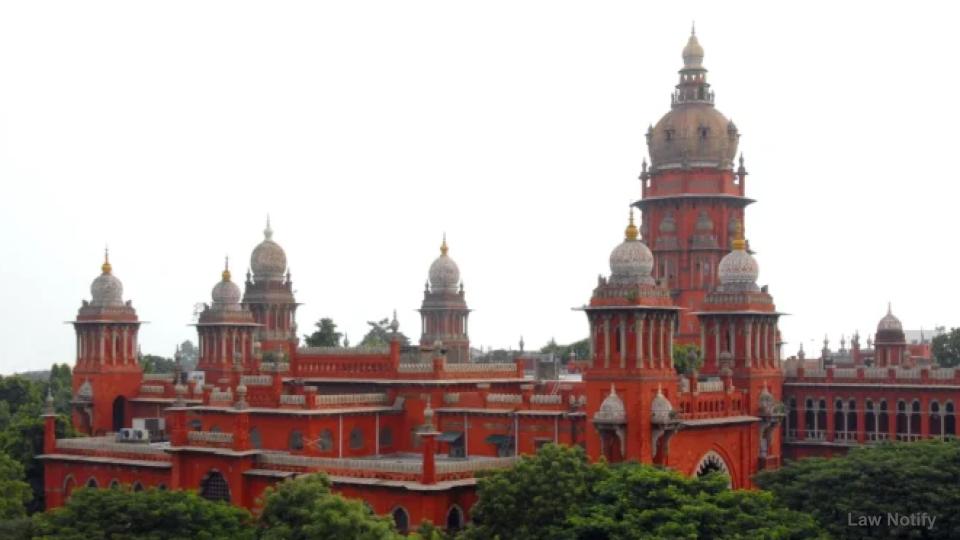
April 15, 2026 : The Madras High Court on Tuesday issued notice to Tamil Nadu Deputy Chief Minister Udhayanidhi Stalin, the Central government, and Income Tax authorities on a petition alleging discrepancies in his election affidavit.
A Bench comprising Chief Justice S A Dharmadhikari and Justice G Arul Murugan directed the Director General of Income Tax (Investigation) and the Ministry of Corporate Affairs to submit a report by April 20.
The directions came on a petition filed by Chennai resident R. Kumaravelu, a voter from the Chepauk–Thiruvallikeni constituency. The petitioner sought an inquiry into alleged inconsistencies in the assets declared by Stalin in his affidavits for the 2021 Assembly elections and the upcoming 2026 polls.
According to the latest affidavit, Stalin has declared assets worth approximately ₹20.6 crore, including both movable and immovable properties. His income for the financial year 2024–25 is stated to be about ₹10.4 lakh, while his spouse has reported earnings exceeding ₹2.9 crore.
The petitioner alleged significant discrepancies, including omission of certain assets, unexplained variations in loans, and inconsistencies between the affidavit disclosures and corporate records. It was further claimed that some financial particulars were inaccurately presented, raising concerns about possible non-compliance with statutory requirements. Such discrepancies, the plea argued, undermine transparency and impede voters’ ability to make informed electoral choices.
Filed under Article 226 of the Constitution of India, the petition also invoked the right to information of voters under Article 19(1)(a) of the Constitution of India, asserting that accurate disclosure of candidate details is integral to democratic participation.
Senior Advocate V. Raghavachari, appearing for the petitioner, submitted that the case was not directed against any individual but aimed at verifying the correctness of disclosures made in the election affidavit.
The Court observed that affidavits submitted along with nomination papers are placed in the public domain for objections. It also noted that the Returning Officer does not adjudicate the correctness of such disclosures, as doing so would require evidentiary examination and trial.
The Bench further remarked that disputes of this nature are ordinarily raised through election petitions after the conclusion of polls. However, the petitioner contended that post-election remedies are inadequate and that voters are entitled to accurate information prior to casting their votes.