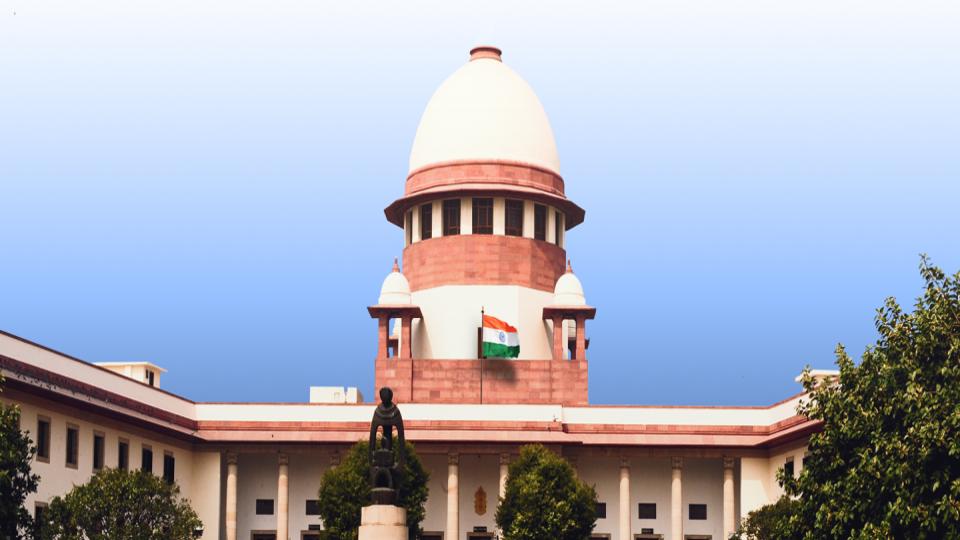
April 15, 2026 : The Supreme Court of India on Wednesday observed that measures introduced in the name of social reform cannot be permitted to dilute the essential identity of a religion.
The remark came from Justice BV Nagarathna during proceedings before a nine-judge Constitution Bench led by Chief Justice of India Surya Kant. The Bench, also comprising Justices MM Sundresh, Ahsanuddin Amanullah, Aravind Kumar, Augustine George Masih, Prasanna B Varale, R Mahadevan and Joymalya Bagchi, is currently hearing the Sabarimala reference.
Senior Advocate Abhishek Manu Singhvi, appearing for the Travancore Devaswom Board, argued that Article 25(2)(b) of the Constitution, which empowers the State to introduce social reform and ensure access to Hindu religious institutions, must be harmonised with Article 26(b), which protects the rights of religious denominations to manage their own affairs.
He contended that while the State may expand temple entry under Article 25(2)(b), religious bodies must retain autonomy over their internal practices and rituals.
The Bench examined whether laws framed under the banner of social reform could extend to what are considered essential religious practices. Justice Nagarathna cautioned that such reforms should not go so far as to erode the foundational character of a religion.
The Court also deliberated on the specific use of the term “social reform” in Article 25(2)(b), as opposed to Article 25(1), which permits restrictions based on public order, morality and health. Singhvi submitted that Article 25(2)(b) was intended to address practices that may not align with evolving societal norms.
During the hearing, the Bench acknowledged that certain legislative interventions, including reforms in personal laws, may fall within the ambit of social reform. Singhvi further emphasised that Article 25(2) is an enabling provision and should not be interpreted in a way that undermines the broader guarantee of religious freedom under Article 25(1).