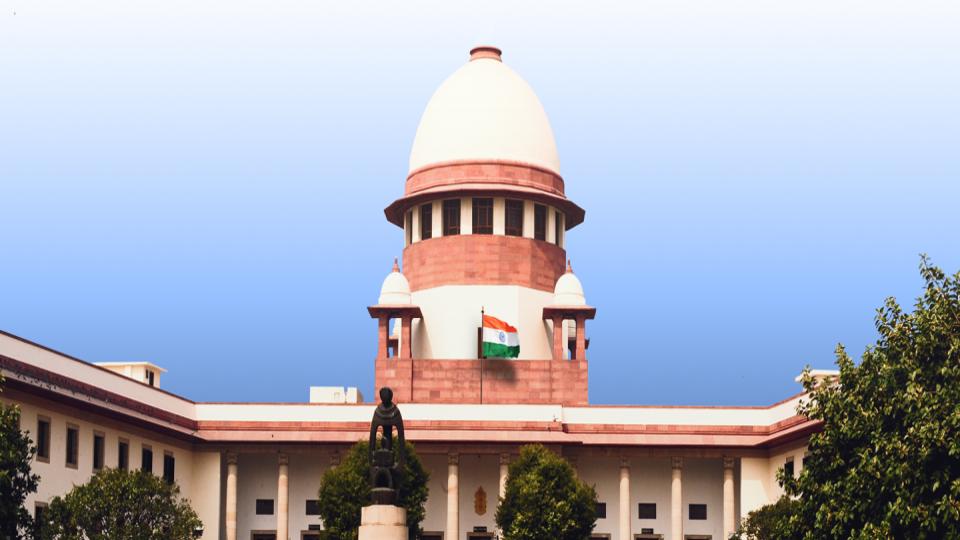
August 12, 2026: President Droupadi Murmu has given her assent to the Supreme Court (Number of Judges) Amendment Act, 2026, increasing the sanctioned strength of the Supreme Court from 34 to 38 judges, including the Chief Justice of India (CJI).
The legislation received presidential assent on August 11, 2026, and has been notified in the Gazette of India. The Act is deemed to have come into force from May 16, 2026, the date on which the President promulgated the Supreme Court (Number of Judges) Amendment Ordinance, 2026. The new law repeals the Ordinance while validating actions taken under it.
Parliament Passed the Amendment
Union Minister of State for Law and Justice Arjun Ram Meghwal introduced the Bill in the Lok Sabha on July 20, 2026. The Lok Sabha passed the legislation on August 3, followed by the Rajya Sabha on August 5.
The Bill was certified as a Money Bill under Article 110 of the Constitution.
During the parliamentary debate, Meghwal said that Chief Justice of India Surya Kant had written to Prime Minister Narendra Modi on May 11, 2026, seeking an increase in the sanctioned strength of the Supreme Court.
The CJI reportedly highlighted the growing volume of litigation and the difficulty of maintaining case disposal rates when judges are assigned to Constitution Benches. The recently constituted nine-judge Bench to hear the Sabarimala reference was cited as an example of the challenge.
More Than 92,000 Cases Pending
According to the Centre, more than 92,000 cases were pending before the Supreme Court as of January 1, 2026. During 2025, the Court registered 75,410 fresh matters but disposed of slightly more than 65,000 cases.
The government said that increasing the judicial strength would improve the Court’s capacity to deal with its growing workload, facilitate the constitution of larger Benches and help reduce mounting pendency.
The increase is particularly significant because the Supreme Court frequently constitutes larger Constitution Benches to decide questions involving substantial constitutional and legal issues. Such Benches can temporarily reduce the number of judges available for hearing regular matters.
First Increase Since 2019
This is the first increase in the sanctioned strength of the Supreme Court since 2019. In that year, Parliament increased the number of Supreme Court judges, excluding the CJI, from 30 to 33.
The Supreme Court began functioning in 1950 with a sanctioned strength of eight judges, including the CJI. The strength was subsequently increased to 11 in 1956, 14 in 1960, 18 in 1978, 26 in 1986 and 31 in 2009.
Following the latest amendment, the sanctioned strength now stands at 38 judges, including the CJI.
Three Vacancies Currently Remain
The Supreme Court currently has 35 judges in position against the sanctioned strength of 38, leaving three vacancies.
The increase in sanctioned strength is expected to provide greater judicial capacity and flexibility, particularly when larger Benches are required to hear important constitutional matters. It is also aimed at strengthening the Court’s ability to address its substantial pending caseload.