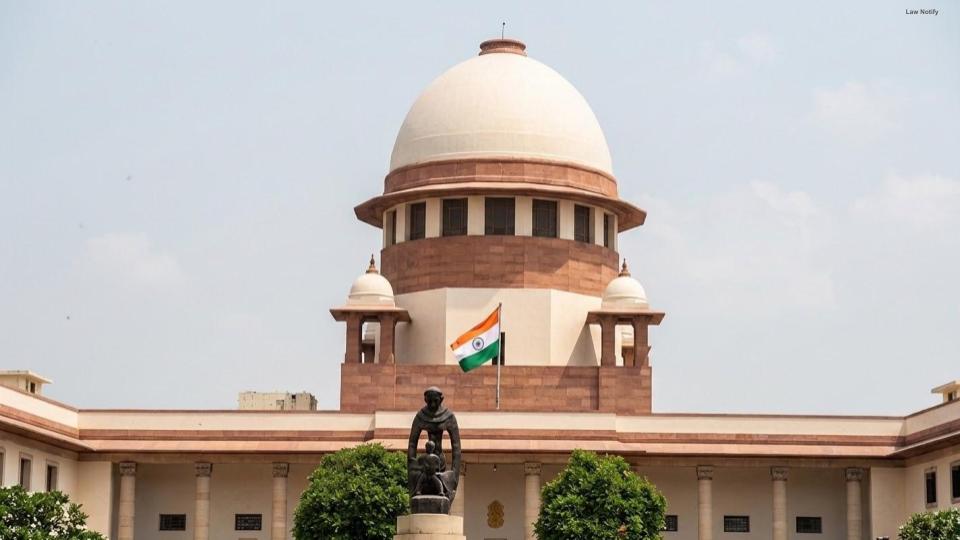
The Supreme Court has held that the presumption under Section 114A of the Indian Evidence Act, 1872 cannot be invoked mechanically and must be applied only after the entire evidence is properly assessed. The Court ruled that where the same factual circumstances form the basis of kidnapping and rape allegations, disbelieving the prosecutrix’s version regarding kidnapping while relying on the same version to convict for rape cannot be sustained.
A Bench of Justice Ujjal Bhuyan and Justice Atul S. Chandurkar observed that a rape conviction can be based solely on the testimony of the prosecutrix if her evidence inspires confidence. However, material contradictions, omissions and conduct that is inconsistent with the prosecution story must be carefully considered.
The Court noted that the prosecutrix had travelled with the appellant, Paramjit Singh Bedi, through busy and brightly lit areas of Ludhiana and later travelled by scooter from Ludhiana to Malerkotla, a journey of about one and a half hours. During this journey, she did not raise an alarm or attempt to get off the scooter. Her account of the return journey was also inconsistent, as she initially stated that they returned by car but later said they travelled by train without tickets.
The medical evidence also did not support the prosecution case in the manner required for sustaining the conviction. Dr. Ananjit Kaur found no external or internal injuries on the prosecutrix. The Court also noted that the ossification test placed her age between 17 and 19 years, while the trial court had accepted her age as 19.
The Supreme Court found it significant that the trial court had acquitted the appellant of the charge under Section 366 IPC but convicted him under Section 376 IPC on the basis of substantially the same factual narrative. According to the Court, once the prosecutrix’s version was disbelieved for the kidnapping charge, the same version could not selectively be relied upon for the rape conviction.
The Court further clarified that the mere presence of spermatozoa in a vaginal swab does not, by itself, establish rape. The surrounding circumstances, including the conduct of the prosecutrix, the nature and duration of travel, the absence of injuries and the consistency of her testimony, are relevant while determining whether the prosecution has proved its case beyond reasonable doubt.
The Supreme Court also criticised the High Court for mechanically affirming the conviction by relying on Section 114A of the Evidence Act without adequately examining the contradictions in the evidence. It observed that the statutory presumption cannot replace a proper evaluation of the prosecution evidence.
The case arose from an FIR registered at Police Station Division No. 5, Ludhiana. The prosecution alleged that the appellant took the prosecutrix, then a Class VIII student, from her home on June 19, 2009, on the pretext of meeting his daughter. She was allegedly taken first to LIG Flats in Ludhiana and subsequently to an abandoned factory at Malerkotla, where the prosecution alleged that she was confined and sexually assaulted.
The Sessions Court acquitted the appellant under Section 366 IPC but convicted him under Section 376 IPC and sentenced him to 10 years’ rigorous imprisonment with a fine of Rs. 5,000. The Punjab and Haryana High Court upheld the conviction. The Supreme Court later examined the matter and found that the prosecution evidence did not provide a reliable basis for sustaining the rape conviction.
The judgment reiterates an important principle of criminal law: statutory presumptions cannot be applied in isolation from the evidence as a whole. Where the testimony of the prosecutrix contains material contradictions and does not inspire confidence, the prosecution must still establish the charge beyond reasonable doubt.