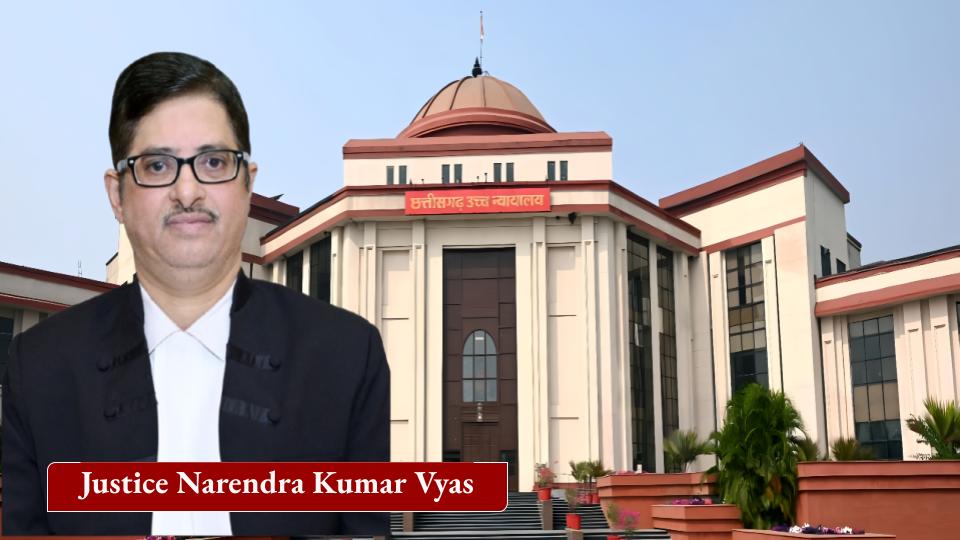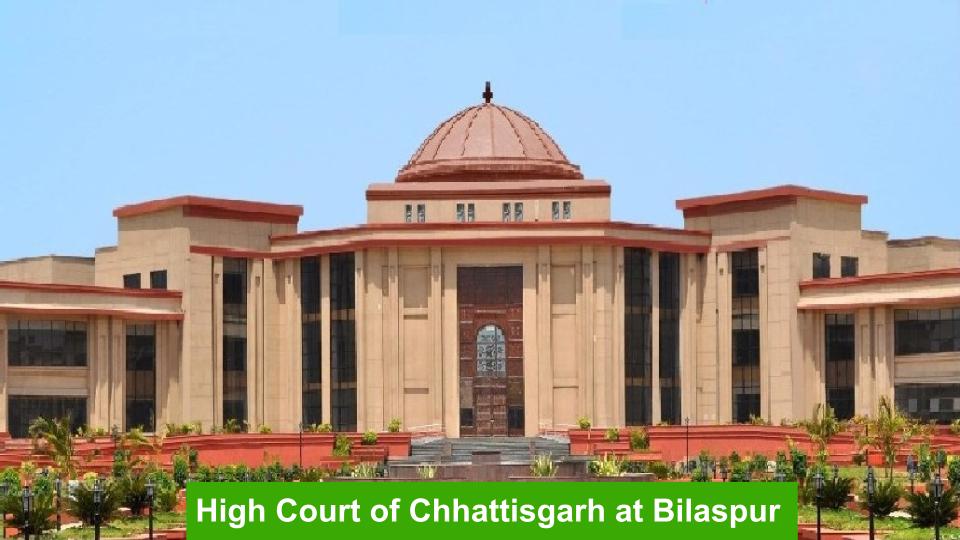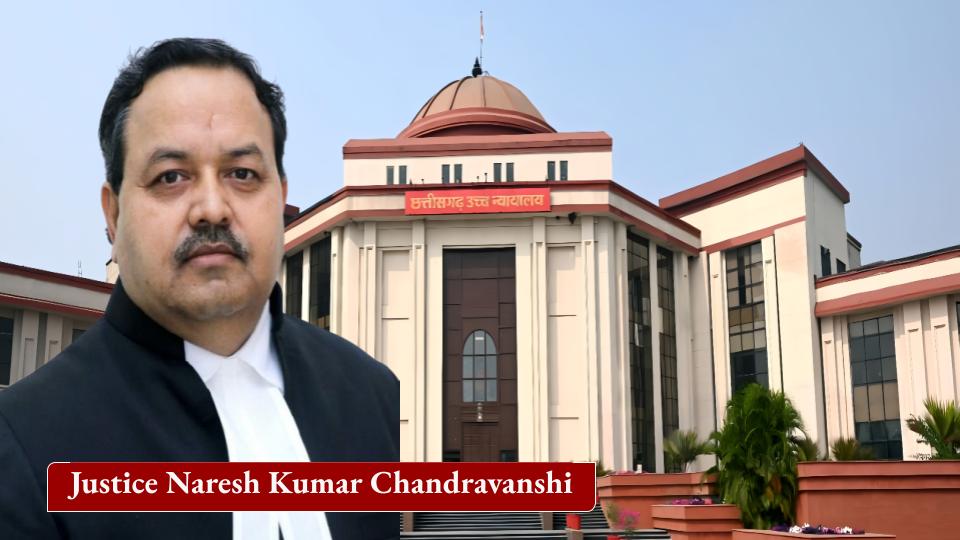
The Chhattisgarh High Court at Bilaspur has acquitted a man convicted in a rape and POCSO case, holding that the prosecution failed to establish beyond reasonable doubt that the victim was a minor on the date of the alleged incident and also failed to prove the charges of rape and criminal intimidation through reliable evidence. The judgment was delivered by Justice Naresh Kumar Chandravanshi in CRA No. 1335 of 2021 on September 29, 2026.
The appeal was filed by Ashwani Chandrakar, who was challenging the judgment dated August 12, 2021 passed by the Upper Sessions Judge, II Fast Track Special Court (POCSO Act), Durg, in Special Sessions Case No. 33/2020. The trial court had convicted him under Section 4 of the Protection of Children from Sexual Offences Act, 2012 and Section 506 Part-II of the Indian Penal Code. He had been sentenced to 10 years’ rigorous imprisonment with a fine of Rs. 5,000 under the POCSO Act and one year’s rigorous imprisonment with a fine of Rs. 1,000 under Section 506 Part-II IPC, with the sentences directed to run concurrently.
According to the prosecution case, the alleged incident took place on October 15, 2016 near a railway track at Puraina. The prosecution alleged that the appellant forcibly dragged the victim towards bushes, threatened her with a blade and committed rape. It was further alleged that he threatened to kill her if she disclosed the incident. The victim subsequently approached the police and an FIR was registered for offences under Sections 376, 323 and 506-B IPC and Section 4 of the POCSO Act. During investigation, statements of witnesses were recorded, the spot map was prepared, medical examinations were conducted and documents relating to the victim’s age were collected.
The principal issue before the High Court was whether the prosecution had satisfactorily proved that the victim was below 18 years of age on the date of the alleged occurrence. The Court found significant inconsistencies in the material relied upon by the prosecution. The victim stated in her evidence that her date of birth was August 4, 2000, whereas the school Dakhil-Kharij register recorded her date of birth as July 5, 2001. The Head Master examined by the prosecution also admitted that the register did not disclose the basis on which the date of birth had been entered.
The High Court also considered an ossification examination conducted during the investigation. The radiologist had assessed the victim’s approximate age as 18 to 19 years. Although the report was neither exhibited nor the radiologist examined, the Court noted that it was part of the prosecution investigation material and directly relevant to the question of minority.
While examining the statutory framework, the Court referred to Section 94(2) of the Juvenile Justice (Care and Protection of Children) Act, 2015. The provision prescribes a sequence for determining age, beginning with a school or matriculation certificate, followed by a birth certificate issued by a competent local authority and, only in their absence, an ossification or other medical age determination test. The High Court also relied upon Supreme Court decisions including Omprakash v. Union of India, Rajni v. State of Uttar Pradesh and Alamelu v. State.
The Court emphasised that merely producing a school record does not automatically establish the correctness of the date of birth recorded in it. Referring to the Supreme Court’s decision in Alamelu, the High Court noted that the evidentiary value of a school record depends upon proof of the material on the basis of which the entry was made. The Court also highlighted the constitutional implications of relying on an inadequately supported age entry in a criminal case, particularly where conviction could affect the accused’s right to personal liberty under Article 21 of the Constitution.
The High Court ultimately held that the prosecution had not established the victim’s minority with the degree of certainty required in a criminal trial. The Court observed that the evidence consisted of three conflicting circumstances: the victim’s own stated date of birth, the unexplained school-record entry and the prosecution’s own ossification assessment indicating an approximate age of 18 to 19 years. The Court concluded that the resulting reasonable doubt regarding minority had to operate in favour of the accused.
The Court further held that an investigation document produced by the prosecution cannot simply be ignored because it was not formally exhibited when the document is relevant to testing the prosecution case. Referring to Ramaiah @ Rama v. State of Karnataka and Nilesh Baburao Gitte v. State of Maharashtra, the Court held that a prosecution document forming part of the charge-sheet could be considered by the defence even if it had not been formally exhibited. The High Court observed that the prosecution cannot rely on one part of its investigation material while disregarding another part that creates doubt concerning a foundational fact.
The High Court then examined whether the prosecution had independently established the allegations of rape and criminal intimidation under the IPC. The medical examination of the victim conducted on October 25, 2016 did not reveal any internal or external injury, and the doctor did not give a definite opinion regarding recent sexual intercourse. The FSL report also found no semen or human spermatozoa on the victim’s vaginal slide or underwear or on the appellant’s underwear.
The Court made it clear that the absence of physical injuries or semen cannot, by itself, disprove an allegation of rape. However, it found that these circumstances assumed significance when considered alongside other weaknesses in the prosecution evidence. The Court also noted inconsistencies concerning the alleged disclosure of the incident and the delay in lodging the written complaint.
The prosecution case stated that the victim disclosed the incident to her maternal aunt before approaching the police. However, the maternal aunt did not support this version in court. She stated that the victim had told her that she had slipped near the railway track and injured her hand, and she denied that the victim had disclosed that she had been sexually assaulted. The investigating officer also confirmed that the written complaint was lodged approximately ten days after the alleged incident.
The High Court reiterated that a conviction for rape can legally rest upon the sole testimony of the prosecutrix when that testimony is wholly reliable and inspires confidence. At the same time, the Court said that where material inconsistencies exist on the core aspects of the prosecution case and the surrounding circumstances do not provide assurance, the evidence must be scrutinised with due caution.
In the present case, the Court found that the victim’s account concerning the circumstances immediately following the alleged incident was inconsistent with the prosecution’s own version. The absence of supporting evidence from the maternal aunt, the unexplained delay in the written complaint, the medical findings, the FSL report and the absence of an independent witness collectively weakened the prosecution case. The Court stressed that these circumstances were not considered individually but in their totality.
Holding that the prosecution had failed to prove the appellant’s guilt beyond reasonable doubt, the High Court observed that the “benefit of doubt must be credited to the appellant.” The Court accordingly allowed the appeal, set aside the trial court’s judgment dated August 12, 2021 and acquitted Ashwani Chandrakar of the charges under Sections 376(1) and 506 Part-II IPC and Section 4 of the POCSO Act.
The judgment is significant because it underscores two important principles in criminal jurisprudence. First, where minority is a foundational fact for attracting the statutory consequences of the POCSO Act, the prosecution must establish age through legally reliable evidence. Second, an acquittal based on reasonable doubt does not amount to a finding that the alleged incident necessarily did not occur; rather, it reflects the criminal law requirement that guilt must be proved beyond reasonable doubt.
As the appellant was in custody, the High Court directed that he be released forthwith if he was not required in any other case. However, in accordance with Section 481 of the Bharatiya Nagarik Suraksha Sanhita, 2023, he was directed to furnish a personal bond of Rs. 25,000 with one surety for the same amount, effective for six months, along with an undertaking to appear before the Supreme Court if notice was issued in any special leave petition arising from the judgment.
Case Reference: Ashwani Chandrakar v. State of Chhattisgarh, CRA No. 1335 of 2021, 2026:CGHC:42268, For the appellant: Ms. Upasana Yadav, Advocate, appearing on behalf of Mr. Jitendra Gupta, Advocate. For the State: Mr. Kulesh Sahu, Panel Lawyer.