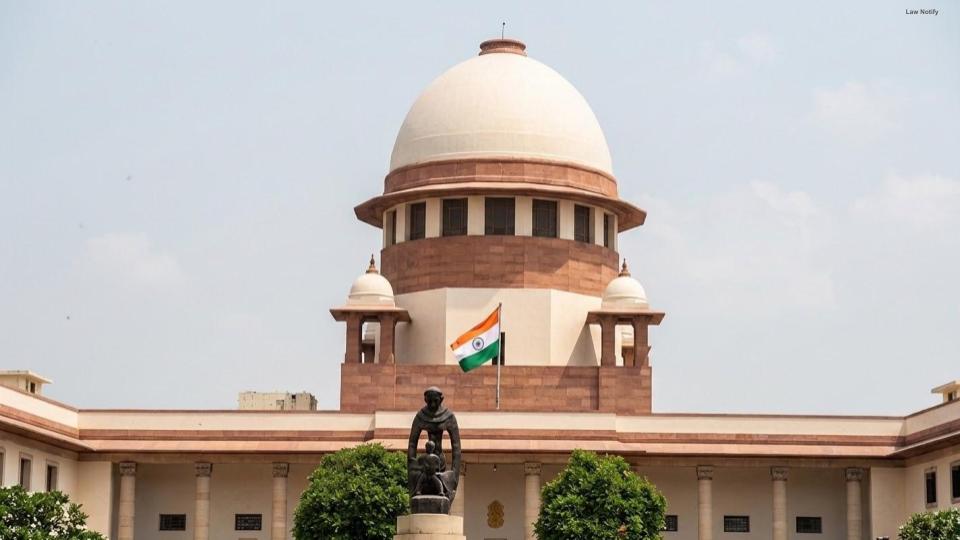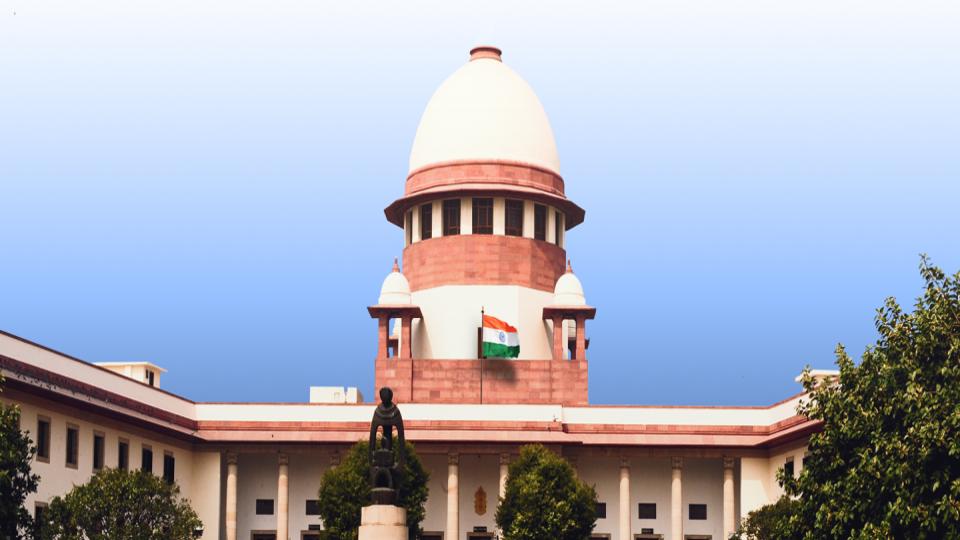
August 5, 2026 : The Supreme Court has issued notice to the Bar Council of India (BCI) and the Union Ministry of Law and Justice on a petition challenging the BCI’s July 2026 resolution and circular prescribing the manner of implementing 30 per cent reservation for women in State Bar Councils.
A Bench comprising Chief Justice of India Surya Kant, Justice Joymalya Bagchi and Justice V. Mohana on Tuesday sought responses from the BCI and the Centre on the plea filed by ten elected members of the Uttarakhand Bar Council in Kuldeep Kumar & Ors. v. Union of India & Anr.
The petition questions the legality of the BCI’s decision to increase the number of elected members in State Bar Councils to ensure the mandated level of women’s representation. According to the petitioners, the BCI has exceeded its statutory powers by altering the composition of State Bar Councils without any amendment to the law.
The dispute arises from the Supreme Court’s earlier judgment in Yogamaya M.G. v. Union of India & Ors., in which the Court directed that women should constitute 30 per cent of the membership of every State Bar Council. Following the judgment, the BCI passed a resolution on July 19, 2026, and later issued a circular laying down the mechanism for implementing the reservation.
Under the Advocates Act, 1961, the elected strength of State Bar Councils is fixed at 15, 20 or 25 members depending on the number of advocates enrolled in the State. To comply with the Supreme Court’s direction, the BCI prescribed that councils with 25 elected members should have seven women members, those with 20 members should have six women, and councils with 15 members should have four women representatives.
The controversy centres on the BCI’s proposal that if the required number of women candidates are not elected within the existing statutory strength, additional elected seats should be created to fill the shortfall. For example, if no woman candidate is elected to a 25-member council, seven new elected seats would be added, increasing the total strength to 32. If some women are elected, only the remaining deficit would be filled through elections to the additional seats.
The petitioners contend that this mechanism effectively amends the statutory composition of State Bar Councils, something that can only be done by Parliament through an amendment to the Advocates Act. They argue that the Supreme Court’s judgment never authorised the BCI to expand the number of elected members.
According to the plea, the Supreme Court had contemplated implementation of the 30 per cent reservation through a combination of 20 per cent elected women members and 10 per cent co-opted women members, rather than by increasing the statutory strength of State Bar Councils.
The petition states that the BCI has “gravely misconstrued” the limited liberty granted by the Supreme Court by introducing seat enhancement without obtaining any specific direction from the Court. It further argues that such action amounts to an impermissible exercise of legislative power in the absence of statutory authority.
The petitioners have sought quashing of the BCI’s July 2026 resolution and circular. They have also requested the Supreme Court to restrain the BCI from taking any action that could alter the outcome of the Uttarakhand Bar Council elections held in February 2026. Additionally, they have sought a declaration that the strength of the Uttarakhand Bar Council cannot be increased beyond the statutory limit of 25 elected members unless authorised by Parliament or through a specific order of the Supreme Court.