News Citation : 2026 LN (HC) 433
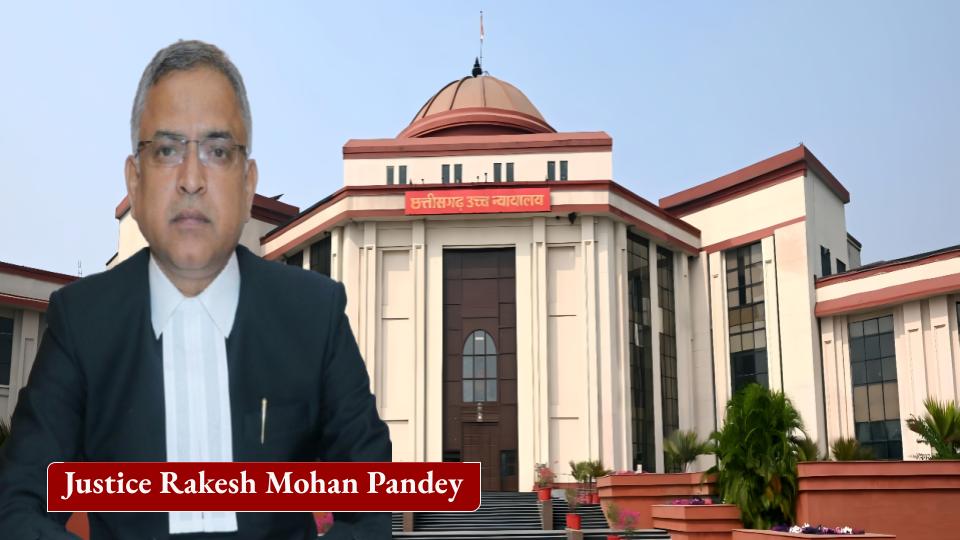
The Chhattisgarh High Court has ruled that a government employee cannot ordinarily be sent on deputation without his consent, setting aside deputation and relieving orders issued against a Deputy Ranger posted in Dantewada. Justice Rakesh Mohan Pandey allowed the writ petition filed by Sohan Lal Verma and quashed the orders dated April 13, 2022, concerning his deputation to District Union Sukma and his subsequent relieving from District Union Dantewada. The court found that there was neither the petitioner’s consent nor material showing a consensual arrangement between the lending and borrowing authorities.
The case was heard as WPS No. 2815 of 2022. Sohan Lal Verma, who was working as a Deputy Ranger in the Dantewada Forest Division, was promoted to the post of Deputy Range Officer by an order dated January 1, 2022. Subsequently, by an order dated January 20, 2022, he was sent on deputation from Forest Division Dantewada to District Union Bijapur. That arrangement was later modified on February 1, 2022, when he was shifted from District Union Bijapur to District Union Dantewada. On April 13, 2022, the order was again modified and Verma was sent on deputation to District Union Sukma. He was relieved from District Union Dantewada on the same day.
Appearing for the petitioner, advocate Somkant Verma argued that his client had been sent to the new place of posting without obtaining his consent. It was further submitted that the April 13 order effectively shifted him outside the district even though he had already resumed his duties at District Union Dantewada pursuant to the February 1 order. The petitioner also pointed out that the High Court had granted an interim order in his favour on April 21, 2022, which continued during the proceedings.
The State opposed the petition through panel lawyer Ajay Kumrani. The State argued that there was no requirement to obtain the employee’s consent under Fundamental Rule 110. However, the State did not dispute that the petitioner continued to work at District Union Dantewada.
After considering the submissions and examining the material on record, the High Court turned to the established principles governing deputation in service law. The court noted that deputation is legally distinct from an ordinary transfer. It generally involves sending an employee outside his parent cadre or department to another department, cadre or organisation for a temporary period.
The High Court relied on the Supreme Court’s observations in State of Punjab v. Inder Singh, as referred to in Ms Sarita Singh v. M/s Shree Infosoft Private Limited. The Supreme Court has explained that deputation has a recognised meaning in service law and involves service outside the parent cadre or department. Importantly, the principle relied upon by the High Court states, “There can be no deputation without the consent of the person so deputed.”
The court also referred to Umapati Choudhary v. State of Bihar, where the Supreme Court described deputation as an arrangement involving the lending authority, the borrowing authority and the employee. The judgment emphasises that deputation is consensual and includes the employee’s decision to accept or decline the deputation.
Another Supreme Court decision considered by the High Court was Union of India v. S.N. Maity. In that case, the Supreme Court cautioned against arbitrary or capricious exercise of administrative power in matters involving deputation and tenure postings. The principle highlighted in the High Court order was that merely using the expression “until further orders” does not give an employer unlimited authority to act arbitrarily. Any curtailment or alteration of a service arrangement must have a rational basis.
Applying these principles to Verma’s case, the High Court found that there was no evidence establishing his consent to the proposed deputation. The court also found no material demonstrating a consensual arrangement between the lending and borrowing authorities. The judgment specifically records, “There was neither any consent of the petitioner nor any material to show a consensual arrangement between the lending and borrowing authorities.”
On that basis, the High Court held that the deputation order dated April 13, 2022, was legally unsustainable. The court accordingly quashed both the deputation order and the consequential relieving order. The writ petition was allowed.
The ruling is significant for government employees because it reiterates the distinction between an ordinary administrative transfer and deputation. Deputation involves a specific service-law arrangement in which the employee is assigned to another department, cadre or organisation outside the parent establishment. According to the principles relied upon in the judgment, such an arrangement is consensual and cannot simply be imposed without the employee’s consent.
At the same time, the order should not be read as a blanket restriction on the government’s power to transfer its employees. The High Court’s decision concerns the legality of the particular deputation arrangement before it, where the record did not establish the employee’s consent or a consensual arrangement between the concerned authorities. The judgment therefore underscores the need to distinguish deputation from an ordinary transfer and to follow the applicable service-law requirements in each case.
The High Court’s order was passed on August 24, 2026, by Justice Rakesh Mohan Pandey. After allowing the writ petition and quashing the impugned orders, the court also vacated the interim order that had earlier been granted in favour of the petitioner.