News Citation : 2026 LN (HC) 91 | 2026:CGHC:44
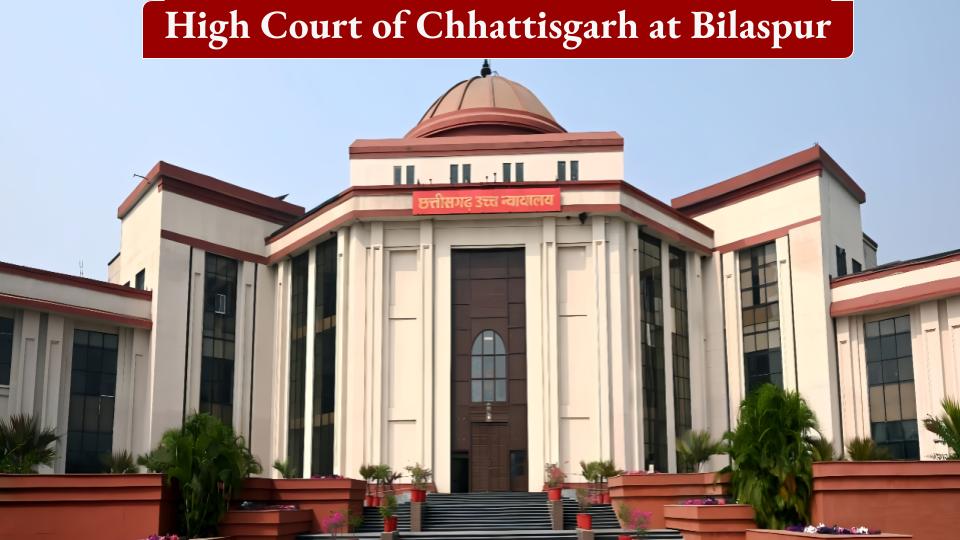
January 02, 2026 : The Chhattisgarh High Court at Bilaspur has declined to interfere with income tax reassessment proceedings initiated against Raipur-based assessee Shyam Hari Gupta, holding that challenges to the validity of the notice, including limitation and jurisdictional issues, must be raised before the Assessing Officer during reassessment.
Justice Naresh Kumar Chandravanshi disposed of the writ petition filed under Articles 226 and 227 of the Constitution, which sought quashing of a notice issued under Section 148 of the Income Tax Act, 1961, and the order passed under Section 148A(d).
The petitioner had argued that the original reassessment notice dated June 30, 2021, served on July 1, 2021, was barred by limitation and that the sanction for reopening had been granted mechanically by the Principal Commissioner of Income Tax without application of mind. It was further contended that after April 1, 2021, sanction under Section 151 ought to have been obtained from the Chief Commissioner of Income Tax and not the Principal Commissioner. The petitioner also claimed that there was no fresh or tangible material to justify reopening, as all relevant documents had already been furnished to the Assessing Officer in earlier proceedings.
The Income Tax Department opposed the petition, submitting that the reassessment process had been lawfully revived following the Supreme Court’s ruling in Union of India v. Ashish Agarwal. According to the Department, a fresh notice under Section 148A(b) was issued with complete material after receiving information through the ITBA portal regarding possible escapement of income. The Department also relied on a recent Division Bench judgment of the same High Court, which had upheld similar reassessment notices.
After examining the record, the Court noted that an identical challenge had already been rejected by both a Single Bench and a Division Bench of the High Court, with the Division Bench relying on settled Supreme Court precedents, including Raymond Woollen Mills Ltd. and Anshul Jain. Those rulings clarified that at the stage of issuing a reassessment notice, courts should not examine the sufficiency or correctness of the material and that such objections can be raised before the Assessing Officer.
Applying the same reasoning, the Court held that it was not inclined to exercise its extraordinary writ jurisdiction to quash the reassessment notice or the order passed under Section 148A(d). The petition was accordingly disposed of, while granting liberty to the petitioner to raise all permissible objections, including limitation and jurisdiction, before the Assessing Officer during the reassessment proceedings.
Case Reference : WPT No. 61 of 2023, Shyam Hari Gupta v. The Principal Commissioner of Income Tax-1, Raipur & Another; Counsel for the Petitioner: Mr. Mool Chand Jain, Advocate; Counsel for the Respondents: Mr. Ajay Kumrani, Advocate.