News Citation : 2026 LN (HC) 189 | 2026:CGHC:11537-DB
March 11, 2026 : The High Court of Chhattisgarh has dismissed a writ petition filed by a Raipur resident seeking eviction of tenants from a shop and recovery of rent arrears, holding that the petitioner failed to establish the existence of a landlord-tenant relationship.
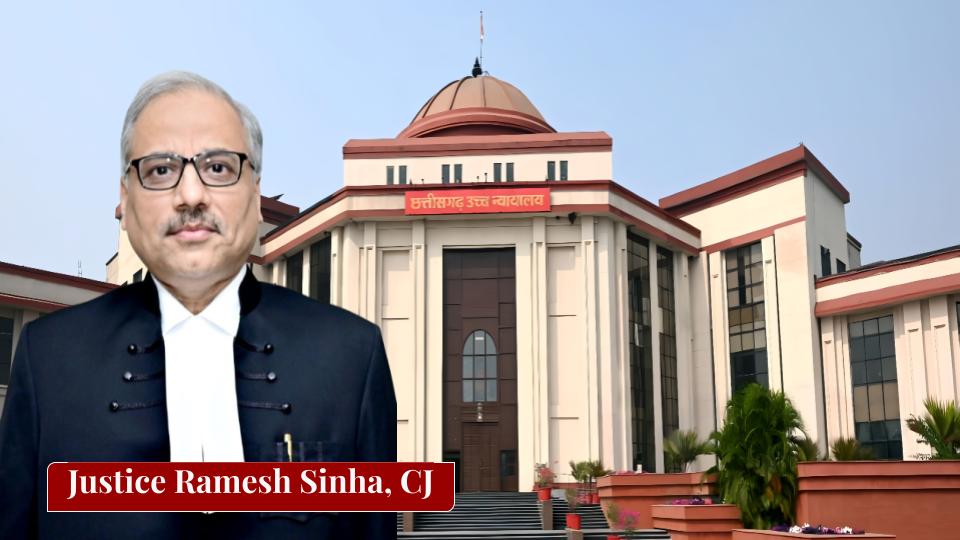
The Division Bench comprising Chief Justice Ramesh Sinha and Justice Bibhu Datta Guru delivered the judgment on 11 March 2026 in a case filed by Halima Begam. The petition challenged the orders of the Rent Control Authority dated 24 May 2022 and the Rent Control Tribunal dated 24 March 2023, both of which had rejected her eviction plea.
According to the case record, the dispute concerned a shop located in Amapara, Raipur. The petitioner claimed ownership of the property after purchasing it through a registered sale deed dated 14 February 2000 from the previous owner. The shop had originally been rented in the late 1970s to Nazir Ahmad, who ran a grocery business named “Ahmed Kirana Stores.” After his death, his legal heirs continued to run the business and remained in possession of the shop.
Halima Begam approached the Rent Control Authority under the Chhattisgarh Rent Control Act, 2011, seeking eviction of the occupants and recovery of unpaid rent. She argued that once she purchased the property, the occupants automatically became her tenants. She also alleged that rent had not been paid regularly and that arrears had accumulated.
However, the respondents contested the claim and argued that the dispute was essentially a family property matter rather than a landlord-tenant dispute. They maintained that the property had been purchased using joint family income and that they were in possession as co-owners, not tenants. They also denied recognizing the petitioner as their landlord.
The Rent Control Authority examined the evidence and concluded that although the petitioner had proved her ownership through the sale deed, she failed to prove that a landlord-tenant relationship existed between her and the respondents. The authority noted the absence of documentary evidence such as rent receipts, rent agreements, or proof of rent payment. As a result, the eviction application was dismissed.
Both sides later filed appeals before the Rent Control Tribunal. After reviewing the case, the Tribunal upheld the authority’s findings and dismissed both appeals, stating that neither side had established sufficient grounds to interfere with the original order.
When the matter reached the High Court, the petitioner argued that once ownership was established and the original tenancy was admitted, the law should recognize her as the landlord under Section 109 of the Transfer of Property Act. The respondents, however, maintained that the essential requirement of proving a landlord-tenant relationship had not been satisfied.
The High Court agreed with the reasoning of the Rent Control Authority and the Tribunal. The Bench observed that ownership alone does not automatically establish a legal relationship of landlord and tenant, particularly in cases involving family members and inheritance of a business. The court also noted that for nearly fifteen years after purchasing the property, the petitioner had not demanded rent or produced evidence showing that the respondents acknowledged her as their landlord.
Another factor considered by the court was the ongoing civil litigation concerning the ownership of the property. A separate civil suit regarding the title had already been decided by a lower court and was pending in appeal before the High Court. In such circumstances, the court said, summary proceedings under the Rent Control Act could not be used to resolve issues that primarily concern property title.
The Bench further held that when two statutory authorities have recorded concurrent findings on factual issues, the High Court should not interfere in its supervisory jurisdiction unless there is a clear legal error. Since no such error was found, the writ petition was dismissed.
The court clarified that the parties remain free to pursue their remedies in the pending appeal concerning the property title and that observations made in the present case will not affect those proceedings.
Case Reference : WPC No. 1752 of 2023, Smt. Halima Begam vs Rafiq Ahmad & Others; Counsels: For Petitioner: Mr. Manoj Pranjpe, Senior Advocate with Mr. Arpan Verma, Advocate; For Respondent No. 1: Ms. Aditi Singhvi, Advocate; For Respondents No. 2 to 6: Mr. Ratnesh Agrawal, Advocate.