News Citation : 2026 LN (HC) 277 | 2026:CGHC:19185
The High Court of Chhattisgarh has partially allowed a writ petition filed by a former Peon of the Gariyaband Civil Court, setting aside his dismissal from service due to a significant procedural error by the disciplinary authority. The court found that the District Judge had unfairly relied on the employee’s past service record to justify the harshest possible penalty without giving him a chance to defend himself against those specific allegations.
The petitioner, Rameshwar Yadav, was terminated in July 2016 following a departmental inquiry into his unauthorized absence from duty starting in March 2015. While the inquiry found the charges of absenteeism proved, the subsequent dismissal order explicitly cited his “habitual” nature of taking leave throughout his career as a reason for his unfitness for service. Yadav challenged this, arguing that his past conduct was never mentioned in the original charge sheet, nor was he given notice that it would be used to determine his punishment.
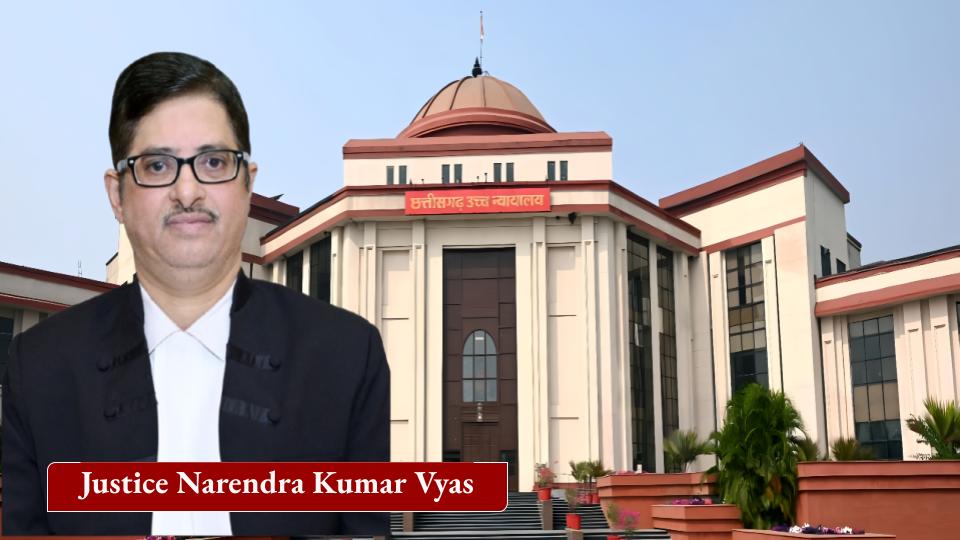
Justice Narendra Kumar Vyas, presiding over the case, observed that while the findings of the inquiry regarding the specific instance of absenteeism were valid, the inclusion of past conduct in the final sentencing was legally flawed. The court noted that under the Chhattisgarh Civil Services Rules and established Supreme Court precedents, if a disciplinary authority intends to use a “bad record” to escalate a penalty, that record must be specifically set out in a show-cause notice.
The court highlighted that failing to disclose such adverse material violates the principles of natural justice. “It is incumbent upon the Disciplinary Authority to disclose the past record in the show-cause notice and the document regarding his past record should have been supplied to the petitioner,” the judgment stated.
Despite setting aside the dismissal, the court declined to reinstate the petitioner with back wages. Instead, the matter has been remitted back to the Disciplinary Authority. The District Judge is now required to provide Yadav with a copy of the past records being considered and afford him a proper hearing. A fresh decision on the quantum of punishment must be reached within four months, ensuring that any previous penalties already served for absenteeism are taken into account to avoid double jeopardy.
Case Reference : WPS No. 2310 of 2020: Rameshwar Yadav vs. District Judge, Raipur & Others; Counsels: Mr. Bidya Nand Mishra (Petitioner), Mr. Ranbir Singh Marhas, Ms. Shweta Mishra & Ms. Anushka Sharma (Res. 1 & 3), and Mr. Rishi Raj Pithawa (State/Res. 2).