News Citation : 2026 LN (HC) 214 | 2026:CGHC:14144
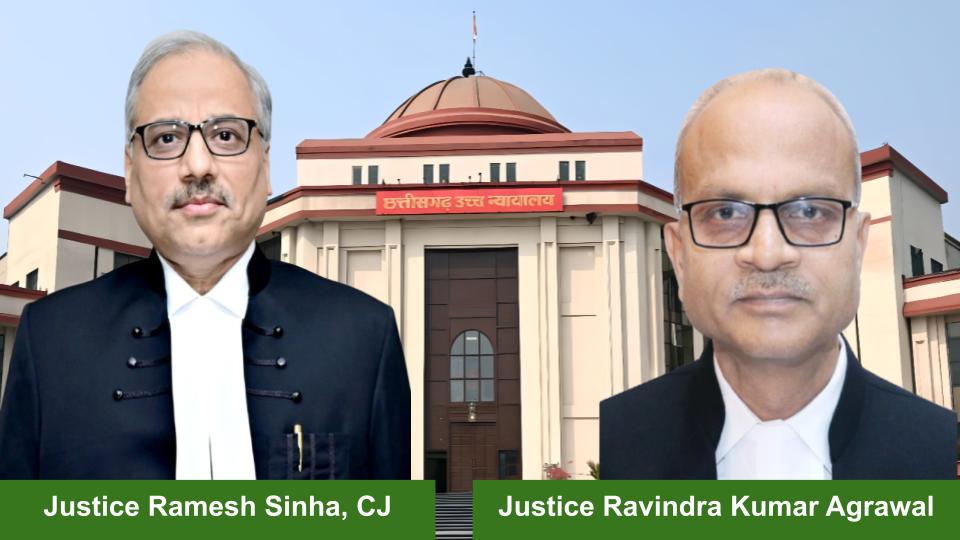
March 24, 2026 :The Chhattisgarh High Court, through Justice Ravindra Kumar Agrawal, dismissed an appeal challenging a trial court ruling that upheld the ownership rights of a Raipur resident over a disputed residential plot, holding that a registered sale deed cannot be cancelled unilaterally by a cooperative society’s liquidator.
The case arose from a dispute over a 2,400 sq. ft. plot in Purena village, Raipur. The original buyer, Devashish Panda, had purchased the land through a registered sale deed in 2001 and claimed continuous possession, including construction of a boundary wall and water tank.
Years later, in 2011, the cooperative housing society through its appointed liquidator cancelled the earlier allotment and executed a fresh sale deed in favor of another claimant, Chhaya Devi Agrawal. The cancellation and resale were carried out on the same day, without court intervention.
Panda challenged this move in a civil suit, arguing that the cancellation was illegal and that his ownership rights could not be extinguished without due legal process. The trial court ruled in his favor, declaring the cancellation and subsequent sale deed void and granting him permanent injunction over the property.
Agrawal then filed a first appeal before the High Court, contending that the original allotment was conditional and had been validly cancelled due to non-compliance with construction timelines. She also argued that the liquidator had authority under cooperative society laws to take such action.
However, the High Court rejected these arguments. It held that once a registered sale deed is executed, ownership rights are fully transferred, and any cancellation must be carried out through a competent civil court. A unilateral cancellation even by a liquidator is legally invalid.
The Court further clarified that the powers of a liquidator are administrative in nature and do not include authority to cancel completed sale transactions or divest lawful ownership rights. It also ruled that the “de facto doctrine” cannot be used to validate actions taken without jurisdiction.
Additionally, the Court noted that the appellant failed to personally testify, weakening her claim. It reiterated that a purchaser cannot acquire better title than the seller meaning the subsequent buyer could not gain ownership if the society itself had no valid title to transfer.
Finding no legal error in the trial court’s reasoning, the High Court dismissed the appeal and upheld the original decree in favor of Panda.
Case Reference : FA No. 99 of 2019, Smt. Chhaya Devi Agrawal v. Devashish Panda & Ors.; Counsel for Appellant: Mr. B.P. Sharma and Ms. Nidhi Tiwari, Advocates; Counsel for Respondent No.1: Mr. Prafull N. Bharat, Senior Advocate with Mr. Harshal Chouhan, Advocate; Other Respondents: None appeared despite service.